Six decades after a landmark global commitment, Kenya’s educators remain central to the nation’s future — yet much remains to be done
By Ashford Kimani
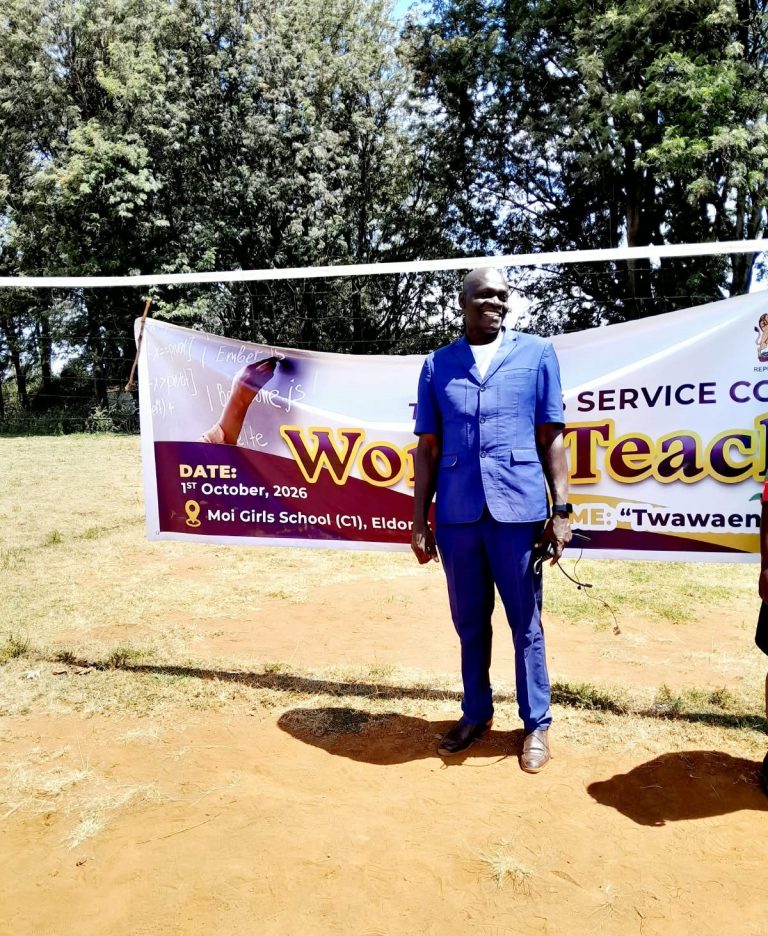
Teachers are among the most influential professionals in any society. They nurture young minds, transmit knowledge, instil values, discover talent and prepare learners for an increasingly complex world. As Kenya joins the global community in marking World Teachers’ Day 2026, the theme — “Standing with Teachers: 60 Years of Protecting the Profession, Advancing Its Status and Shaping Our Futures” — offers a moment to reflect on how far the profession has come, and how far it still needs to go.
This year’s celebration marks six decades since the adoption of the 1966 ILO/UNESCO Recommendation concerning the Status of Teachers, a milestone that reminds governments, education stakeholders, parents and communities that quality education cannot be separated from the welfare, professional standing and working conditions of the people who deliver it.
Every profession rests on a foundation laid by a teacher. Doctors, engineers, entrepreneurs, scientists, administrators and political leaders all pass through the hands of educators who equip them with knowledge, skills and values. A country that invests in its teachers is, in effect, investing in its human capital and long-term development.
In Kenya, teachers are at the centre of implementing the Competency-Based Education curriculum, which emphasises practical skills, creativity, innovation and learner-centred approaches. That transformation demands more than revised syllabuses and new learning materials. It requires competent, motivated and adequately supported teachers who can translate policy into meaningful classroom experience. Institutions such as the Kenya Education Management Institute, the Kenya Institute of Curriculum Development and the Centre for Mathematics, Science and Technology Education in Africa each demonstrate that the success of education reforms depends significantly on the capacity of teachers and school leaders to carry them through.
The 2026 World Teachers’ Day programme places considerable emphasis on recognition. The Roll of Honour spans categories including Early Years Educators, Lifetime Achievement, School Leadership Excellence, Child Protection Champion, Co-curricular and Talent Development, Early Career Educator, Inclusive Educator, Innovation and ICT Integration in Teaching, Most Resilient Teacher, Sustainable Development Educator and Teacher Mentor. The programme also recognises recipients of the President’s Award, National Honours and international distinctions.
These categories illuminate the full breadth of what effective teaching involves. A good teacher does more than deliver lessons. Teachers protect children, mentor colleagues, nurture talents, integrate technology, promote inclusion and often serve communities under difficult and under-resourced conditions. Recognising such contributions matters because it signals that teaching is a profession requiring commitment, expertise, creativity and continuous improvement. It also provides role models for young educators and encourages experienced teachers to sustain their service.
Recognition, however, must extend well beyond ceremonies. Every teacher — including those working in remote, marginalised and under-resourced communities — deserves respect, professional support and working conditions that make effective service possible. The Kenya National Union of Teachers and the Kenya Union of Post Primary Education Teachers continue to provide an organised voice for the profession, advocating on welfare, fair remuneration, career progression and constructive engagement with government. Their advocacy highlights issues that remain central to the future of education.
Teachers cannot consistently deliver their best when they lack essential resources, carry excessive workloads or work in environments that undermine their professional dignity. Motivation must therefore be understood as a shared responsibility — one that falls on the government, the Teachers Service Commission, school administrators, unions, parents and education partners alike.
Equally important is meaningful teacher participation in policy. Reforms are more likely to succeed when educators are consulted, their classroom experiences are taken seriously and implementation challenges are resolved through genuine dialogue rather than top-down directives.
Technology and innovation present new opportunities and new responsibilities. Digital resources and ICT integration can enrich learning and broaden access to information, but technology cannot substitute for the human qualities that make teaching meaningful — empathy, patience, mentorship and the ability to recognise each learner’s individual needs. The future of education lies in combining the right tools with strong teacher-learner relationships.
Inclusive education also demands sustained attention. Learners arrive with different abilities, backgrounds and needs. Teachers require appropriate training, accessible materials and supportive environments to ensure that no learner is left behind.
World Teachers’ Day should be more than an annual occasion. It should serve as a national accountability moment — an opportunity to evaluate honestly whether teachers receive the respect, resources and support necessary to fulfil their responsibilities. As Kenya marks six decades of international commitment to the status of the profession, the message is straightforward: protecting teachers means protecting the future of learners and the nation itself. Awards and public appreciation are valuable, but they must be accompanied by sustained investment in teacher welfare, professional development and effective education management.
The ultimate measure of this celebration will not be the speeches delivered or the certificates presented. It will be whether teachers return to their classrooms feeling valued, empowered and equipped to make a difference — because standing with teachers is, ultimately, standing with every learner whose future depends on quality education.
Similar Posts by The Mt Kenya Times:
- Kenya political weather — The winds are changing
- Building Africa’s Future: The remarkable rise of Professor Clemence Jaricha
- Mahrez agrees Qatar move to join Al-Shamal as free agent
- Portugal hold firm to down Norway without Ronaldo
- Sifuna puts TEP on the map
About the Author