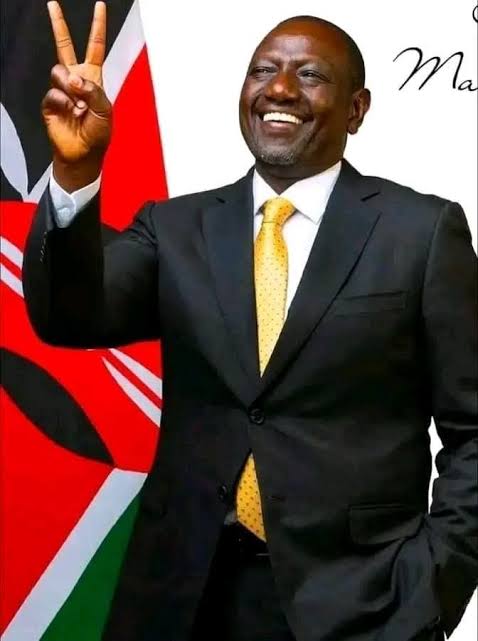
President William Ruto
With former Deputy President Rigathi Gachagua in the field and voters asking hard economic questions, President Ruto can no longer take the region’s loyalty for granted
By Collins Kibet
President William Ruto’s grip on Mt Kenya, the region that proved decisive in his 2022 election victory over former Prime Minister Raila Odinga, is facing its most serious test yet as Kenya moves into the political season ahead of the August 2027 general election.
Four years ago, Mt Kenya delivered Ruto the numbers he needed. Today, the political landscape looks considerably different. Alliances have fractured, economic grievances have accumulated and a familiar face — former Deputy President Rigathi Gachagua — has positioned himself as the region’s most vocal advocate, directly challenging the assumption that what Mt Kenya gave in 2022 it will give again in 2027.
Kenyan electoral history offers little comfort to incumbents who assume loyalty is permanent. Voters in this region, as elsewhere, are transactional in the most legitimate sense: they support leaders who demonstrate tangible returns. The currency of Mt Kenya politics is not sentiment but results — affordable food, employment for young people, fair taxation, functioning agricultural markets and access to government opportunity. On each of those measures, the mood in the region is mixed at best.
The government has pointed to investments in infrastructure, agriculture, housing and digital services as evidence of progress. But economic statistics rarely match the experience of ordinary households. A farmer contending with high production costs, a trader squeezed by taxation, or a young graduate still searching for work will judge the administration by what they feel in their pockets, not what they read in budget speeches. In Mt Kenya, with its strong agricultural and business community, economic policy does not exist in the abstract — it lands directly on livelihoods, and voters remember how it lands.
Gachagua’s emergence as an independent political force has sharpened these stakes considerably. His removal from the deputy presidency and his subsequent repositioning as a champion of Mt Kenya interests has given the region’s dissatisfied voters a credible vehicle for expressing frustration with the administration. The relationship between Ruto and Gachagua — once the cornerstone of the Kenya Kwanza coalition — has collapsed with a speed and bitterness that has left neither man unscathed. For Ruto, the political cost is real: a figure who understands the region’s networks, language and grievances is now working actively against him from within the same electoral constituency.
Deputy President Kithure Kindiki offers the administration a counterweight. His presence provides a senior Mt Kenya voice within government and a channel through which the administration can maintain communication with leaders and voters in the region. But a familiar face in high office is not a substitute for policy outcomes. Kindiki’s political value to Ruto will ultimately depend on whether voters conclude that his influence has produced real benefits — or whether they see him as window dressing on an administration that has not delivered.
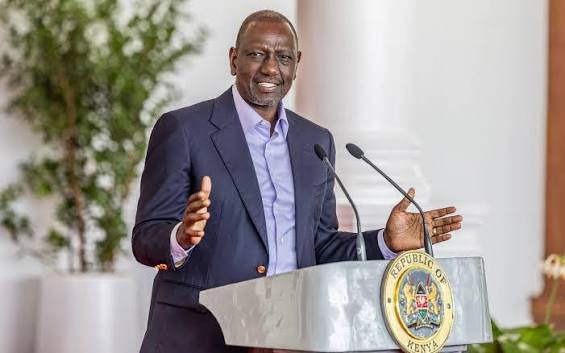
Ruto understands, or should understand, that no single region can anchor a presidential victory. His 2027 strategy will require him to consolidate support in the Rift Valley, deepen his presence in Western Kenya, expand at the Coast and in the North East and protect the broader coalition that carried him to power. A mathematically credible path to a second term exists without a full sweep of Mt Kenya. But it is a narrower path, and it demands that losses in one region be compensated convincingly elsewhere — a demanding and expensive political calculation.
The opposition’s capacity to consolidate will also shape what happens in Mt Kenya. A fragmented opposition, fielding multiple presidential candidates, could dilute the anti-Ruto vote sufficiently to protect him even in a region where enthusiasm has cooled. But a united opposition with a compelling economic platform and a candidate the region respects could turn Mt Kenya into one of the most fiercely contested electoral battlegrounds in the country’s recent history.
Kenya’s younger voters add a further layer of uncertainty. This generation is increasingly disengaged from the ethnic and historical alliances that have traditionally structured Kenyan politics. They are asking different questions — about jobs, about taxation, about entrepreneurship, about whether the political system can actually improve their lives. They are not automatically available to any party, and they are not impressed by speeches that do not connect to their daily reality. Ruto’s administration will need to speak their language with policy, not just rhetoric.
Mt Kenya is not a monolith. It contains competing interests, generational differences and a significant bloc of genuinely undecided voters who will make their judgment as the campaign intensifies. Treating the region as a guaranteed asset would be a serious strategic error. The voters who will ultimately determine its direction are those who have not yet decided — and they are watching closely.
Ruto still holds considerable advantages: incumbency, a national political network, state resources and the institutional momentum that comes with holding office. None of that is trivial. But none of it is sufficient on its own. The 2027 election will be decided by trust, by economic credibility and by whether voters believe another five years of this administration will leave them better off.
Mt Kenya supported William Ruto in 2022. That is history. The question now is whether the region believes that doing so again will serve its future. The answer is not yet written — and Ruto, more than anyone, knows he must earn it.
Similar Posts by The Mt Kenya Times:
- Nyoro suspended over pipeline IPO claims
- Kirigiti gets its first primary school as construction begins
- National Assembly approves Fatuma Ali for parliamentary commission
- The five types of teachers found in WhatsApp professional groups
- Ebola comes to Kenya: Preparedness faces its first test
About the Author