At Laikipia and campuses across Kenya, the answer is rarely simple — and almost always personal
By Elizabeth Tsisika, Laikipia University
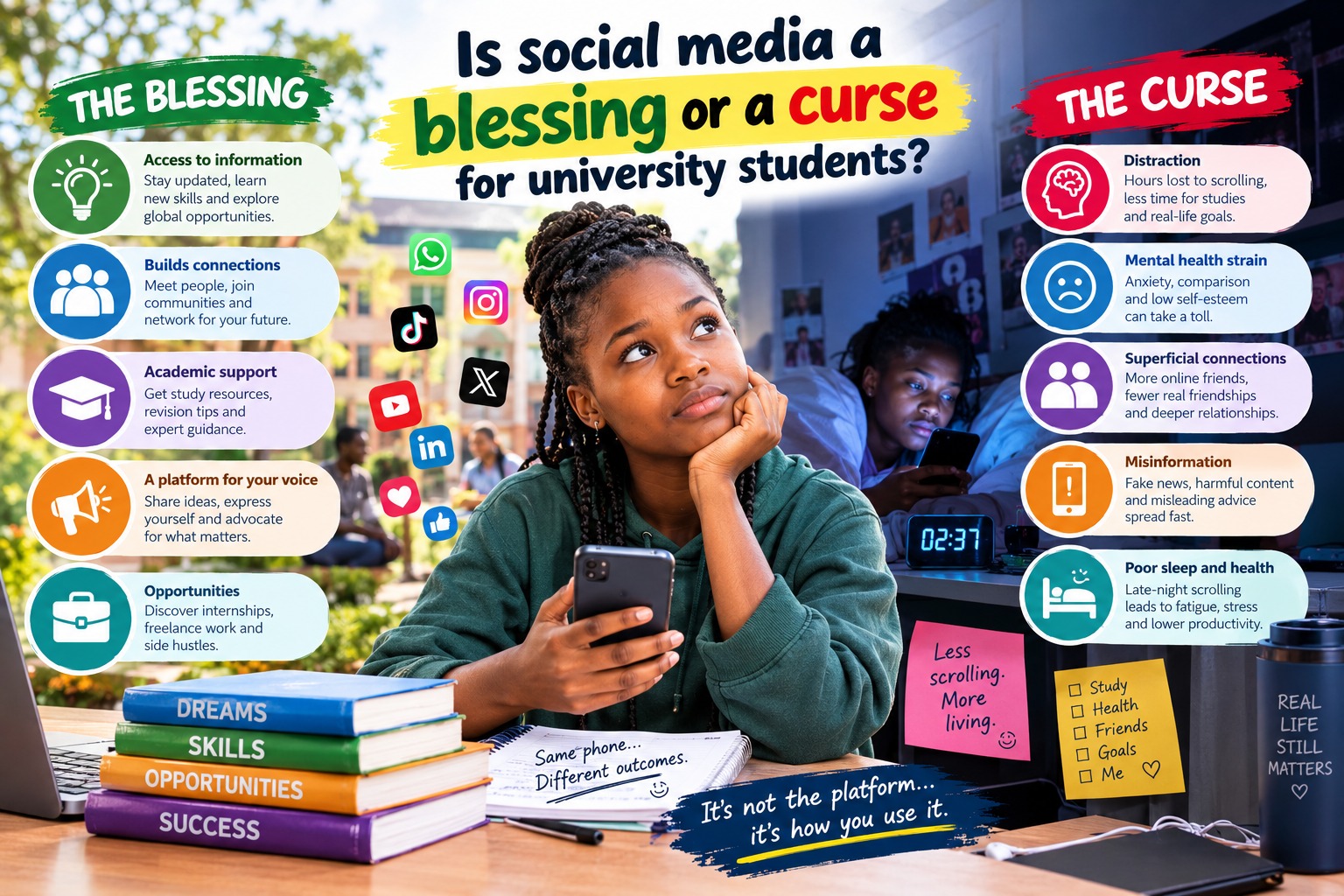
LAIKIPIA, Kenya — Walk across any university campus in Kenya today and the scene is remarkably consistent. Students bent over phones between lectures, WhatsApp groups buzzing with assignment queries at midnight, TikTok videos playing quietly at the back of halls. Social media has become so deeply woven into university life that separating the student experience from the digital one is almost impossible. Platforms such as WhatsApp, Instagram, TikTok, Facebook and X are now used for everything from education and networking to entertainment and emotional support. The question that increasingly preoccupies educators, parents and students themselves is whether all of this is doing more good than harm.
The honest answer is: it depends — and it depends almost entirely on the student doing the scrolling.
At Laikipia University and institutions across the country, social media offers genuine benefits. WhatsApp groups allow classmates to share materials, discuss assignments and stay connected across distance. YouTube and Facebook host educational content that helps students revisit and deepen their understanding of concepts covered in class. For journalism and communication students in particular, these platforms provide a live window into the professional world — connecting them with educators, practitioners and news organisations globally. Used well, social media makes learning more dynamic and more relevant. The challenge, as most students will privately admit, is that using it well is harder than it sounds.
A student who opens WhatsApp to check a study group message can find themselves, an hour later, deep in a rabbit hole of videos they never intended to watch. The platforms are engineered for exactly this. The result, for many, is a steady erosion of study time — not through any grand decision to stop working but through the accumulation of small, barely noticed distractions. Notifications fragment concentration during lectures and private study. Late-night scrolling reduces sleep, and reduced sleep affects memory, concentration and classroom engagement the following morning. None of this means social media automatically causes poor academic performance — the impact depends heavily on how students manage their habits — but the temptation to misuse these platforms is real and constant.
Mental well-being is the dimension of this conversation that often goes underacknowledged. Social media feeds are populated largely with curated highlights — best moments, flattering photographs, achievements people want others to see. For a student navigating academic pressure, financial stress or personal uncertainty, sustained exposure to this carefully edited version of everyone else’s success can quietly erode confidence. Feelings of inadequacy and pressure to meet unrealistic standards are well-documented consequences of heavy social media use among young adults.
Cyberbullying adds another layer of risk. Insulting messages, rumour-spreading, the sharing of embarrassing images without consent and harassment through fake accounts can cause serious emotional harm. What makes online bullying particularly damaging is that it does not stop at the campus gate — it follows a person home, into their private moments. Content shared online travels fast and proves nearly impossible to fully remove. Students experiencing it may withdraw from campus life, avoid online academic discussions or struggle to function at all. Universities have a clear responsibility to promote digital safety actively, make reporting procedures visible and treat online harassment with the same seriousness as any other misconduct. Students should also protect personal information, use privacy settings and never hesitate to seek help from counselling services when distress becomes persistent.
The social dimension of these platforms is more nuanced than either advocates or critics tend to acknowledge. For students living away from home for the first time, social media offers a genuine connection to family and old friends. It also opens doors to professional networks, potential employers, internships and scholarships that would once have been inaccessible. The quieter risk is that the ease of online interaction begins to substitute for the harder, richer work of building real relationships — the chance encounters, study groups and campus activities through which lasting friendships develop.
There is real economic opportunity here too. Students across Kenya use social media to advertise products, promote small businesses and build audiences for creative content. For the entrepreneurially minded, the barriers to entry are genuinely low. The caution, particularly for journalism students, is that the speed of social media can erode the discipline of verification, accuracy and ethical responsibility that professional practice demands.
The path to making social media work rather than against you comes down to intentionality. Setting specific times for checking platforms, disabling unnecessary notifications during study, using app time limits and protecting sleep with a digital cut-off in the evening are practical habits that compound positively over time. Universities can reinforce this by embedding digital literacy — how to identify misinformation, protect privacy and evaluate sources — into the curriculum.
Social media is neither a blessing nor a curse. It is a powerful tool whose value depends almost entirely on the judgment of the person using it. For university students, developing that judgment — deliberately and early — may prove one of the most important things they do on campus.
Similar Posts by The Mt Kenya Times:
- Diaspora Times Global Oct 17 – Oct 23, 2026
- Light at last: How electricity is reshaping Nandi and Uasin Gishu
- The triple squeeze: how EPRA’s fuel price hike is reshaping the survival equation for the common mwananchi
- Zelenskyy accuses Trump of rewarding Putin as Pope pleads for peace from a hospital bed
- Mashujaa Day 2026: What does Kenya owe the heroes it exports?
About the Author