Kenya’s Ebola cases climb to eight as outbreak spreads beyond health workers
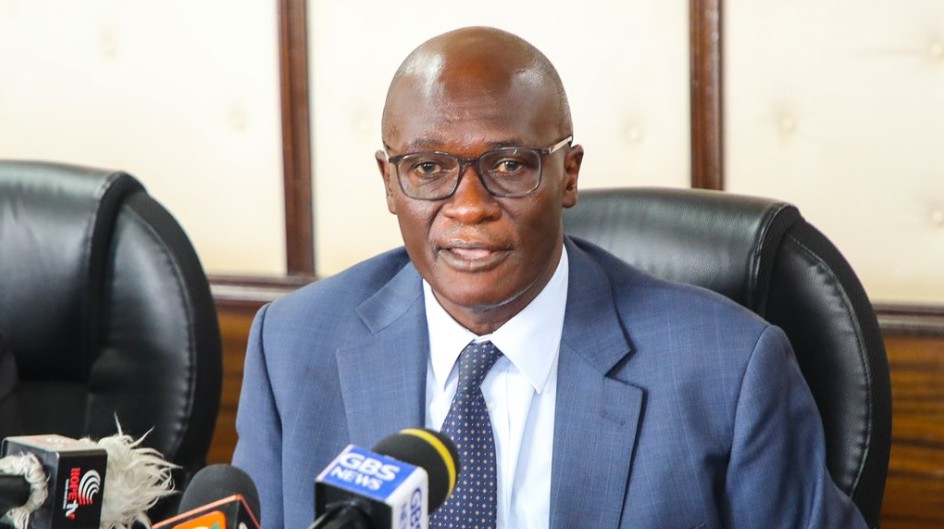
Director General for Health Dr. Patrick Amoth
Authorities insist community transmission risk remains low even as contact tracing intensifies across 130 identified exposures.
By Annet Njeri
Kenya’s confirmed Ebola infections rose to eight yesterday after a 49-year-old man tested positive for the Bundibugyo virus, one day after the Ministry of Health announced four new cases in a single bulletin.
Director General for Health Patrick Amoth disclosed the latest infection during a Sunday night television appearance, describing the patient’s condition and the pace of testing under way. “Today we tested 38 persons; one turned positive — not a direct health care worker, a 49-year-old gentleman who developed symptoms of fever, headache, and muscle pain, and his test came out positive,” Amoth said. The patient has since been isolated at a designated treatment facility.
The development marks a significant escalation from the three confirmed cases reported as recently as Friday. Saturday’s announcement alone added four infections — three health workers aged 29, 32 and 35 who had treated the index patient in hospital, and a close male relative of that patient, who died from the disease. The health workers had been in quarantine since 9 October, the relative since 6 October, meaning all four developed symptoms while already under monitoring — a fact the Ministry cited as evidence that its containment protocols were working.
The Ministry has not disclosed the latest patient’s exposure history or confirmed whether he was among the 130 contacts already identified and being monitored. That gap in information will concern epidemiologists, as an infection outside the established contact network would suggest the outbreak’s boundaries are less clearly defined than authorities have indicated.
Despite the rising tally, Amoth maintained that the threat to ordinary Kenyans remained contained. “The risk to the general public remains low as there is no evidence of community transmission of the disease,” he said in Saturday’s statement, a position the Ministry has held consistently since the outbreak was declared. As of Saturday, 128 of the 130 identified contacts had been traced and placed in quarantine; efforts to locate the remaining two were continuing.
The Ministry warned that additional cases could emerge among quarantined contacts before their 21-day monitoring periods expire, a standard feature of Ebola outbreak management that reflects the virus’s incubation window rather than a failure of containment.
Kenya’s index patient, whose death triggered the outbreak investigation, was linked to the Bundibugyo strain — one of several species of Ebola virus, distinct from the better-known Zaire strain responsible for the catastrophic West African outbreak of 2014 to 2016. Bundibugyo virus disease spreads exclusively through direct contact with the blood or bodily fluids of an infected or deceased person, not through airborne transmission. The Ministry has confirmed there are no restrictions on travel, trade or public gatherings.
Amoth’s closing message was unambiguous. “Early reporting saves lives,” he said. Members of the public experiencing fever, unusual fatigue, muscle or joint pain, sore throat, vomiting, diarrhoea or unexplained bleeding are urged to seek medical attention immediately and can contact the Ministry’s toll-free line on 719.
Eight cases in four days is a trajectory that demands vigilance — and transparency.
Similar Posts by The Mt Kenya Times:
- Mt Kenya Times ePAPER October 20, 2026
- Ruto rallies Kalenjin elders in Rift Valley unity push
- Sonko bid to nullify impeachment judgments fast-tracked in court
- Arrest the sponsors, not just the foot soldiers, Kalonzo tells police
- Police and politics shut down Kitale’s busiest market
About the Author