Nyoro’s ‘small wheelbarrow’ moment: How a presidential aide exposed Mount Kenya’s most controversial politician
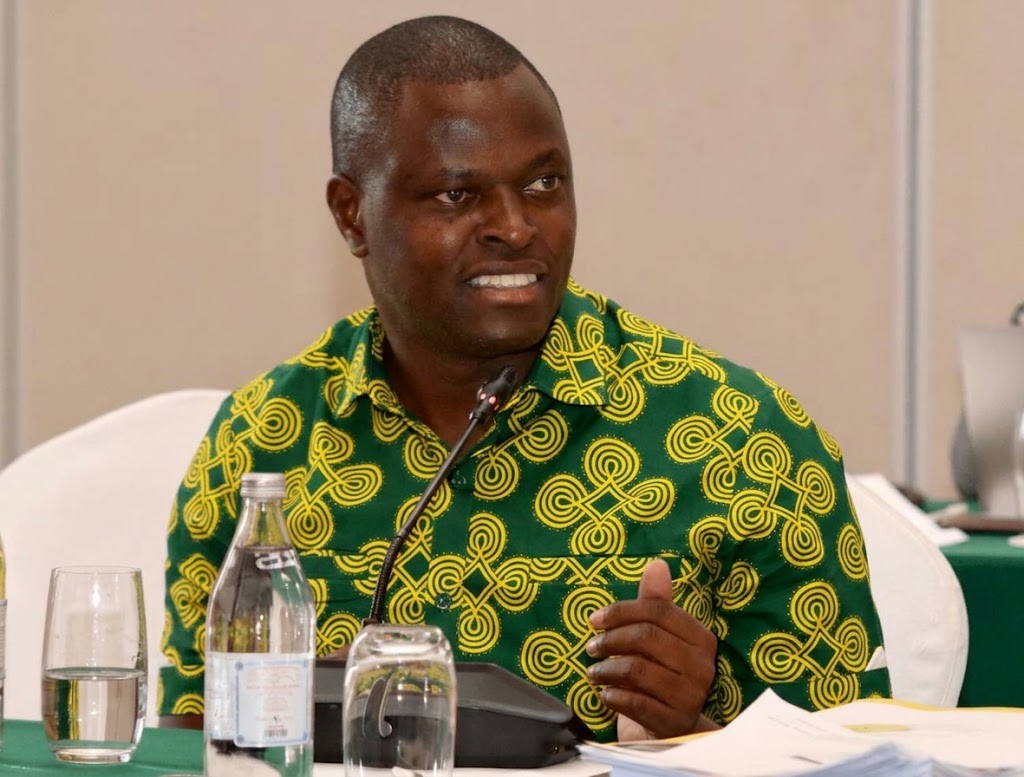
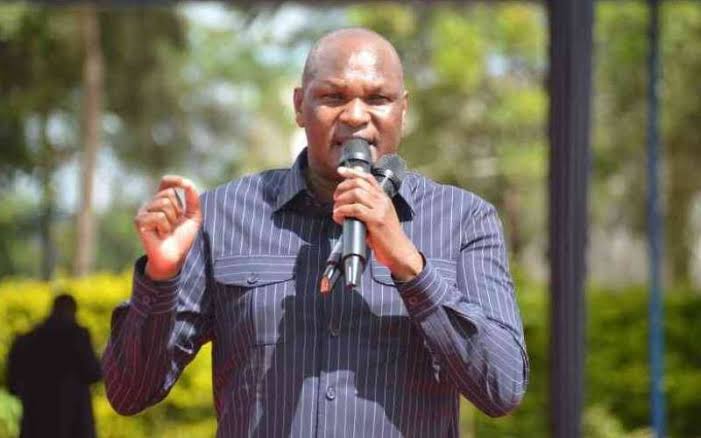
Kiharu Member of Parliament Ndindi Nyoro
Farouk Kibet’s public rebuke of Ndindi Nyoro has confirmed what opposition leaders suspected all along — and President Ruto’s Dangote intervention has made the political fallout considerably worse
By James Mwangi
Presidential aide Farouk Kibet publicly rebuked Kiharu Member of Parliament Ndindi Nyoro, effectively confirming that Nyoro had been operating as a government-sponsored political operative within the opposition ranks, and warning him that he had exceeded the boundaries of his assignment — a disclosure that President William Ruto compounded on Sunday with a pointed public statement on the very Dangote shares controversy that had triggered Nyoro’s fall from grace.
The sequence of events has stripped away whatever remained of Nyoro’s carefully cultivated image as a genuine opposition figure and laid bare the mechanics of what his critics had long described as a calculated strategy to fragment the Mount Kenya vote ahead of the August 2027 general election. In the space of two public statements from men at the heart of the ruling establishment, what months of opposition accusations had failed to establish was confirmed beyond reasonable dispute.
“Wewe Ndindi Nyoro, tunakujua. Wewe ni wheelbarrow ndogo. Hiyo wheelbarrow hatukukupatia uende ukaharibie serikali jina,” Kibet said — translated: “We know you, Ndindi Nyoro. You are a small wheelbarrow. That wheelbarrow we did not give you so that you go and damage the government’s name.”
The statement was remarkable not merely for its contemptuous tone but for what it revealed. Kibet was not denying that Nyoro had been given a political role. He was complaining that Nyoro had gone off-script. The specific offence was Nyoro’s public questioning of the allocation of shares in the Dangote refinery — a line of commentary that crossed from permitted political theatre into territory the government found genuinely embarrassing.
Ruto moved to close that embarrassment on Sunday with a characteristically combative explanation. “Shylocks and brokers wanted to buy shares at the Dangote Refinery for KSh5 so that they could sell them to Dangote himself at more than KSh9,” the President said. “But we outsmarted them, and that is why they are making noise everywhere.” The statement served a dual purpose — defending the government’s handling of the Dangote transaction while simultaneously framing all critics of that process, Nyoro included, as either speculators or their mouthpieces. It was a pointed message, and few who had followed the preceding days’ events could have missed its intended target.
Together, the two statements from Kibet and Ruto represent an extraordinary moment of political transparency, however unintentional. A sitting president and his closest aide had, within days of each other, publicly addressed the conduct of a man who had been loudly insisting he was an independent opposition figure. Neither statement treated him as one.
Nyoro had for months positioned himself within the Wantam brigade — a broad opposition coalition bringing together political leaders from across the country — while simultaneously maintaining evident links to the ruling establishment. Democracy for the Citizens Party Secretary General designate John Methu had been among the most vocal in naming the arrangement plainly. During a televised interview, Methu stated that Nyoro was a political project, a carefully placed operative whose purpose was to divide Mount Kenya’s substantial electoral bloc rather than provide it with coherent opposition leadership.
Nyoro had fought back with the indignation of a man either genuinely wronged or expertly briefed. He attacked Methu’s credibility, denied the mole tag forcefully and presented himself as a principled political figure unfairly targeted by those threatened by his growing influence. Without definitive proof, the accusation could be dismissed as the standard currency of Kenyan pre-election combat. Kibet and Ruto, between them, supplied that proof.
The political significance of this moment extends well beyond Nyoro’s personal fortunes. Mount Kenya remains the single largest electoral bloc in Kenya, and its political direction in 2027 will be decisive. President Ruto carried the region in 2022 through his alliance with then Deputy President Rigathi Gachagua, who delivered the mountain vote with precision that proved critical to their combined victory. That alliance has since collapsed spectacularly. Gachagua was impeached, replaced and has since launched the Democracy for the Citizens Party with undisguised presidential ambitions. The mountain is now genuinely contested territory, and both sides understand the stakes.
Into that contest, deploying figures capable of muddying the opposition waters makes obvious strategic sense. A fragmented Mount Kenya vote — split between Gachagua’s DCP, a government-aligned faction and various independent operators — is considerably less dangerous to Ruto’s 2027 prospects than a unified bloc marching behind a single opposition candidate. Nyoro, positioned within the opposition while remaining tethered to the establishment, was presumably intended to contribute to that fragmentation — attending the right meetings, making the right speeches, raising sufficient doubt about the opposition’s coherence to keep potential supporters uncertain.
That strategy has now been publicly compromised by the very people tasked with managing it. Kibet’s frustration appears genuine, which raises its own questions about the discipline and coordination of the government’s Mount Kenya political operation as 2027 draws closer. An operative whose cover is blown by his own handler is of severely limited further use. Whether Nyoro can recover enough credibility to remain politically relevant in the region is, at this point, doubtful.
What is beyond doubt is that the Mount Kenya electorate is watching, and watching with increasing sophistication. The region’s voters have demonstrated in successive elections a capacity for collective political decision-making of considerable power. They are also, as this week’s disclosures inadvertently demonstrated, the subject of elaborate and sustained political engineering by those who fear what a united mountain vote could achieve.
Methu, whose television accusation Nyoro so forcefully rejected, will be entitled to considerable satisfaction. He called it early, he called it accurately, and the confirmation came not from an opposition researcher but from the inner circle of State House itself.
In Kenyan politics, the truth has a habit of emerging eventually. This week, it arrived courtesy of a presidential aide with a memorable turn of phrase, a president defending a share deal, and a wheelbarrow that rolled too far from its prescribed path.
The mountain is watching. In 2027, it will remember.
Similar Posts by The Mt Kenya Times:
- Mt Kenya Times ePAPER October 26, 2026
- Sakaja challenges Kamukunji police over Eastleigh suspect bail
- Muturi demands binding livestreaming rules for 2027 polls to prevent repeat of 2022 chaos
- NTSA calls for road safety to be declared a national disaster after 24 die in Mtito Andei crash
- Ruku turns on Waiguru over deputy president ambitions: ‘That seat is not being contested for’
About the Author