Ruto courts Ukambani with roads and a KSh70B clinker plant as 2027 political contest heats up
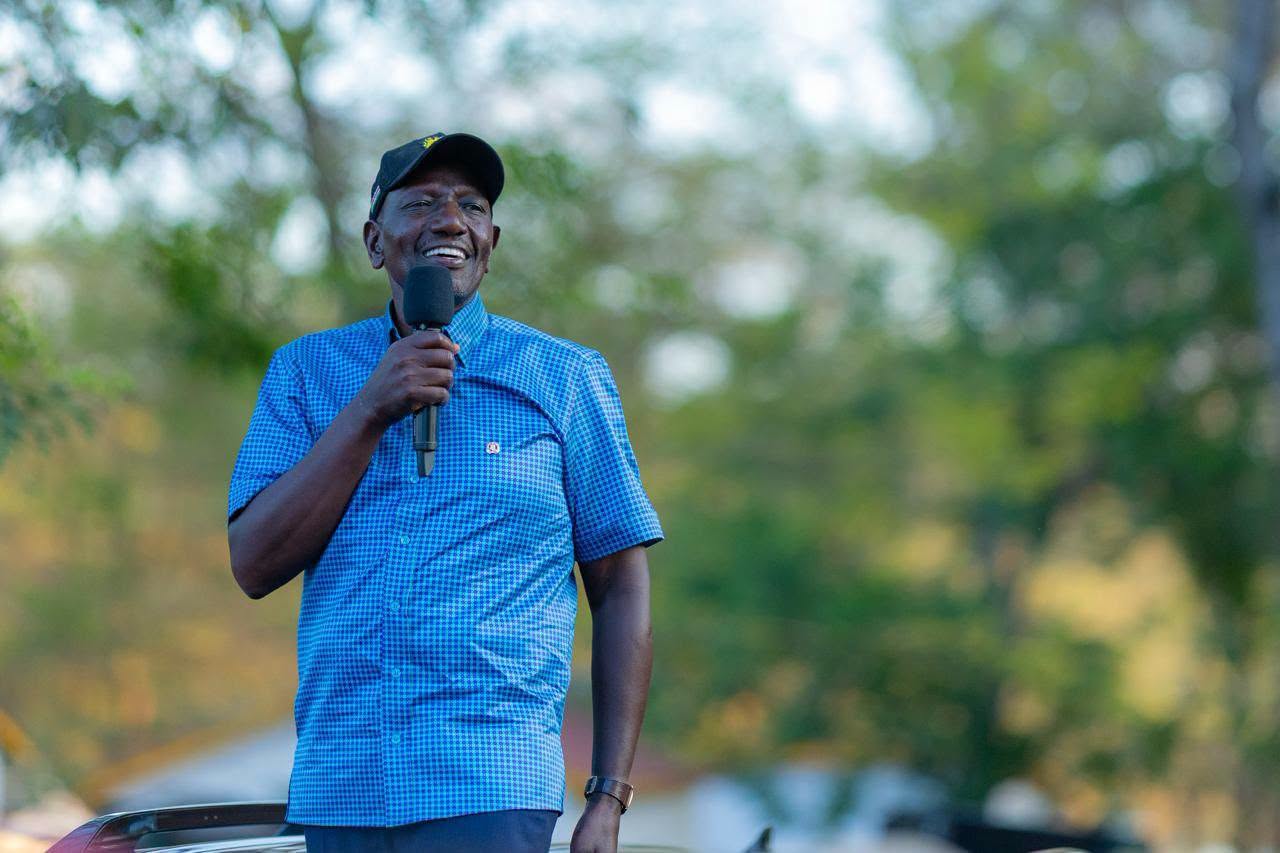
President William Ruto
The President’s development offensive in Kalonzo’s backyard carries unmistakable electoral calculation as opposition talks gather momentum
By Grace Wanja
President William Ruto over weekend toured Ukambani, announcing a series of road construction projects across Kitui and neighbouring counties and pledging to launch a KSh70 billion clinker manufacturing plant in the region, in a development offensive that carries as much political weight as economic ambition.
Speaking during a church service in Mwingi, Ruto outlined an infrastructure programme that his administration says will transform connectivity, industrialise the region’s natural resources and create thousands of jobs for young people. The visit, however, arrives at a moment of acute political significance — the day before Wiper Democratic Movement leader Kalonzo Musyoka is scheduled to hold presidential ticket talks with Democracy for the Citizens Party leader Rigathi Gachagua, a meeting that could reshape the opposition’s challenge to Ruto’s re-election bid in August 2027.
The timing is difficult to read as coincidental. Ukambani is Kalonzo’s political heartland, and any serious contest for the presidency must reckon with the region’s loyalties. By arriving with roads, jobs and a major industrial investment, Ruto is making a direct argument to Ukambani voters: that tangible delivery, not political alliance-building, is the measure by which leadership should be judged.
“I am coming to launch a major clinker company in this area,” Ruto told the congregation in Mwingi. “God has blessed us with various resources. Now we are here in a place where we can get a clinker plant.” The announcement was greeted with considerable enthusiasm, and understandably so. The plant, which already supports more than 3,000 workers during its construction phase, is projected to create approximately 4,000 additional jobs for young people once fully operational — a figure that resonates powerfully in a region where youth unemployment remains a persistent and painful reality.
On roads, the President was specific. Construction has already begun on the Vonza-Kiusyani road, which will eventually extend to Chandula. A separate road linking Kandwia, Kyuso and Tseikuru towards Usueni is scheduled to begin shortly. In Kibwezi East, Makueni, Ruto announced plans to commence work on the Machinery Road, responding to direct requests from local residents for improved connectivity. He framed these projects as part of a broader national strategy to open up rural areas, link communities to markets and create the economic conditions in which investment can thrive.
Beyond Ukambani, Ruto referenced a wider portfolio of industrial investments to reinforce the narrative of a presidency delivering equitably across the country. He pointed to a factory in West Pokot where 2,500 young people have secured employment, projects under construction in Taita Taveta and a refinery in Lamu as evidence that his administration’s development agenda extends from coast to border. “We must keep petty politics out of our investors and our investment opportunities as a nation,” he said, in remarks that served simultaneously as a policy statement and a pointed message to opposition figures he accuses of prioritising political positioning over national progress.
The Mui Basin, one of the region’s most significant untapped economic assets, also featured in the President’s announcements. Ruto said his government is actively exploring investment opportunities in the basin, where another major industrial project is expected to be developed in partnership with local leaders and communities. The basin, known for its substantial coal deposits, has long been identified as a potential driver of industrial development in Kitui County, and any credible plan to activate it would represent a meaningful economic intervention for the region.
The political subtext of Sunday’s tour, however, is impossible to ignore. Kenya is now less than ten months from a general election that analysts describe as the most consequential in a generation. Ruto faces a re-election environment defined by public anxiety over the cost of living, frustration with the pace of economic delivery and a growing opposition coalition that, if it achieves the unity its constituent parts have been discussing, could present the most formidable electoral challenge the incumbent has faced.
Ukambani sits at the centre of that political calculation. Kalonzo has three times run for the presidency and three times fallen short, in part because he has never commanded the kind of cross-regional coalition that wins Kenyan elections outright. His talks with Gachagua, whose Democracy for the Citizens Party commands both Mount Kenya and significant influence in Maasailand, represent precisely the kind of alliance-building that could change that equation. Together, a Kalonzo-Gachagua arrangement would link Ukambani, Mount Kenya and Maasailand into a coalition of formidable electoral weight.
Ruto’s visit to Mwingi, laden with announcements and the promise of imminent ground-breaking ceremonies, is his most direct response yet to that threat. The message is clear: whatever the opposition is offering in meeting rooms in Nairobi, his administration is offering it in tarmac and factory jobs on the ground in Kitui.
Water and Sanitation Cabinet Secretary Alice Wahome made the same argument for Mount Kenya earlier this week, insisting that the region had received its fair share from the Ruto administration and had no reason to shift political allegiance. The President’s Ukambani tour suggests the government is now extending that message eastward, seeking to demonstrate relevance and delivery in territory that opposition figures are actively trying to consolidate.
Whether the strategy succeeds will depend on how Ukambani voters weigh the two competing propositions on offer. On one side, a sitting president bearing construction contracts and industrial investment. On the other, a political alliance promising regional dignity, electoral leverage and the tantalising possibility that one of their own could finally reach State House.
In Kenyan politics, development announcements and political alliances have both, at different times, proved decisive. In August 2027, Ukambani may determine which one matters more.
Similar Posts by The Mt Kenya Times:
- Mt Kenya Times ePAPER October 26, 2026
- Sakaja challenges Kamukunji police over Eastleigh suspect bail
- Muturi demands binding livestreaming rules for 2027 polls to prevent repeat of 2022 chaos
- NTSA calls for road safety to be declared a national disaster after 24 die in Mtito Andei crash
- Ruku turns on Waiguru over deputy president ambitions: ‘That seat is not being contested for’
About the Author