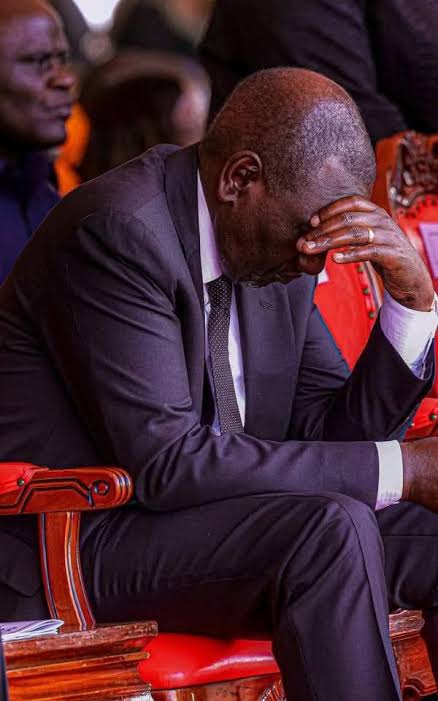
Ruto’s Cabinet is now unconstitutional, lawyers warn, as gender rule deadline passes
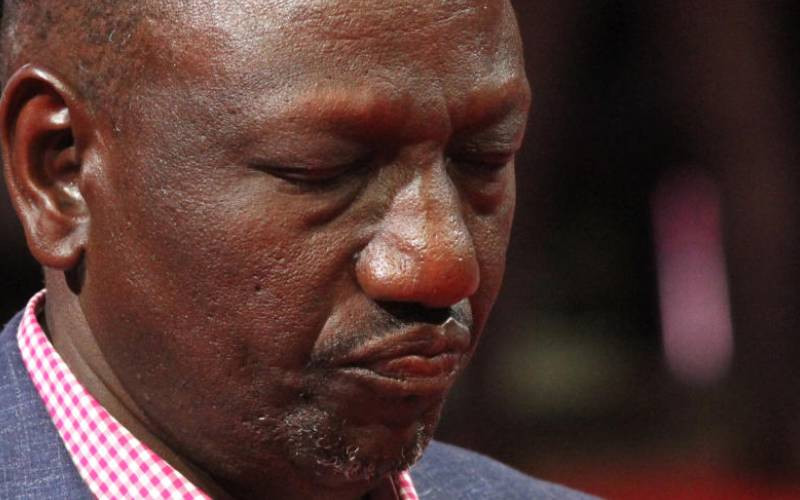
President William Ruto
The president faces contempt of court risk and a legally compromised executive after failing to meet a court-ordered 120-day deadline to add women to his Cabinet
By David Kimani
President William Ruto is governing with a Cabinet that legal experts say is unconstitutional, after he failed to meet a court-ordered deadline to comply with Kenya’s two-thirds gender rule, exposing every Cabinet decision taken henceforth to legal challenge.
The 120-day window granted by the High Court in July, within which Ruto was required to reconstitute his 25-member Cabinet to include at least two additional women, expired on Tuesday. The court had found that women held only seven of the 25 Cabinet positions — 28 per cent — falling short of the constitutional minimum of 33.3 per cent. With the deadline gone and no reconstitution announced, Kenya now has a Cabinet that practising lawyers describe as illegal, its decisions potentially void and its continued operation a standing breach of the constitution that Ruto swore to uphold.
The implications are serious, immediate and, for an administration already navigating turbulent political waters ahead of the August 2027 general election, potentially devastating. Law Society of Kenya president Charles Kanjama was unambiguous in his assessment. “It means any Cabinet decision or action is liable to be declared null and void and of no legal effect,” Kanjama told media. His predecessor as LSK president, Eric Theuri, went further. “It is not a Cabinet recognised by law,” Theuri said. “If it operates as such, they would be operating under a constitutional breach. Everything it does between now and the 2027 general election is subject to legal challenge, and any payment made to Cabinet Secretaries is liable to challenge.”
Those are not theoretical warnings. They describe a practical legal vulnerability that opposition figures, civil society organisations and any aggrieved party with standing could exploit at any moment, in any court, against any decision the Cabinet takes. Procurement approvals, policy directives, budget allocations, regulatory determinations — all of it now sits beneath a cloud of potential nullification. For a government attempting to demonstrate economic competence and institutional stability in the final stretch before an election, the timing could hardly be worse.
The case was brought by the Katiba Institute alongside other petitioners, who argued that the executive bore a clear constitutional obligation to honour the gender principle when nominating Cabinet members. That principle, enshrined in Article 27 of the constitution and given operational force across multiple provisions, has been a persistent source of tension between Kenya’s political class and its constitutional commitments since the 2010 constitution came into force. Successive administrations have acknowledged the rule, cited logistical and political constraints, and ultimately failed to meet it. Ruto’s administration has now distinguished itself by being found in breach by a court and then failing to act even after a formal deadline was set.
The question of accountability is complicated by the constitutional protection that shields a sitting president from civil proceedings. The Supreme Court’s March 2022 ruling in the Building Bridges Initiative judgment confirmed that a sitting president cannot be sued during their tenure under Article 143(2). This means that while Ruto bears political and moral responsibility for the non-compliance, the legal machinery must move against the Attorney General rather than the president directly. Katiba Institute counsel Joshua Nyawa explained the mechanics clearly. “Even if he is in contempt of court, the only person who can be sued is the Attorney General,” Nyawa said. “The effect is to put the President liable for contempt of court.” It is a constitutional architecture that protects the individual while exposing the institution — and it places the Attorney General in an increasingly uncomfortable position as pressure mounts for action.
Ruto does retain one avenue of recourse. He could return to court to seek an extension of the deadline, acknowledging the lapse and asking for additional time to effect the required changes. But legal observers are sceptical that such an application would succeed, and for good reason. Theuri noted the fundamental difficulty: “He can go to court but will have a very hard time convincing the court on why he did not appeal in the provided time.” A court that set a 120-day deadline, watched it pass without compliance and then received an application for more time would need compelling reasons — not merely political inconvenience — to grant the extension. None have been publicly offered.
The political context gives the legal crisis additional texture. This would not be the first time Ruto has been compelled to overhaul his Cabinet under pressure. On 11 July 2024, following the deadly Gen Z protests against the Finance Bill that proposed a raft of deeply unpopular tax measures, he dismissed his entire Cabinet — a move widely described as unprecedented in Kenya’s post-independence history. He retained only Prime Cabinet Secretary Musalia Mudavadi before assembling a new team, incorporating opposition figures and reassigning others in a sweeping reshuffle that reflected the political damage the protests had inflicted. A second significant Cabinet change, forced this time not by street pressure but by judicial authority, would raise uncomfortable questions about the administration’s capacity to get even its basic constitutional obligations right.
For the broader Kenyan public, the episode lands against a backdrop of accumulated frustration. The cost of living remains high. Youth unemployment has not meaningfully improved. The economic promises of the Kenya Kwanza manifesto have not materialised at the pace or scale that was suggested during the 2022 campaign. And now the government’s most powerful decision-making body stands legally compromised — its authority to act, spend and govern subject to challenge by anyone with the inclination and the legal standing to file a petition.
The gender rule is not a bureaucratic technicality. It is a constitutional commitment to equal representation that Kenyans voted for in 2010 and have been waiting to see honoured for sixteen years. The High Court gave the president 120 days to take what amounts to a modest corrective step. He did not take it.
The courts, and ultimately the voters, will decide what that failure costs him.
Similar Posts by The Mt Kenya Times:
- Mt Kenya Times ePAPER October 30, 2026
- Ruto courts Russian investment in Moscow as Kenya seeks KSh5.2 trillion infrastructure push
- Court voids Ruto’s housing promises to teachers and police, ruling presidential pronouncements have no force of law
- Sifuna’s rise: How a senator from Nairobi became Kenya’s most watched politician ahead of 2027
- Gachagua’s Kajiado tour reshapes the road to 2027
About the Author