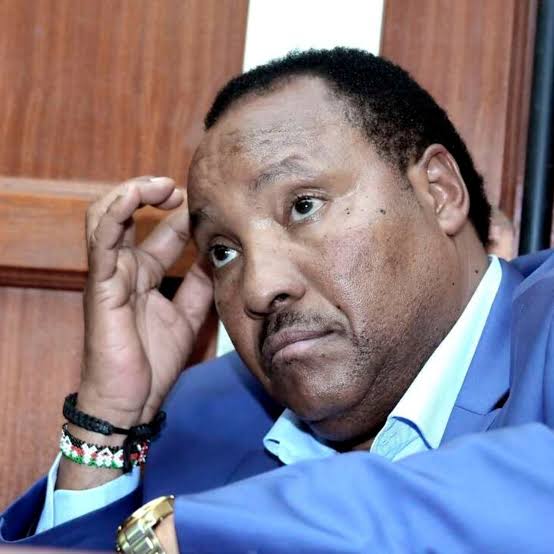
Former Kiambu Governor Ferdinand Waititu.
Former Kiambu governor faces November 2 reckoning after High Court overturned his acquittal — and Kenya’s political class is watching closely
By James Mwangi
Former Kiambu Governor Ferdinand Waititu yesterday appeared before an anti-corruption court to plead for leniency ahead of his sentencing on November 2, 2026, after being convicted alongside his wife and two others in a Sh588 million money laundering and corruption case that has followed him through Kenya’s courts for years.
Speaking through his lawyer during mitigation proceedings before Chief Magistrate Harrison Barasa at the anti-corruption magistrate’s court, Waititu offered a personal apology and appealed to the court to treat him as a first offender. “I apologise for whatever wrong I did. I am a first offender together with my wife, so when sentencing, please consider that,” he said.
The plea marked a significant moment in one of Kenya’s most closely watched corruption prosecutions. Waititu, who served as Kiambu governor before being removed from office in January 2020 following impeachment over separate graft allegations, had initially been acquitted in the Sh588 million tender case before the High Court overturned that decision, found him guilty of corruption offences and remitted the matter to the magistrate’s court for mitigation and sentencing.
His defence team mounted a carefully structured argument for leniency, urging the court to weigh the purpose of punishment alongside the specific circumstances of the case. Counsel pointed to an audit report produced by the State during trial, arguing it demonstrated that no public funds were ultimately lost in the transactions at the heart of the prosecution. “What has instead been faulted is the process leading to the award of the tender,” the defence submitted — a distinction it presented as material to the appropriate level of punishment.
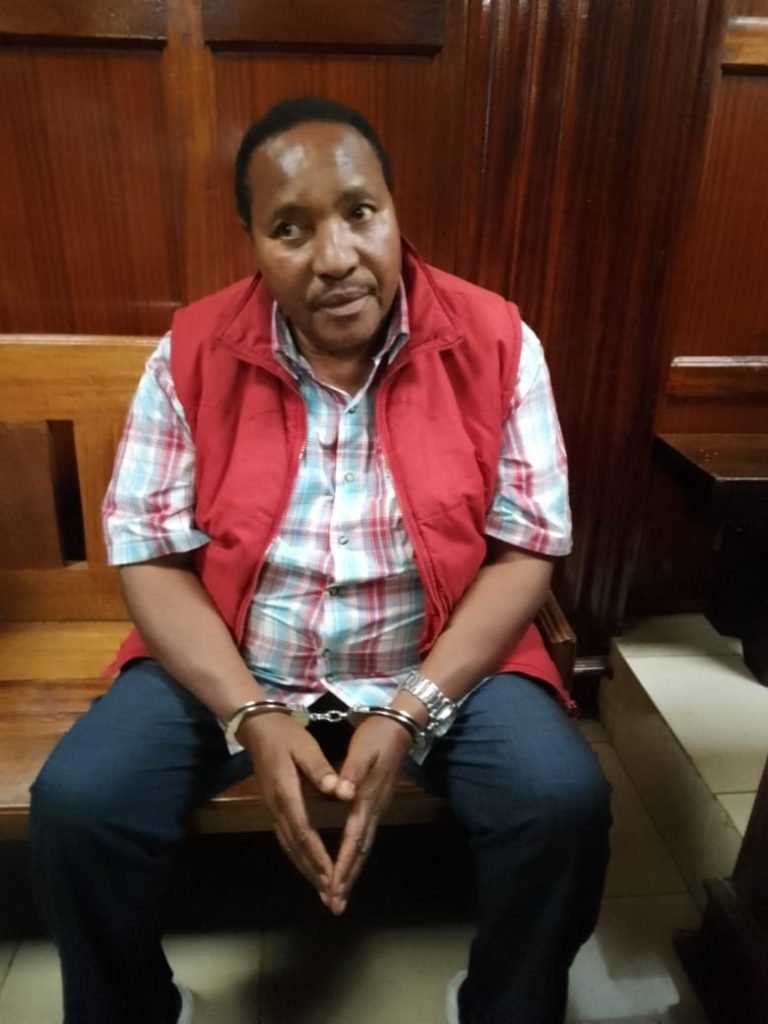
The defence also highlighted the substantial financial penalties Waititu and his co-accused had already faced during proceedings, arguing that rehabilitation rather than further punitive measures should guide the court’s approach. It drew attention to the contradictory findings reached at different stages of the case, noting that the accused had been acquitted at one level before being found guilty at another — a sequence it argued created genuine legal uncertainty about ultimate culpability.
Counsel confirmed that an appeal had already been filed at the Court of Appeal. “Going by the history of the case, where one court finds the accused innocent and the other guilty, there is every possibility that the Court of Appeal might arrive at a different opinion, which could be on the innocence of the accused persons,” the defence submitted. The argument was pointed: sentencing a man whose conviction remains subject to further appellate review should, his team contended, attract proportionate rather than maximum punishment.
The other convicts in the case — Testimony Enterprises director Charles Mbuthia and his wife Beth Wangeci — also made mitigation submissions, each seeking consideration of personal circumstances before Barasa determines their sentences. The court heard all submissions before adjourning to allow the magistrate time to assess the arguments presented.
The Sh588 million case originated from a tender awarded during Waititu’s tenure as governor, with prosecutors successfully arguing at the High Court that the procurement process was tainted by corruption. The High Court’s decision to overturn the earlier acquittal was itself a significant development, reflecting the judiciary’s willingness to scrutinise lower court decisions in high-profile graft cases — a signal that Kenya’s anti-corruption architecture retains prosecutorial and judicial teeth even when politically connected figures are in the dock.
The timing of the sentencing carries weight well beyond the individuals directly involved. With Kenya heading towards a general election in August 2027, the political environment around accountability and governance is intensifying. Waititu remains a recognisable figure in Central Kenya politics, and the outcome of his sentencing will be read by observers as an indicator of how seriously the courts intend to treat corruption convictions against former senior officials.
The period leading to next year’s election is already being shaped by questions of who is eligible to stand, who carries legal liability from past conduct and whether convictions will hold through the appellate process in time to affect the ballot. Kenya’s courts are, by necessity, becoming an arena in which political futures are decided alongside criminal ones. Waititu’s case sits squarely at that intersection.
For prosecutors, a custodial sentence would represent the culmination of a long and legally complicated process. The case survived an acquittal, a High Court reversal and sustained appellate argument — a journey that tested the resilience of Kenya’s anti-corruption institutions and, ultimately, found them capable of holding a former governor to account. The Director of Public Prosecutions will be watching November 2 as a test of whether convictions secured at considerable institutional cost are followed by sentences that carry genuine deterrent weight.
For Waititu himself, the courtroom on November 2 will deliver the most consequential verdict of his public life. His plea for mercy — framed around first-offender status, expressed remorse and the possibility of appellate vindication — is a final attempt to influence an outcome that will define how his political legacy is remembered.
Chief Magistrate Barasa will deliver sentences for all convicted parties on November 2, 2026.
Similar Posts by The Mt Kenya Times:
- Mt Kenya Times ePAPER October 29, 2026
- Ruto courts Moscow as Africa’s big powers rewrite the rules of engagement
- The running-mate puzzle: Who blinks first?
- Jubilee’s coalition gambit: The opposition clock is ticking towards 2027
- From Moscow with ambition: Ruto bets on Russia to rewrite Kenya’s economic story before 2027
About the Author