Roads and electricity bring inclusive growth to Masinga as Ruto launches Ukambani development drive
 The Mt Kenya Times
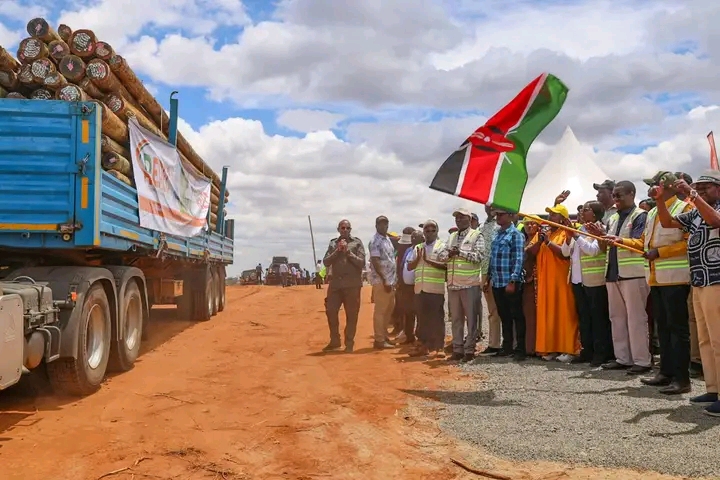
President William Ruto Flags-off of Last Mile Connectivity Programme materials at Kithoko Village

A 33km road and KSh29.89M electricity project signal a deliberate push to connect rural Machakos communities to markets, services and economic opportunity
By James Kilonzo Bwire
The launch of the 33.13-kilometre Kagonde–Masinga–Kithyoko Road and the flag-off of Last Mile Connectivity Programme materials at Kithoko Village in Masinga Constituency, Machakos County, marked more than the start of two infrastructure projects yesterday. They represented a concrete commitment to bring essential services to communities that have long sat at the margins of national development.
President William Ruto presided over both launches during a development tour of Ukambani, which has prioritised roads, electricity, water supply and other public investments across Machakos, Makueni and Kitui counties. The message from Kithoko Village was direct: development must reach the village level, where people live, farm, trade and raise their children.
Roads are among the most consequential investments a government can make in a rural community. They determine whether farmers can move produce to market in good condition, whether traders can reach customers affordably and whether residents can access schools, health facilities and employment opportunities without excessive cost or delay. In Masinga, where agriculture and small-scale trade remain central to household incomes, poor road infrastructure has long suppressed productivity and limited economic participation.
The Kagonde–Masinga–Kithyoko Road addresses that constraint directly. Beyond easing daily movement, it opens the area to wider markets, reduces transport costs for farm inputs and harvested produce, and makes it easier for service providers and skilled workers to operate in communities previously difficult to reach. It will also strengthen emergency response, allowing ambulances and security services to reach residents more quickly. A 33-kilometre road of this nature has the potential to influence farming, trade, education, healthcare and public safety simultaneously.
Electricity, however, is what converts physical access into productive capacity. The Last Mile Connectivity Programme materials flagged off at Kithoko Village will be implemented by the Rural Electrification and Renewable Energy Corporation and are valued at KSh29.89M, targeting 200 households in Masaku and Gembeni villages. The figure may appear modest against larger national programmes, but its household-level impact will be immediate and tangible.
A connected home benefits through better lighting, food preservation, support for children’s studies and reduced dependence on costly energy alternatives. Electricity also creates the conditions for small businesses to grow — welding workshops, salons, milling services, cold storage, mobile phone charging points and a range of other income-generating activities all depend on reliable power. Beyond individual households, schools can operate more effectively, health facilities can preserve vaccines and provide safer services, and traders can extend their working hours.
The projects in Masinga sit within a significantly larger programme. The cumulative investment in the Kenya Power and REREC electrification programme across Machakos County stands at approximately KSh5.54B, targeting 52,862 households. This is a major commitment to rural electrification, one that reflects a serious policy position: that access to electricity is a foundation for inclusive growth, not a secondary concern.
REREC’s mandate, established under the Energy Act 2019, extends beyond connecting households to the grid. The corporation is also responsible for promoting renewable energy technologies including solar, wind, small hydropower and biogas. As rural electrification expands, it carries with it an opportunity to encourage efficient energy use, support clean cooking alternatives and reduce reliance on traditional biomass — contributing to the country’s broader climate and energy agenda.
Roads and electricity are complementary rather than competing investments. A farmer benefits from the road to reach the market, but electricity enables that farmer to add value to produce, operate equipment and store goods for longer. A trader gains from better transport links, but power allows longer operating hours and the use of refrigeration or machinery. A school becomes more accessible through better roads, but electricity improves learning conditions through lighting and digital tools. A health facility becomes easier to reach, but power makes it safer and more effective. The simultaneous launch of both projects in Masinga recognises this relationship and responds to it.
The equity dimension of these investments is equally significant. Rural communities have long carried a disproportionate burden of poor infrastructure. High transport costs, limited electricity access and weak connectivity have restricted economic participation and deepened regional inequality for decades. The Kagonde–Masinga–Kithyoko Road and the Last Mile Connectivity Programme seek to correct that imbalance, bringing public infrastructure to where it can make the greatest difference to ordinary households.
The success of both projects will depend on timely implementation, quality workmanship and sustained maintenance. A road must be completed to a standard that withstands weather and regular use. Electricity connections must be delivered safely and affordably. Community members must be informed about connection requirements and supported through the process. County governments, Members of Parliament, local administrators and community organisations all have a role to play well beyond the launch ceremonies — in protecting road infrastructure, supporting network safety and encouraging productive use of electricity through business development and improved farm operations.
Development becomes credible when it improves everyday experiences. A household that receives electricity will feel it directly. A trader who moves goods more easily will value the road. A student who studies under reliable light will benefit from the energy connection. A farmer who reaches the market without excessive delay will gain from the infrastructure investment. The launches in Masinga Constituency are a practical demonstration of a development philosophy centred on delivery, access and shared progress — one measured not in policy documents alone, but in the ability of communities to move freely, access power, build enterprises and improve their lives.
Similar Posts by The Mt Kenya Times:
- Attracting a tourist or bringing them back? A tourism geography perspective
- Absa Bank Kenya backs green finance push as businesses seek sustainable growth
- A citizens’ charter is a promise that must be lived every day
- Kenya tea bonuses fall despite rising auction prices: The real reasons behind the shortfall
- KICD approval is not a guarantee of sales: Publishers must get serious about marketing
About the Author