KICD approval is not a guarantee of sales: Publishers must get serious about marketing
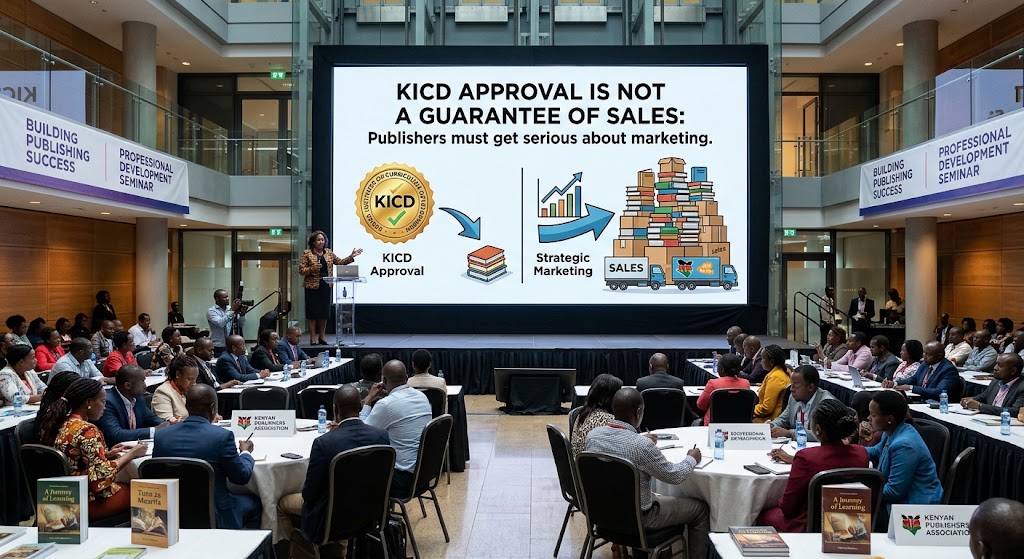
Thousands of Kenyan publishers celebrate KICD approval as though the battle is won — but without serious marketing, that certificate is worth very little.
By Ashford Kimani
Every so often, a publisher posts a cover photo on social media, announces that their book has received KICD approval, and waits for the orders to pour in. The celebrations are genuine and the pride is understandable. Getting a book through the Kenya Institute of Curriculum Development’s vetting process requires effort, patience, and investment. But here is the uncomfortable truth that too few publishers are willing to hear: approval is not a sales strategy. It never has been.
A year after the celebrations, the same publishers are asking why their books are not moving. Why teachers are not listing them. Why competitors with fewer approved titles are outselling them by a wide margin. The answer, almost invariably, is marketing — or rather, the lack of it.
KICD carries a clear and important legal mandate: to vet and approve curriculum materials and ensure they meet the required standards. That process is a quality-control mechanism, not a commercial guarantee. Once a book earns the KICD seal, the institute’s role effectively ends. The responsibility for getting that book into classrooms falls entirely on the publisher. Approval opens the door. Marketing is what gets you through it.
Consider KFC. It is one of the most recognisable brands on the planet, with decades of market presence and a loyal global customer base. Yet the company continues to invest heavily in sophisticated, world-class marketing campaigns. If a brand of that stature must keep reminding customers why they should choose its products, what makes a publisher think that a KICD approval stamp is sufficient to secure a place on a teacher’s booklist? The logic simply does not hold.
Publishers who sit back after approval, expecting teachers to seek out their books, are making a costly assumption. Expecting automatic selection merely because a book has been approved is like smiling at someone in a completely dark room. You may be smiling all you want, but nobody can see you. In the competitive publishing industry, approval establishes eligibility. Marketing drives visibility, preference, and ultimately sales.
The existence of numerous approved titles across the same subjects and grade levels means that teachers must make choices. They will base those choices on professional judgement, the quality of content, the relevance of exercises, the clarity of explanations, and the practical value each publication offers to their learners. Publishers who actively engage with teachers, demonstrate the strengths of their materials, and invest in understanding what educators genuinely need will consistently outperform those who do not. This is not speculation — it is observable in the market every single year.
Some publishers do understand this. Spotlight has distinguished itself by consistently exceeding expectations in teacher engagement. Oxford University Press and Moran Publishers invest in regular contact with educators, explaining the unique strengths of their titles and gathering feedback that informs future editions. These are not coincidental successes. They reflect deliberate, sustained marketing strategies built on relationships and educational value.
The publishers who are struggling should ask themselves some searching questions. Are they investing enough in understanding what teachers need? Are their field representatives trained to demonstrate how their materials support curriculum implementation? Are they collecting feedback and using it meaningfully? Are they present in the conversations that matter to educators? A publisher who cannot answer these questions confidently should not be surprised when a competitor with a sharper marketing approach secures the larger share of the market.
It is equally important to draw a firm distinction between professional marketing and manipulation. The goal of marketing curriculum materials must be to provide accurate information, demonstrate clear educational value, and help teachers make genuinely informed decisions. It should never involve inappropriate incentives, undue pressure, or the cultivation of relationships designed to bypass professional judgement. Teachers, for their part, must remain anchored to one criterion above all others: what is best for learners.
The shift to competency-based education has added further urgency to this conversation. Teachers today need materials that go well beyond presenting information and rote exercises. They need resources that support practical activities, critical thinking, creativity, collaboration, and the development of the competencies the curriculum prescribes. Publishers who truly understand these demands — and demonstrate clearly how their products address them — carry a far more compelling proposition into every school visit.
Marketing must not stop when a book is purchased, either. Publishers need reliable distribution networks, prompt responses to complaints, timely correction of errors in subsequent editions, and honest communication about pricing and availability. A publisher’s reputation can be seriously damaged by a single instance of promising delivery and failing to meet it when schools are urgently preparing for a new term.
There is also a strong case for embracing digital channels. Professional websites, teacher forums, educational webinars, and online product demonstrations can extend a publisher’s reach significantly, particularly in areas where physical access is costly or difficult. These tools complement traditional field representation rather than replacing it, and they signal to educators that a publisher is serious, accessible, and invested in their success.
The message is clear and it bears repeating: KICD approval gives a publisher permission to compete. It does not confer an entitlement to win. The publishers who recognise this distinction will invest in their products, listen to teachers, strengthen their distribution, and market their publications with the same professionalism they bring to the writing and editing process. Those who do not will continue watching competitors dominate a market they believe their approval certificates should have secured for them long ago. The certificate is the beginning of the work, not the end of it.
Similar Posts by The Mt Kenya Times:
- Kenya’s 2027 election: Will political alliances and the fight over transparency decide who wins State House?
- 10 media personalities who never studied journalism
- Yvonne Okwara begins a new chapter at Shuga Global
- No ODM, no State House: Kaluma warns Ruto on 2027 coalition terms
- Raila Odinga Stadium: A political arena in Kenya’s defining election season
About the Author