Court voids Ruto’s housing promises to teachers and police, ruling presidential pronouncements have no force of law

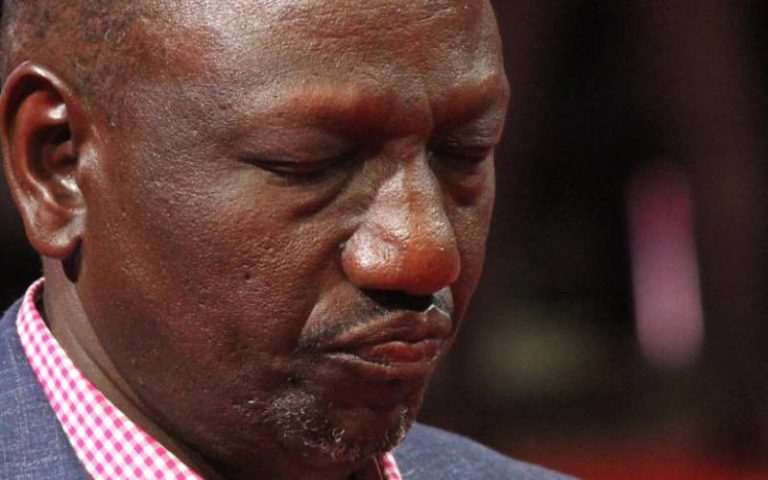
President William Ruto
A High Court judgment strips away two of the president’s most publicly repeated affordable housing pledges, exposing a pattern of executive overreach that lawyers say undermines Kenya’s constitutional order
By Joakim Mutuku
The High Court ruled on Thursday that President William Ruto’s promises to reserve affordable housing units for teachers and police officers are legally void, finding that presidential pronouncements cannot alter allocation criteria established by statute without a basis in law or policy.
Lady Justice Patricia Nyaudi delivered the judgment, declaring that remarks made by Ruto on 3 June and 13 September 2025 — in which he announced that teachers and members of the National Police Service would each receive preferential access to a proportion of affordable housing units — carried no legal weight and could not lawfully override or supplement the criteria set out in the Affordable Housing Act and its accompanying regulations. The ruling is precise in its language and unsparing in its implications. “A declaration be and is hereby issued,” Justice Nyaudi stated, “that the pronouncements made by the President on 3rd June 2025 and 13th September 2025, absent a statutory or policy basis, are of no legal effect and cannot lawfully alter or supplement the criteria for allocation of housing units established under the Affordable Housing Act and its Regulations.”
The case was brought by petitioners John Maina Ndegwa and Marshalls Tito Ongoya, who challenged the constitutionality of proposals that would have reserved 20 per cent of affordable housing units for teachers and a further 20 per cent for police officers — effectively directing 40 per cent of a publicly funded national programme towards two specific professional groups on the basis of nothing more than a presidential speech. Their lawyer, John Maina, welcomed the outcome with characteristic directness. “The court found that that proposal is null and void; it is not supported by any existing law,” Maina said outside court. “All Kenyans are entitled to the affordable houses.”
That last point — all Kenyans — cuts to the heart of what the ruling represents. Kenya’s affordable housing programme, the centrepiece of Ruto’s Bottom-Up Economic Transformation Agenda and arguably the initiative most closely associated with his personal brand of governance, was designed as a universal intervention to address a housing deficit that affects millions of ordinary citizens across income brackets. The statutory framework that underpins it establishes allocation criteria intended to reflect broad public need. When the president stood before audiences of teachers and police officers and promised them dedicated portions of that programme, he was not announcing a policy — he was making a political gesture, and the court has now said so in the clearest possible terms.
The constitutional significance of the ruling extends well beyond affordable housing. Kenya’s 2010 constitution was designed precisely to prevent the concentration of executive authority that characterised earlier eras of Kenyan governance — eras in which presidential pronouncements routinely functioned as law, in which what the president said in a speech became, in effect, public policy, regardless of what Parliament had enacted or what regulatory frameworks required. Justice Nyaudi’s judgment is a reminder that those days are constitutionally foreclosed. The president retains enormous executive authority, but that authority operates within a legal framework, not above it. A promise made at a public rally, however sincerely intended, cannot rewrite a statute.
Legal observers have noted that the ruling arrives at a particularly sensitive moment for an administration whose relationship with the judiciary has grown increasingly strained. Ruto is already facing separate legal pressure following his failure to meet the High Court’s 120-day deadline to reconstitute his Cabinet in compliance with the constitutional two-thirds gender rule — a deadline that expired on Tuesday, prompting Law Society of Kenya president Charles Kanjama to warn that Cabinet decisions are now “liable to be declared null and void.” Two significant judicial rebukes in the space of days paint a picture of an executive that is either unable or unwilling to operate within the boundaries the constitution sets.
The political context amplifies the significance of Thursday’s ruling. The affordable housing programme has been both a flagship ambition and a lightning rod for public controversy since Ruto took office in September 2022. The housing levy — a statutory deduction from workers’ salaries to fund the programme — triggered fierce resistance, legal challenges and sustained public debate about whether the government had the authority to compel contributions and whether the programme’s benefits would be equitably distributed. The June 2024 Gen Z protests, which forced Ruto to dismiss his entire Cabinet and abandon the Finance Bill, were partly animated by frustration with the levy and the broader perception that public resources were being directed by executive preference rather than transparent policy.
Against that backdrop, the promise to reserve portions of the programme for teachers and police officers — two constituencies with significant organisational capacity and political weight — was widely read as an attempt to build loyalty among professional groups whose support could prove valuable. Teachers, represented by the Kenya National Union of Teachers and the Kenya Union of Post Primary Education Teachers, have historically been a formidable electoral constituency. Police officers, whose deployment and welfare decisions lie within the executive’s direct control, represent a different but equally significant form of institutional leverage. The court’s ruling removes both promises from the president’s political toolkit and, in doing so, returns the affordable housing programme to the statutory framework that Parliament intended to govern it.
What happens next is a matter of both legal and political consequence. The government could, in theory, seek to amend the Affordable Housing Act or introduce supplementary regulations that would provide a lawful basis for preferential allocation to specific professional categories. Such a route would require parliamentary approval and would face public scrutiny about whether it constitutes genuine policy or legislative validation of an overturned political promise. Alternatively, the administration could accept the ruling and proceed with allocation criteria that treat all qualifying Kenyans equally — which is, after all, what the existing law requires.
For ordinary Kenyans who have paid the housing levy, registered on the programme’s platforms and waited for units that have been slow to materialise, the ruling offers both reassurance and frustration. Reassurance that the courts remain willing to hold the executive to account. Frustration that the programme around which so much public expectation has been built continues to generate more legal controversy than completed houses.
With August 2027 approaching and Ruto’s political standing under mounting pressure, the administration can ill afford a reputation for governing by announcement rather than by law.
The courts have now said so twice this week.
Similar Posts by The Mt Kenya Times:
- Mt Kenya Times ePAPER October 30, 2026
- Ruto courts Russian investment in Moscow as Kenya seeks KSh5.2 trillion infrastructure push
- Ruto’s Cabinet is now unconstitutional, lawyers warn, as gender rule deadline passes
- Sifuna’s rise: How a senator from Nairobi became Kenya’s most watched politician ahead of 2027
- Gachagua’s Kajiado tour reshapes the road to 2027
About the Author