Kenya’s nuclear future: A conversation the whole nation must own
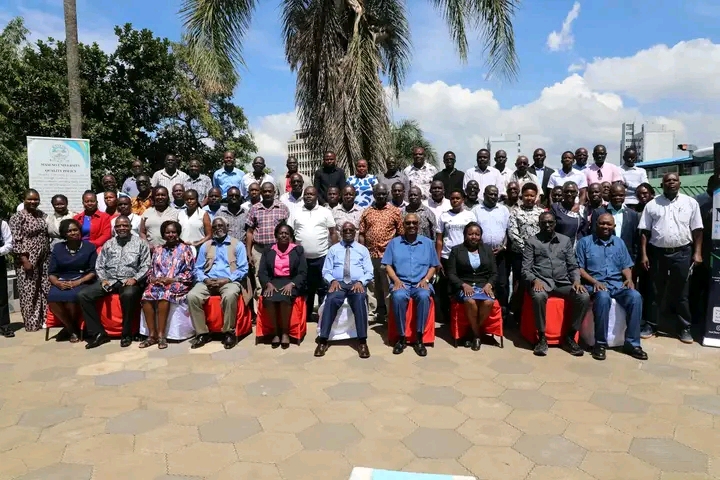
NuPEA stakeholders at Kisumu hotel. Photo courtesy
As Kenya advances plans for its first nuclear power plant, the stakes extend far beyond engineering — demanding transparency, public trust and a skilled generation prepared to carry a decision that will outlast all of us
By James Kilonzo Bwire
Kenya is approaching one of the most consequential energy decisions in its history, as the government advances plans for the country’s first nuclear power plant — a commitment that will shape its economy, environment and public life for generations, and one that demands far broader public ownership than it has yet received.
Electricity is the invisible foundation of modern life. The choices a country makes about how it generates power determine the health of its industries, the reliability of its hospitals, the productivity of its farms and the quality of life in its homes. A nuclear programme, once begun, locks a nation into a path spanning not years but generations — from the first feasibility studies through construction, operation, eventual decommissioning and the long stewardship of spent fuel and radioactive materials. That is precisely why the conversation about nuclear power in Kenya cannot remain the preserve of boardrooms, technical committees and government offices. It belongs to everyone, because everyone will live with its consequences, pay for its costs and inherit both its benefits and its burdens.
Against that backdrop, a workshop convened in Kisumu by the Nuclear Power and Energy Agency, the Kenya Electricity Generating Company and Maseno University represents something genuinely encouraging. It acknowledges what too many large infrastructure projects ignore: that a programme of this magnitude cannot be carried by engineers and policymakers alone. It must be carried by a nation. When universities sit at the same table as government and the energy sector, the conversation shifts from announcement to genuine dialogue. Citizens are no longer told what has been decided; they are invited to ask questions, raise concerns, test assumptions and contribute knowledge. That shift matters more than any single technical milestone, because the most sophisticated reactor in the world will fail in its social purpose if the society around it does not understand, trust and consent to it.
Trust, then, is the foundation upon which this entire undertaking must rest. Nuclear power carries a weight of public feeling unlike any other energy source. People hear the word and think of accidents, of invisible radiation, of waste that remains hazardous for periods longer than the entire recorded history of many nations. Those fears are not irrational. They are human, and they deserve to be met with patience, openness and evidence — not dismissal, condescension or the polished language of public relations. Fear that is ignored does not disappear. It grows in silence and hardens into opposition that no volume of technical reassurance can dissolve.
Earning public confidence requires truthful communication about both the benefits and the risks, transparency on site selection, honest answers to difficult questions about accidents, waste, cost and security, and a visible commitment to safety at every stage. It also requires intellectual honesty about uncertainty. A government that claims the programme carries no risks at all will lose credibility the moment citizens discover otherwise — and credibility, once lost, is extraordinarily difficult to recover.
Public engagement is not a public relations exercise to be ticked off a checklist. It is a constitutional and moral duty. It should begin early, continue consistently and include the voices of farmers, fisherfolk, women, youth, county leadership, religious institutions, civil society and the residents who will live closest to the facility. Engagement must be genuine rather than performative. Holding a meeting to inform communities of a decision already made is not engagement — it is notification dressed in the language of participation. Genuine engagement means communities have real opportunities to influence outcomes, that objections receive serious and documented responses, and that the process retains flexibility to change course when concerns are legitimate. Communities that feel respected become partners. Communities that feel steamrolled become adversaries, and a nuclear programme cannot afford adversaries among its own host populations.
Equally critical is competence. A nuclear programme demands an entire ecosystem of skilled people: reactor physicists, nuclear and civil engineers, radiation protection specialists, environmental scientists, geologists, lawyers, economists, regulators and emergency planners. It demands institutions too — an independent regulatory authority, a capable owner-operator, robust emergency arrangements and a legal framework aligned with international conventions. Kenya’s universities are the natural nurseries of this human resource. The Kisumu workshop rightly places capacity-building at the heart of the discussion. Academia can contribute most concretely by developing curricula in nuclear science, engineering, radiation safety and nuclear law, producing graduates who understand not only how a reactor works but why a culture of safety, discipline and accountability must surround it. Nuclear safety is not primarily a matter of equipment. It is a matter of culture, and culture is built in classrooms long before it is tested in control rooms.
The regulatory architecture deserves particular emphasis. An independent, well-resourced regulator is as important as the plant itself — empowered to say no, to delay, to demand improvements and to inspect without interference. History has shown that the most serious nuclear accidents involved not only technical failures but institutional ones: cultures where inconvenient warnings were suppressed and schedules prioritised over safety. Kenya should study those lessons not to be discouraged but to be forewarned. The nation should equally resist any temptation to rush. A delayed but carefully prepared programme is far better than a hurried one that cuts corners. The costs of preparation are visible and immediate; the costs of unpreparedness are invisible until the day they become catastrophic.
Site selection involves far more than geology and proximity to the transmission grid. The land on which a plant may be built is not empty space. It carries histories, livelihoods, sacred sites and community bonds formed over generations. Land acquisition done poorly leaves communities poorer and resentful. Done well — with fair compensation, genuine consultation and long-term local benefit sharing through employment and community development — host communities become genuine partners rather than casualties of progress.
Radioactive waste is the question that outlasts everyone alive today and deserves an honest answer. How much waste will be produced, where it will be stored, who will pay for its long-term management and what arrangements will protect generations who had no voice in the original decision — these are not secondary questions. They are central ones. Emergency preparedness must equally mean more than documents on a shelf: trained personnel, tested evacuation plans and regular community exercises so that people know what to do if something ever goes wrong.
The promise of nuclear power is real. It offers reliable, large-scale, low-carbon electricity that can complement geothermal, hydro, wind and solar in a diversified national energy mix, supporting industry, employment and Kenya’s broader development ambitions. But that promise is conditional — it holds only if the programme is governed with integrity, financed responsibly and explained to the public without exaggeration or alarmism.
The workshop in Kisumu is valuable precisely because it opens space for questions before decisions harden into irreversible commitments. In the years between roadmap and reactor, the most important construction will not be of concrete and steel but of knowledge, institutions, skills and public confidence. Concrete and steel can be inspected with instruments. Confidence can only be inspected through conduct — observed in every meeting, every disclosure and every promise kept or broken. If Kenya builds those intangible foundations patiently, the plant will stand not merely as a source of electricity but as proof that the country can undertake complex, high-stakes endeavours with wisdom and genuine care for the people it serves. When those lights eventually come on, they should illuminate a nation that was informed, consulted, protected and proud of how the journey was made.
Similar Posts by The Mt Kenya Times:
- Sifuna launches Linda Mwananchi Party as opposition giants converge on Nairobi
- Tanzania and Angola forge trans-African rail link from ocean to ocean
- Kenya Airways slashes duty-free prices with new inflight shopping service
- Fly748 targets festive coast rush with November discount extension
- Shukrani: How Kambua turned grief into a song of faith
About the Author