Kenya’s war on corruption needs community soldiers, not just investigators
 The Mt Kenya Times
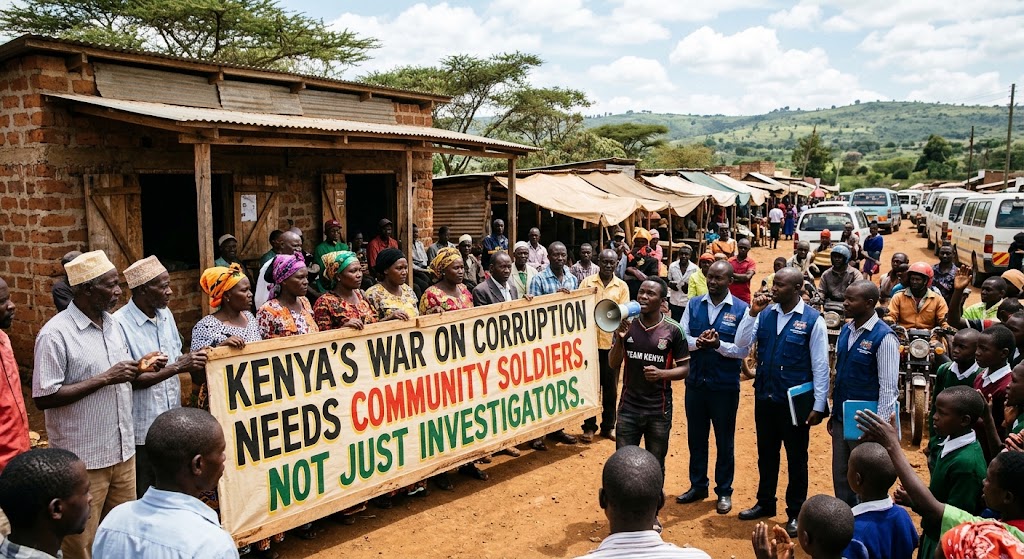
Kenya’s anti-corruption gains remain fragile without empowered grassroots oversight committees that can detect theft before it happens
By Fredrick Kipchumba Chelimo
The Ethics and Anti-Corruption Commission’s recovery of assets worth KSh3.6B and the prevention of potential losses amounting to KSh10.4B represent a significant moment in Kenya’s long and difficult campaign against graft. The figures, presented by EACC Chief Executive Officer Abdi Mohamud before the National Assembly’s Departmental Committee on Justice and Legal Affairs on Wednesday, are impressive by any measure. Yet they also invite a harder question: how much more could Kenya protect if it invested as seriously in detecting corruption at the community level as it does in pursuing wrongdoing after it has already occurred?
That question points directly to the County Anti-Corruption Civilian Oversight Committees — CACCOCs — operating under the National Anti-Corruption Campaign Steering Committee, domiciled in the Office of the Attorney-General and the Department of Justice. These community-based structures are designed to bridge the gap between citizens, public institutions and the national accountability framework. Through civic education, social audits, community engagement and the referral of suspected irregularities to competent authorities, they offer a practical means of converting Kenya’s constitutional commitments into action at the exact point where public money is spent and public services delivered.
Corruption is typically discussed in the language of billions lost, properties seized and suspects prosecuted. These are important measures, but they represent only part of the picture. Behind every inflated procurement contract, stalled road, incomplete classroom or poorly equipped health facility stands a citizen whose taxes and expectations have been quietly betrayed. For a parent whose child studies in an overcrowded classroom, or a patient who arrives at a clinic to find essential medicines absent, corruption is not an abstract governance problem. It is a daily confrontation with denied opportunity and broken public trust.
It is precisely at this intersection between public expenditure and citizens’ lived experience that CACCOCs can contribute most. A national institution may eventually investigate a procurement scandal involving billions, but community-based oversight can identify warning signs far earlier. Residents can question why a publicly funded road has stalled, why construction quality appears inconsistent with approved specifications, or why official completion reports do not match conditions on the ground. Properly documented, such observations become intelligence for the institutions legally empowered to investigate, audit and prosecute.
The constitutional foundation for this work is clear. Article 10 establishes transparency, accountability and public participation as national values. Article 201 requires openness in public finance, while Article 232 reinforces the efficient use of public resources and accountability for administrative decisions. These provisions were never intended as elegant declarations alone. They demand practical systems through which ordinary citizens can scrutinise public decisions and participate meaningfully in protecting the national interest. CACCOCs are one such system.
Their presence across Kenya creates an opportunity to strengthen accountability beyond the reach of central offices and formal institutional processes. However, that the NACCSC website describes only 36 of the 47 county committees as operational is an uncomfortable indication of the gap between institutional establishment and genuine functionality. A committee that exists on paper but lacks training, transport, communication tools or an effective referral mechanism cannot consistently discharge its responsibilities. Establishing structures is the beginning; empowering them to deliver results is the real test.
The challenge is compounded by the fact that CACCOCs depend substantially on citizen volunteers. These individuals are expected to mobilise communities, organise public forums, conduct social audits, document concerns and follow up complaints — responsibilities that require discipline, technical knowledge and sustained engagement. It is neither realistic nor fair to demand professional standards of accountability from a community oversight network while withholding the basic resources required to function. Volunteerism reflects patriotism, but it cannot permanently substitute for a properly structured and adequately supported programme.
Strengthening CACCOCs must therefore begin with a clear national policy and operational framework. Parliament, the Attorney-General’s Office and NACCSC should clarify the committees’ mandate, standardise procedures and establish a predictable model of operational facilitation. Members need training in public finance, procurement, project monitoring, social auditing, evidence documentation and complaint handling. They also need simple, reliable tools for recording project status and reporting findings in a form that competent authorities can readily assess.
Equally important is a structured relationship between CACCOCs and institutions including EACC, the Office of the Auditor-General, county governments and procurement oversight bodies. The committees should not investigate criminal offences, compel witnesses or pronounce guilt — those responsibilities belong to institutions with the appropriate legal authority. CACCOCs should serve as responsible community entry points for public education, early warning and the referral of credible concerns. A well-documented community report should not disappear into administrative silence; it should be acknowledged, assessed and directed through proper channels, with reasonable feedback provided wherever legally permissible.
This collaboration must be protected against political capture, intimidation and conflicts of interest. Grassroots oversight derives its value from independence. If committee members become instruments of political rivalry or personal grievance, their credibility will rapidly erode. Their legitimacy must rest on impartiality, evidence and service to the public interest, regardless of political affiliation or the identity of those implicated.
The KSh10.4B in potential losses averted cannot automatically be attributed to CACCOCs, nor should the KSh3.6B in recovered assets be presented as their outcome without supporting evidence. The figures instead illustrate the national importance of prevention and recovery working together. The appropriate policy question is whether Kenya can build a system in which community intelligence complements professional investigation and institutions respond promptly enough to prevent avoidable losses.
Ultimately, Kenya cannot afford an anti-corruption architecture that becomes most visible only after public money has disappeared. The country needs a system capable of identifying warning signs early, encouraging citizens to report responsibly and ensuring that competent institutions act on credible information. The National Assembly, NACCSC and the relevant government departments should treat the strengthening of CACCOCs not as an optional administrative expense but as a strategic investment in constitutional governance — with appropriate training, standardised procedures, measurable performance indicators and genuine accountability for results.
Recovered billions matter. But the public value preserved through prevention matters just as much.
Similar Posts by The Mt Kenya Times:
- Comrades erupt in joy as lecturers’ strike comes to an end
- Fofana miss sends Liverpool past Chelsea into Carabao Cup quarter-finals
- Spanish football federation postpones 24 cup matches after Toledo train disaster
- The ballot box’s bitter mockery: Electocracy’s iron grip on Kenya
- ‘Are you ok?’: The question we forgot to ask
About the Author