Kisii hosts World Cities Day 2026, as leaders urge counties to strengthen waste management and plan housing together
 The Mt Kenya Times

CS Education Julius Ogamba Migos during celebration of World Cities Day held at Kisii County said that urbanization brings opportunities for employment, investment and better livelihoods. Photo /Elizabeth Angira
By Elizabeth Angira
County governments have been urged to strengthen waste management through reliable collection, segregation at source, recycling, material recovery and safe disposal, as Kisii hosted this year’s World Cities Day celebrations.
The call was made in a speech by Lands, Public Works, Housing and Urban Development Cabinet Secretary Alice Wahome, which was read on her behalf by Education Cabinet Secretary Julius Migos Ogamba.
The celebrations were held at the Kisii Agricultural Training Centre, on the outskirts of Kisii town, under the theme “Regenerating the City: Adequate Housing for All”.
Housing must come with services
Ogamba said adequate housing goes beyond providing a roof over people’s heads. Residents also need clean water, sanitation, proper drainage, transport, public spaces, essential services and economic opportunities.
He said urbanisation brings opportunities for employment, investment and better livelihoods, but warned that poorly planned growth can worsen housing shortages, pollution, flooding and pressure on public services.
The national government, he said, was pursuing an integrated urban development agenda that brings together affordable housing, infrastructure, economic opportunities and improved municipal services.
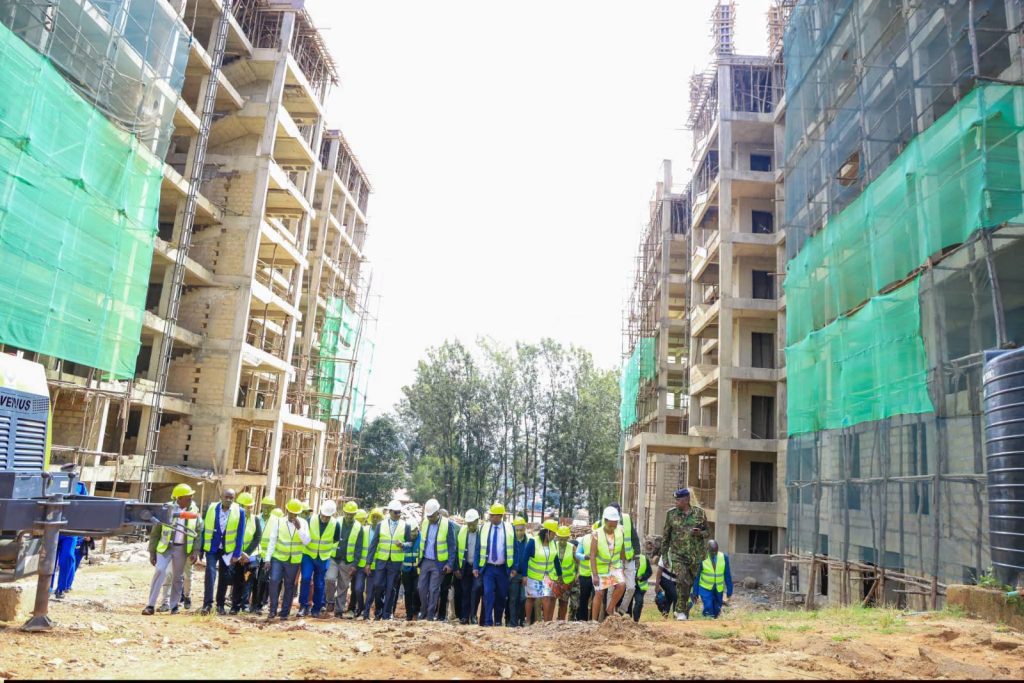
In Kisii County, he cited the affordable housing projects in Ogembo, Suneka, Nyachenge, Nyanchwa and Nyaribari Masaba as opportunities to expand access to housing, create jobs and stimulate local economic activity. Such investments, however, must be accompanied by adequate drainage, sanitation, waste collection, transport links and green public spaces.
He also stressed the role of modern markets in supporting small businesses, traders and agricultural value chains, saying their success depends on proper planning, reliable water, good hygiene and waste collection.
He urged county governments and municipalities to plan housing, markets and other infrastructure as one integrated urban system rather than as isolated projects.
Lessons on resilience and municipal capacity

Ogamba said programmes such as the Kenya Urban Support Programme Phase 2 (KUSP2) and the Kenya Informal Settlement Improvement Project offer lessons on strengthening municipal institutions, integrated planning and resilient infrastructure.
Municipalities, he said, need the capacity to plan, budget for, deliver and maintain roads, drainage systems, markets, public spaces and waste management facilities.
He also pointed to the Building Climate Resilience for the Urban Poor (BCRUP) initiative as an example of efforts to address climate risks facing vulnerable communities.
Flooding, poor drainage, inadequate sanitation and environmental degradation hit residents of underserved settlements hardest, he said, making climate-sensitive planning, ecosystem restoration and inclusive green livelihoods essential.
He added that settlement upgrading should involve residents in identifying local priorities so that neighbourhoods become safer, more accessible and better serviced.
Kisii praised for restoration and waste recovery
The speech commended Kisii County for transforming the former Nyambera dumpsite into Etaya Governor’s Park, saying it showed how degraded land can be reclaimed and turned into valuable public space.
Ogamba also noted the Material Recovery Facility at the training centre as a step towards a circular economy, in which waste is recovered and reused wherever it is safe and economically viable. The facility is reported to handle up to 50 tonnes a day, but he cautioned that this figure should be confirmed with verified data.
“The success of waste management must not be measured by installed capacity alone, but by the quantity of waste responsibly managed and the improvements in residents’ experiences in their neighbourhoods,” he said.
He called for stronger segregation at source, reliable collection, recycling, composting of suitable organic waste and safe disposal of residual waste, and urged that the principles of the Sustainable Waste Management Act, 2022, be applied in homes, schools, offices, markets, institutions and businesses.
Partnerships and accountability
Sustainable urbanisation, Ogamba said, requires coordinated action by national and county governments, municipalities, communities, the private sector and development partners.
Residents, traders, women, young people, waste workers and community organisations should play a meaningful role in planning, implementing and monitoring local solutions, while the private sector and development partners should mobilise investment, promote innovation and develop sustainable markets for recovered materials.
He said these efforts must be backed by sufficient financing, skilled personnel, routine maintenance and clear accountability, and encouraged municipalities to set measurable targets and timelines and to track progress.
He also urged authorities to protect rivers, drainage corridors, wetlands and green spaces.
“Regenerating our cities is a shared responsibility, and the time to act is now,” he said, urging citizens to keep their neighbourhoods clean, separate waste at source and protect shared public spaces.
He reaffirmed the national government’s commitment to working with counties and other stakeholders to build clean, safe, inclusive and climate-resilient towns where every family can access adequate housing.
Kisii eyes city status
Kisii Governor Simba Arati reiterated his commitment to environmental conservation and better urban areas as the county works towards elevating Kisii Municipality to city status. His speech was read by Deputy Governor Elijah Obebo.
Obebo said Kisii’s selection as host reflected progress in urban development. The county had also hosted World Clean-Up Day last month, where stakeholders focused on reducing food waste and promoting a circular economy.
“It means we are doing something in the right direction on matters of urban development, and someone is noticing,” he said.
He said Kisii faces challenges common to cities worldwide, including ageing infrastructure, climate change, a lack of affordable housing and social inequality.
Urban regeneration, he said, offered a sustainable way out and a chance for government, academia, the private sector and civil society to develop practical solutions together.
Obebo cited the county’s Kazi Mashinani initiative as one of the programmes intensifying clean-up in urban areas.
He said the former Nyambera dumpsite, long an eyesore, had become a popular recreational space, especially among young people. Citing research that green spaces improve mental health and reduce stress and anxiety, he urged residents to use and protect the park, and said the county plans to establish more public spaces.
He said the county had finalised its first 10-year County Spatial Plan to guide land use, settlement, infrastructure and natural resource management.
Kisii and Ogembo already hold municipality status, and other urban areas will be elevated once their local land use plans are complete, in line with the Urban Areas and Cities Act.
Obebo also commended the national government’s Affordable Housing Programme, saying the housing and market projects would improve the urban landscape and expand access to housing and business facilities once completed.
He invited development partners, universities, the private sector and civil society to help develop evidence-based proposals to guide policy and investment.
“As a county government, we are committed to ensuring that all this shall be done because we are here, this is our time, and we mean it,” he said.
UN-Habitat: waste as a source of green jobs
CS Julius Ogamba Migos, Kisii County Deputy Governor Elijah Obebo during the celebration of World Cities Day. Photo /Elizabeth Angira
UN-Habitat Kenya Head of Country Programme Beryl Khanyile said sustainable urban development requires more than homes: residents also need secure land tenure, reliable basic services, clean neighbourhoods and ways to earn a living.
She asked leaders to keep in mind a family seeking a decent home through the Affordable Housing Programme, a woman selling vegetables beside uncollected waste, and young people looking for work.
This year’s theme, she said, does not mean starting from scratch. Regeneration means investing in existing neighbourhoods, improving services and making urban areas more productive, inclusive and resilient, with housing that is also climate-resilient.
Khanyile said UN-Habitat, working with the State Department for Housing and Urban Development and Kisii County, was strengthening the solid waste value chain to create green jobs for young people, alongside partners such as ‘Taka ni Mali’.
She commended Governor Arati for initiating the waste-to-value approach through the Material Recovery Facility, and the State Department for its leadership, which she said showed that adequate housing for all is within reach.
She also pointed to collaboration under BCRUP and related Sustainable Development Goals initiatives, which support local services, financing for micro, small and medium-sized enterprises, and green employment.
“Waste is not a problem to be managed. If handled well, it is a source of dignity, income and greater opportunity,” she said.
Khanyile said Kisii’s story would be shared at the global observance in China as a model for other Kenyan towns.
“We want to show the world that this is already happening in Kenya,” she said, calling on stakeholders to turn the commitments made in Kisii into lasting action so that no family or neighbourhood is left behind.
Similar Posts by The Mt Kenya Times:
- Court voids Ruto’s housing promises to teachers and police, ruling presidential pronouncements have no force of law
- Ruto’s Cabinet is now unconstitutional, lawyers warn, as gender rule deadline passes
- Sifuna’s rise: How a senator from Nairobi became Kenya’s most watched politician ahead of 2027
- Gachagua’s Kajiado tour reshapes the road to 2027
- Kenya’s gathering storm: Gachagua’s sixth administration bid reshapes the road to 2027
About the Author