Kenya’s gathering storm: Gachagua’s sixth administration bid reshapes the road to 2027
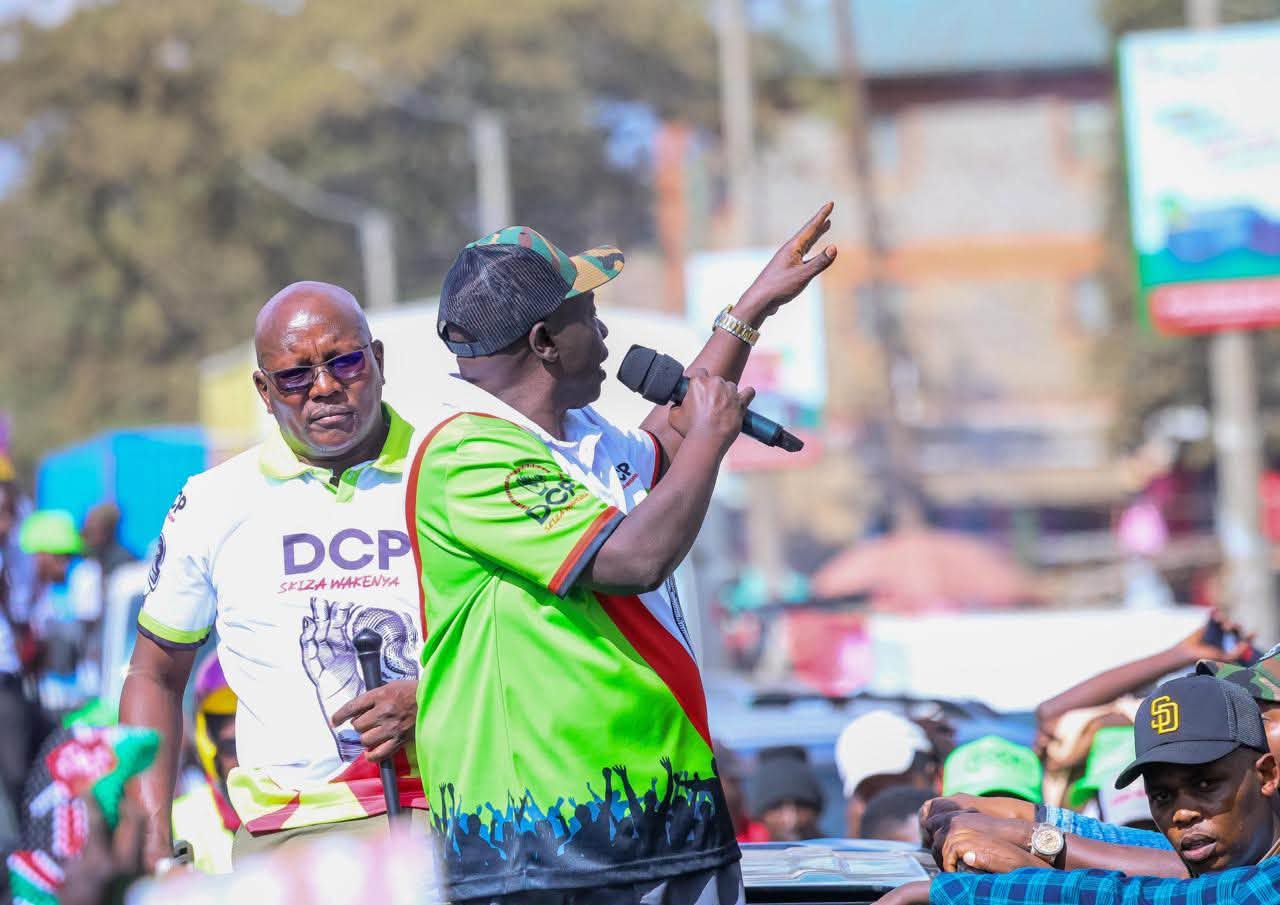
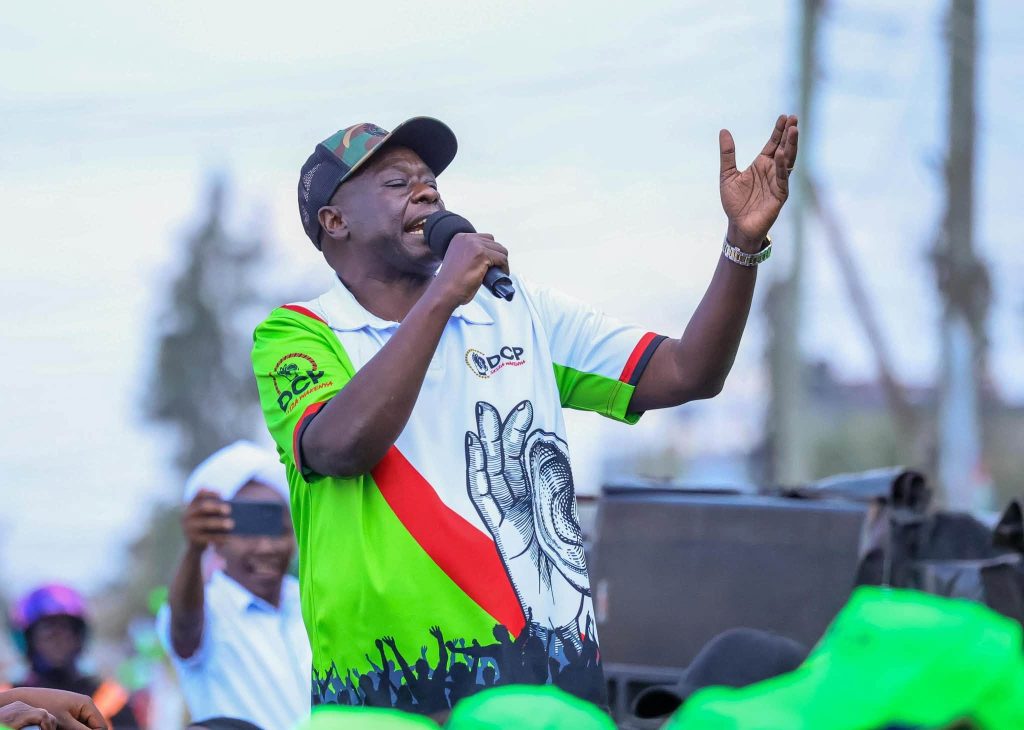
Rigathi Gachagua speaking to residents of Kware Stage in Rongai
The former deputy president is building a nationwide coalition from the grassroots up, and the political establishment is beginning to take notice
By James Mwangi
Rigathi Gachagua stood before residents of Kware Stage in Rongai, Kajiado North, yesterday and said what an increasing number of Kenyans appear to want to hear: that the country needs to be reset, that constitutionalism must be restored, and that the current administration has forfeited its moral authority to govern.
It was not a rally in the conventional sense. There was no official party banner, no declared candidacy, no formal campaign structure. Yet the message carried the unmistakable weight of a man who believes he is building something historic — and who wants the people gathered before him to believe it too. “We will not let you down or forsake you,” Gachagua told the crowd, his voice carrying the particular register of a politician who has concluded that his greatest political asset is the grievance he embodies. “Together, we will restore the dignity of our country and its people.”
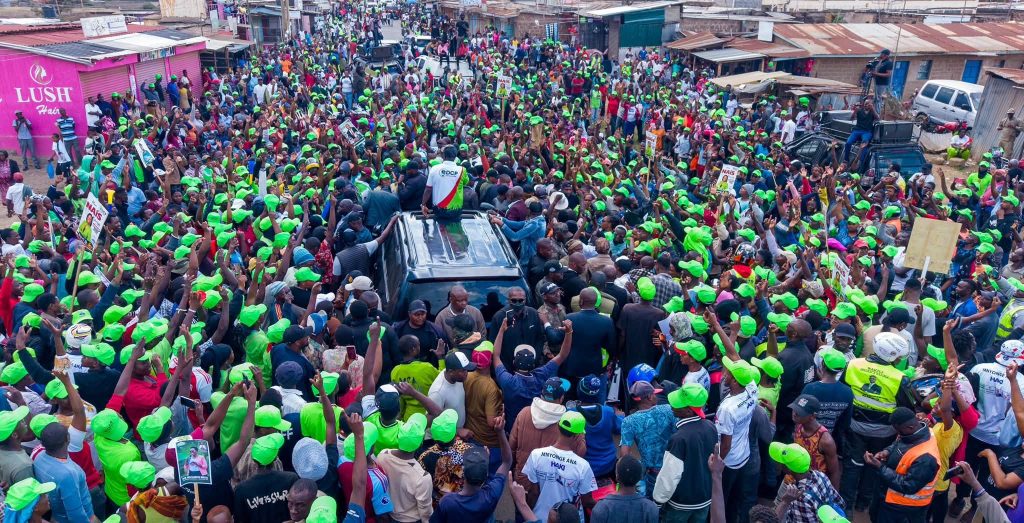
The Kajiado North appearances — spanning Kware Stage and Gataka — form part of a broader political pattern that has accelerated sharply since Gachagua’s impeachment in October 2024. Since his dramatic removal from the deputy presidency by a National Assembly vote of 281 to 44, on charges he has consistently disputed, Gachagua has pursued a methodical grassroots strategy that his allies describe as the foundation of a Sixth Administration — a government, they argue, that will correct what the Kenya Kwanza administration got wrong.
The framing is deliberate and politically shrewd. By positioning himself not as a disgruntled former official seeking personal rehabilitation but as the standard-bearer of a constitutional cause larger than any individual, Gachagua is attempting to transform personal misfortune into national purpose. “This cause is bigger than any one of us,” he told supporters in Kajiado. “We shall not relent, we shall not be cowed. We have a moral duty to bring justice and restore integrity to our nation.”
Whether that message resonates beyond Mount Kenya, where Gachagua commands a loyal and emotionally invested base, will determine whether his 2027 ambitions constitute a genuine electoral threat or an elaborate exercise in political catharsis. The signs from Kajiado — a county that sits outside his traditional stronghold — are that his outreach is widening, though the depth of that support remains untested by any formal electoral contest.
The political environment into which Gachagua is expanding his campaign is volatile, uncertain and fertile with opportunity for anyone willing to channel public frustration. Kenya’s cost of living remains punishingly high. Youth unemployment continues to define the daily reality of millions. The tax debates that triggered the deadly June 2024 protests have not been resolved to public satisfaction, and the government’s credibility with young voters — never fully recovered since those events — remains fragile.
It is against this backdrop that Gachagua’s most pointed attack this week landed with particular force. Referring directly to President William Ruto, he accused the administration of deceiving young Kenyans with promises of overseas work opportunities — the so-called Kazi Majuu programme — and placing them in danger. “You took our children to the battlefield in the name of Kazi Majuu,” he said. “You deceived them and put them in grave danger.” He then turned to the specific case of Kenyans reported to be stranded in Russia, urging Ruto, who was in Moscow at the time, to personally intervene and facilitate their return. “Their parents are desperately worried and crying,” he said. “Please help bring back everyone still trapped there.”
The statement was aimed squarely at a government vulnerability — the welfare of Kenyan workers abroad — that has proven consistently difficult to defend. It also allowed Gachagua to occupy the emotional high ground on an issue where parental anxiety and national concern intersect, a position that translates readily into political capital.
With the August 2027 general election now less than ten months away, Kenya’s political season is entering its most consequential phase. The electoral arithmetic is shifting. Coalition negotiations are under way in drawing rooms and hotel conference suites from Nairobi to Kisumu. Opposition figures who were adversaries eighteen months ago are testing the temperature of cooperation, and the government is watching Gachagua’s grassroots momentum with an attention it does not always publicly acknowledge.
The man from Mathira is not yet on the ballot. But in Kajiado North on Thursday, he was already campaigning — and the crowds were listening.
Similar Posts by The Mt Kenya Times:
- Mt Kenya Times ePAPER October 30, 2026
- Ruto courts Russian investment in Moscow as Kenya seeks KSh5.2 trillion infrastructure push
- Court voids Ruto’s housing promises to teachers and police, ruling presidential pronouncements have no force of law
- Ruto’s Cabinet is now unconstitutional, lawyers warn, as gender rule deadline passes
- Sifuna’s rise: How a senator from Nairobi became Kenya’s most watched politician ahead of 2027
About the Author