A Collection Of Early Written Laws Of Ancient History


By: Aziza Saparbaeva
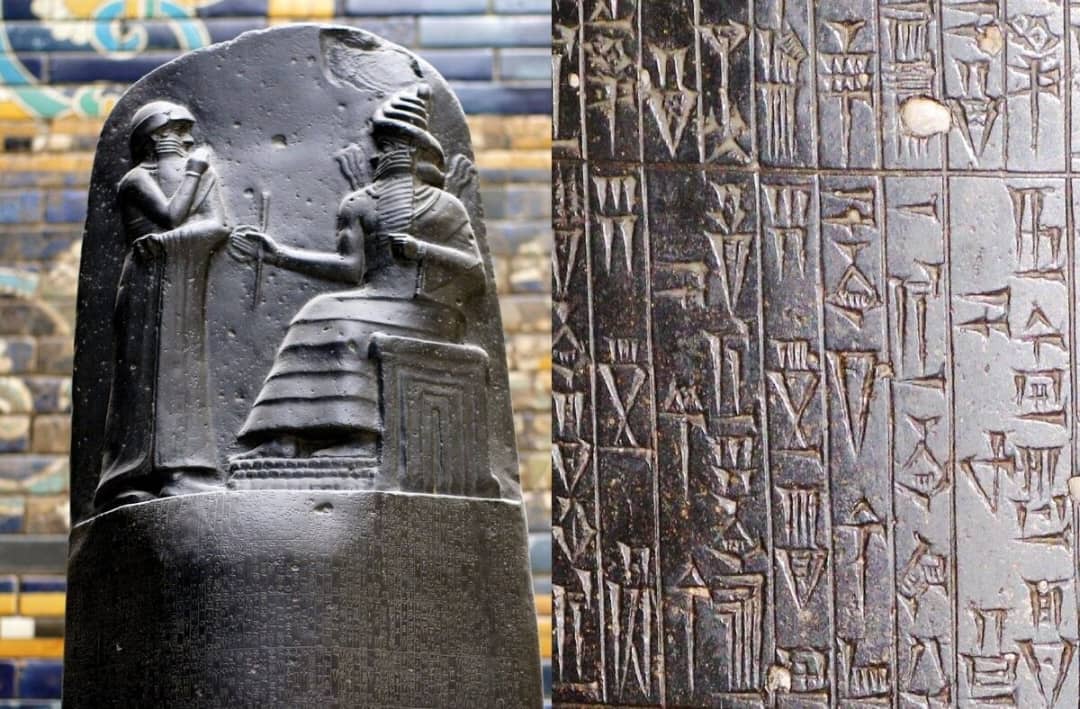
Xammurapi (in the 1st century BC.1792-1750) laws are the most unparalleled set of rights in history. While the punitive procedures in it seem impassioned, but we will not see in it such as taking a diet (revenge). The collection of laws, compiled in the time of Hammurabi, was discovered by the French archaeological expedition of 1901-1902 during the excavation of the ancient Elamite capital of Suza. These laws are engraved on the level of a black basalt stone column in cuneiform. The original laws are now kept in Paris (Louvre).
These laws contained 282 articles and embodied the experience and many examples of Shummer and Akkadian law.
1) Introduction; 2) main part(laws); 3) conclusion.
The introduction states that the main purpose of establishing laws is to punish Justice in the country. In law, the King cites his services to the people. It is also talked about the fact that it is necessary to honor the Kings who will fulfill these laws in the future, curse my king who did not fulfill them or wanted to abolish them.
In the main part of the law, the norms on court and trial (articles 1-5), violation of property rights and penalties applied to it (Articles 6-120), marriage, family and inheritance law (articles 127-195), Criminal Law (responsibility for crimes against the life and health of a person, articles 196-214), labor and labor weapons (articles 215-282), as well as other relations are established.
The law of ancient custom, Sumerian laws and new laws were taken as the basis for the drafting of the code. The laws of khammurapi differ from other Eastern laws in that they do not retain elements of religion and exhortation. If so, then the signs of the seed arrangement were kept in it.
The laws of khammurapi reflected forms of land ownership such as tsarist, synagogue, community and private land ownership. Muik ilku, which was given to officials and military, was called mulk. Community ownership remained in later periods.
The laws separate obligations arising from contracts and damages. Contract law developed widely during this period. Purchase and sale of contracts, Rent, Deduction, debt. shipping, assignment, company (majority), gift and other types are regulated by many norms. The marriage was formalized on the basis of contracts concluded in writing. If a person takes a wife and does not conclude a written contract, this woman is not a wife to him (Article 128). The contract was also concluded between the family of the husband and wife. Slaves and freemen could start families, and children born were considered free. Before the conclusion of the marriage contract, the groom had to give his future mother – in – law thick money-“tirkhatum”, wedding gifts to the family members of the bride – “biblum”, the daughter-in-law’s father-sep-sidirga – “sharhtum”. One marriage was valid so that the husband could enter into a second marriage with a valid one. The child’s parents were cut off by the tongue of the sock, and the fingers of the ursa. The inheritance was initially preceded by sons, girls without sons, and later girls with equal inheritance rights with sons. If the son died, the grandchildren were the heirs. Brothers without children and grandchildren, and uncles without them, came to the field as heirs. Inheritance is evenly distributed among children. The adopted child also received an equal share. The husband gave his wife a gift – “nudunnum”, and it was preserved. In the laws of khammurapi, nothing is mentioned about the habit of bloody revenge, which is characteristic of the primitive community system. He vacated his Omino for penalties imposed by public authorities and the fees the offender pays to the victim or his relatives. However, other remains were preserved, typical of the primitive community system. In particular, if the culprit is unknown, the responsibility of the entire team, the responsibility of the children for the parents, the expulsion of the culprit from his territory, etc. The punishments were primarily aimed at holding the Babylonian system of slavery. In addition to the types of criminal penalties, the penalties of disgrace, deprivation of the right to conduct certain activities and removal from office can also be said. Death is punishable by death for causing human death as a result of negligence. For example, when the house, the castle, breaks down and the landlord’s son dies, the builder’s son is also killed (Art. 230). If the accused was in a high position, he paid a fine. Among the crimes against the person was the crime of stealing young children. Of course, the goal in this was to sell as slaves. (Article 14), qui was called “vardum” in ancient Babylon. Very severe penalties were provided for crimes against property. For the theft of the property of the palace and synagogue, in some cases, the death penalty is provided, in other cases, a fine of 30 times. If the culprit could not pay him, he was sentenced to death. During the fire, the perpetrator of the burglary was set on fire. Property rights against a slave were heavily defended. In accordance with the khammurapi laws, the judge was removed from office if he changed his previous decision and paid a fine of 12 times the amount of the suit. Criminal penalties for failure to report the crime being prepared, perjury and defamation have been set. Court records are written on the cellars. They record the directions of your orientation, oaths, the names of witnesses and the content of the court sentence. As a rule, it was not possible for parties to initiate a case a second time. Articles 278-282 of the law define laws relating to slavery. For example, Section 282 states that “if a qui tells the owner that he is not his slave, then if the owner proves that he is a slave, then the slave can have his slave cut off his ear”. In general, the laws of Hammurabi reflected the rules of order inherent in the ancient Babylonian society.
*My bio: Aziza Saparbaeva – She is from Uzbekistan. Study at Urgench state university.
Winner of the Alisher Navoi State Scholarship
Author of more than 50 articles and 6 books
Member of 10 international organizations
Graduate of more than 20 international courses
The holder of the badge for international services of the “Qo’shqanot” creative association of Kazakhstan
Participant of the international project Oxford&UrSU Amudarya Project
Founder of the Student Academy project
Winner of the 3rd place in the June 2022 “Zukko kitobxon”s contest.
The winner of the 2nd place in the district stage of the Young Reader republican competition
Winner and participant of more than 30 international and national competitions
Participant of more than 20 international and national scientific-practical conferences
A graduate of Shine Girls’ Academy.
She also publishes her creative articles in Uzbek and foreign languages in international anthologies and almanacs. In particular, she actively participates in the international anthology of Great Britain, Germany, and Argentina called Totem with her scientific and creative works. At the same time, several popular articles were published in foreign newspapers and websites. In particular, popular scientific and creative articles are periodically published in Kenya Times, Classico Opine, Raven Cage Zine, The Diaspora Times Global, Page News, and Synchronized Chaos.
“VI Международного химического диктант”, “II Всероссийского Арктического Диктанта для студентов и школьников”, “Всероссийский Большой онлайн-диктант в Год семьи”, “Союзный диктант: Россия и Беларусь”, “Библиотечный диктант”, “Всероссийском Cтатистическом диктант”, “Беларусский Географический Диктарт 2024” competitions.
Business Model Canvas Essentials, Great Learning, Upskillist, Stepik, Scopus Academy, Yalinetwork, UNICEF, UNITAR, Europe Academy, Saylor Academy and completed UK OpenLearn academies and international courses and received a certificate.
*
Photo: Aziza Saparbaeva
A Collection Of Early Written Laws Of Ancient History
Source:
1.Mualliflar jamoasi(S.Gabrielyan) ‘Jahon tarixi 1-tom 1-qism.’
2.R.Rajabov ‘Qadimgi dunyo tarixi ‘
Similar Posts by The Mt Kenya Times:
- Business leaders and policymakers urge Kenya’s 7.4 million small enterprises to aim beyond survival
- Stanbic Kenya Foundation opens digital learning centre at Embu school
- Green Entrepreneurship: From Small Ideas to Great Change
- The Journey of a 16-Year-Old Researcher: Overcoming Challenges and Shaping the Future of STEM in Uzbekistan
- Sumatriptan: A modern solution for migraine relief
About the Author