A special place in my heart for the young mothers sitting the 2026 KCSE
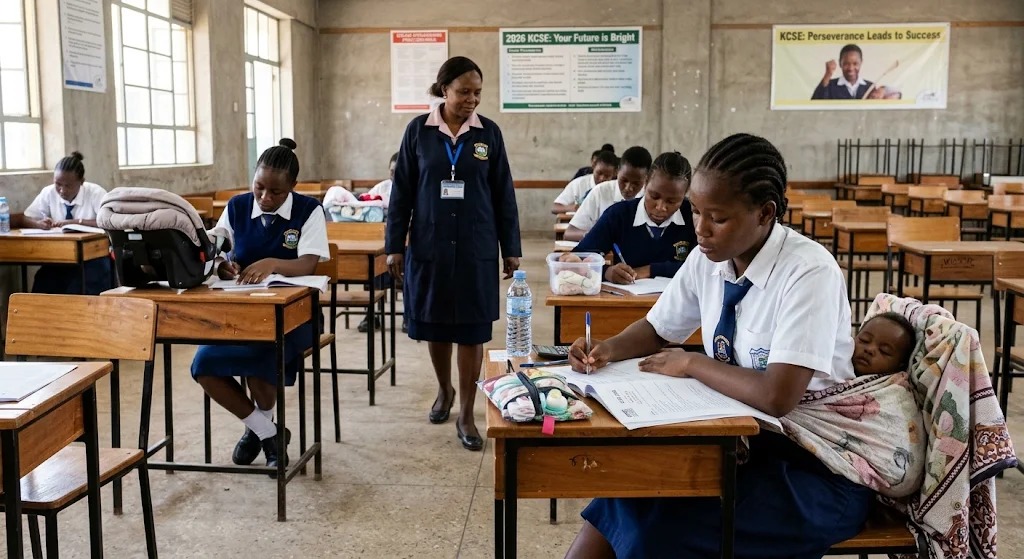
As thousands of candidates open their exam papers, some carry a burden most will never know — and they deserve our respect, not our judgment
By Ashford Kimani
Tonight, my heart goes out to a very special group of Kenya Certificate of Secondary Education candidates: the young mothers. The girls who will walk into examination rooms carrying burdens that many of their fellow candidates may never fully understand. Some are expectant, struggling with the physical demands of pregnancy while trying to concentrate on demanding questions. Others have already given birth and will sit their papers knowing that somewhere outside the school compound, a baby is waiting for them — and wondering whether the child has been fed, whether they are sleeping peacefully, whether they are crying, or whether the grandmother looking after them is coping. For these girls, the KCSE is not simply an examination. It is an extraordinary test of academic ability, emotional strength and personal resilience, all at once.
Let me be clear about one thing. This is not an attempt to celebrate or encourage teenage pregnancy. It is a serious social problem, and everything possible must continue to be done to protect girls from circumstances that interrupt their education and expose them to enormous responsibilities at such tender ages. But condemning teenage pregnancy should never translate into condemning the young women who live with its consequences. Society can discourage early pregnancy without humiliating the girls who find themselves in that situation. It can uphold moral standards without abandoning compassion. Above all, it can acknowledge difficult circumstances without pretending those circumstances do not exist.
Kenyan society can be remarkably unforgiving towards young mothers. The fingers are pointed quickly, the whispers travel fast, and the moral judgments come easily. Words such as careless, irresponsible and undisciplined are deployed without hesitation. Some people look at a pregnant schoolgirl and immediately conclude that she has ruined her future. Others behave as though she has committed an unforgivable offence against the community. What is too often forgotten is that behind every pregnant schoolgirl is a complicated story — and very often, a man whose contribution to that pregnancy attracts remarkably little public attention.
Where is that man? Where is the boyfriend who impregnated the girl? Where is the adult who took advantage of a school-going child? Where is the person who participated in creating the very circumstances for which the girl is now being publicly punished? Why does society condemn the pregnant girl far more loudly than it demands accountability from the man responsible? Why does the girl carry the shame, the pregnancy, the disruption to her education and the social stigma, while the man walks around freely — sometimes, grotesquely, boasting about it?
This double standard must be confronted. A society that consistently shames pregnant schoolgirls while conveniently overlooking the men responsible has misplaced its moral priorities. If the protection of children is taken seriously, outrage must be directed towards exploitation, irresponsibility and the culture of impunity that allows men to escape accountability with ease and without consequence.
But tonight, I want to move beyond the circumstances that brought these girls into motherhood. I want to acknowledge their determination to continue with their education. Consider what it means to sit a three-hour examination while carrying an unborn child — battling morning sickness, exhaustion, backaches and the persistent discomforts of pregnancy, yet remaining composed enough to interpret a Chemistry question or work through a Mathematics problem. Consider being in an examination room with the mind divided between the paper in front of you and the small life depending entirely on you.
For those who have already delivered, the challenge is perhaps even more emotionally demanding. A breastfeeding mother spending hours away from her baby faces interrupted sleep, physical exhaustion and the anxiety of separation. While other candidates spend their evenings revising, she may be changing nappies, preparing formula or soothing a crying infant through the night. When others rise early to review their notes, she may have been awake for hours already, attending to a restless child.
Yet these young women have shown up. They have reported to examination centres. They have picked up their pens. They are sitting the same papers as everyone else, and they are refusing to surrender their educational futures simply because life has taken an unexpected turn. That, in itself, is worth something.
When some of these young mothers post impressive results, those grades will deserve recognition of a particular kind. Behind each mark may lie sleepless nights, tears, difficult decisions, physical discomfort and a fierce determination not to let motherhood become the end of their education. Their results should remind everyone that a difficult beginning does not determine the entire course of a life.
A special tribute is also owed to the grandmothers — the women who have temporarily taken responsibility for their grandchildren so that their daughters can concentrate on their examinations. These are the unsung figures of this examination season. While their daughters sit in examination rooms, they are at home nursing babies, preparing meals, changing nappies and providing the quiet reassurance that every young mother needs to get through the day.
Some of these grandmothers may have been devastated when they discovered their school-going daughters were pregnant. Yet when the examination season arrived, they set their emotions aside and stepped in, because they understood that whatever had happened, their daughters still deserved a future. That is motherhood. That is sacrifice expressed through action rather than words.
To the young mothers sitting KCSE this year: do not allow society’s judgment to define you. Your pregnancy is not your academic identity. Your motherhood is not the end of your ambitions. You may have made mistakes, or you may have been caught by circumstances entirely beyond your control — but neither should rob you of the chance to rebuild your future. Write those papers with courage. Give every question your best. Your child deserves a mother who has not given up on herself.
And to the grandmothers holding the babies while their daughters write: thank you. You are doing far more than babysitting. You are helping preserve a young woman’s future.
As Kenya celebrates the thousands of candidates sitting the 2026 KCSE, let us spare a particular thought for these young mothers. Let us judge less, encourage more and remember that compassion does not require the abandonment of principle. Sometimes, the people who most need encouragement are precisely those whose circumstances make it easiest for society to condemn them. Their stories are not over.
Similar Posts by The Mt Kenya Times:
- Criteria for the Optimal Placement of Electric Vehicle Charging Infrastructure across Urban Transport Networks
- Exporting Teachers, Importing Standards: Is Namibia ready to strengthen classrooms in The Bahamas, and what does the request reveal about the regulation of teaching at home?
- From the Margins to the Centre: Governor Kadiva Hamutumwa, her first sixteen months in office, and an agenda for a lasting Ohangwena legacy
- Mt Kenya Times ePAPER November 7-8, 2026
- Karua demands Lissu’s release as Tanzania court conviction draws regional condemnation
About the Author