Africa’s hopes at the FIFA World Cup: Morocco and Senegal leading the charge
By Pierre Makusha
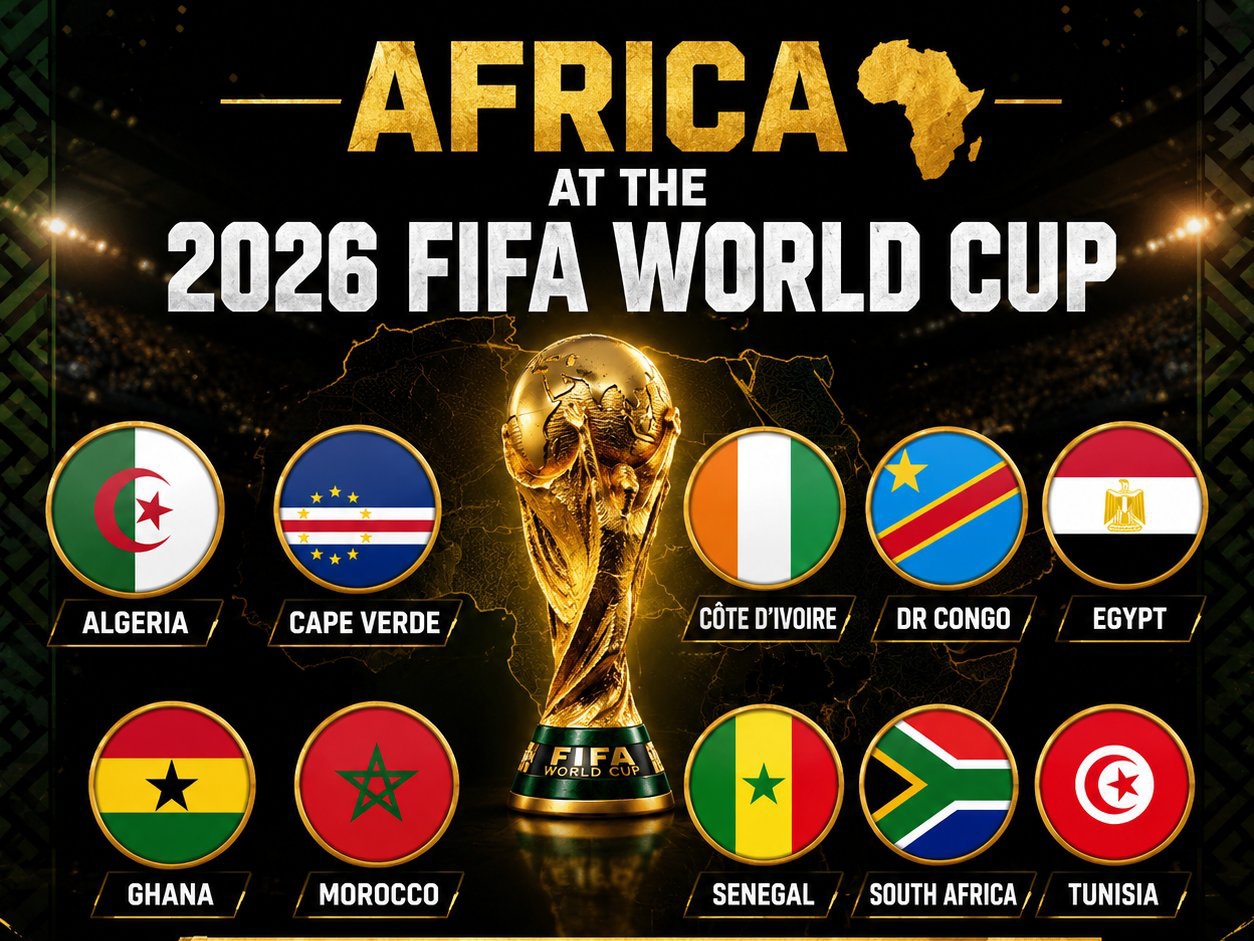
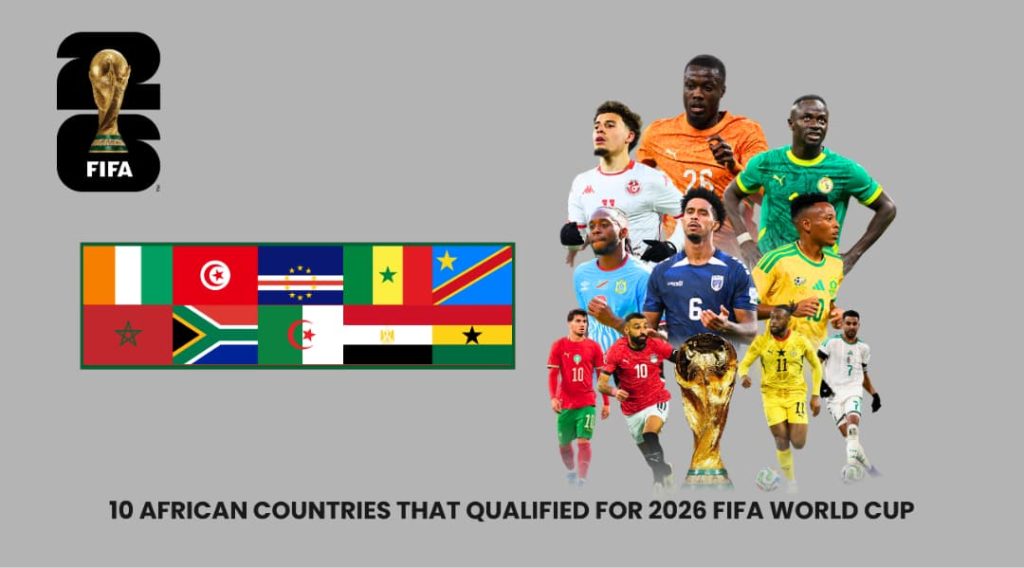
The 2026 Men’s FIFA World Cup kicks off 11 June and will be the biggest in history — 48 teams across the United States, Canada and Mexico. Africa arrives with nine direct slots plus one playoff place, its strongest representation yet and its best chance to go deeper than ever.
The tournament opens with history. _Mexico vs South Africa_ at the iconic _Estadio Azteca_ on 11 June. It is a repeat of the 2010 World Cup opener, when Siphiwe Tshabalala’s 54th-minute screamer gave Bafana Bafana a 1-1 draw and announced South Africa to the world. Sixteen years later Bafana Bafana are back, carrying Africa’s flag on the opening match of this year’s global football extravaganza.
Headlining Africa’s charge are two nations who, on paper, are two of Africa’s best representatives at this year’s showpiece: _Morocco_, ranked 8th in the FIFA World Rankings, and _Senegal_, ranked 14th. The Atlas Lions and Lions of Teranga carry Africa’s belief on their backs.
What makes their story heavier is that Morocco and Senegal met in the 2025 AFCON final, a decider marred by controversy with a Court of Arbitration for Sport ruling still to settle the winner. As attention turns to 2026, it is time for Africa to set aside incidents that threaten the continent’s football image and unite on the world’s biggest stage.
Morocco: From History Makers to Contenders
No African team has gone further than Morocco’s run to the 2022 semifinals. The Atlas Lions beat Belgium 2-0, knocked out Spain on penalties, then stunned Portugal 1-0 to reach the last four before falling 2-0 to France. That run shattered the psychological barrier that an African team could not go toe to toe with football’s biggest names. By 2026 Morocco arrive older, wiser and fearless under _Mohammed Ouahbi_, who led Morocco’s U20s to World Cup glory in 2025.
With Achraf Hakimi fresh from a second UEFA Champions League title with Paris Saint-Germain, Brahim Díaz adding creativity from Real Madrid, and Yassine Bounou giving confidence in goal, Morocco’s target is clear. They open against Brazil, the five-time champions. Beat or frustrate Brazil and the message is sent: a semifinal is no longer the ceiling.
Senegal: The Lions of Teranga Roar Again
 Senegal are African champions from 2021, reached the World Cup Round of 16 in 2022, and are disputed AFCON 2025 champions. They are coached by _Pape Bouna Thiaw_, a member of the Lions of Teranga side that reached the World Cup quarterfinals in 2002. He brings that same belief back to the dugout.
Talisman Sadio Mané leads the attack, with Eduardo Mendy providing world-class security in goal, Idrissa Gana Gueye controlling midfield, and West Ham’s El Hadji Malick Diouf bringing defensive solidity and attacking flair from the left side of defense. Senegal open against Kylian Mbappé’s France in a rematch heavy with history, with the Africans having beaten France in the 2002 World Cup group stage. Senegal’s edge in physicality, organization and mental fortitude will be heavily tested in a group that also includes Norway and Iraq.
Africa’s Depth_
Morocco and Senegal set the tone, but Africa’s strength is in its numbers. _Algeria_ return for the first time since 2014, led by Vladimir Petković, who took Switzerland to the 2018 World Cup knockout stages and Euro 2020 quarterfinals, and captained by Riyad Mahrez as the Desert Foxes return to the global stage with a glimmer of hope and in their first match face a stern test defending World Champions in Argentina.
The Democratic Republic Of Congo are back at the global stage for the first time in over 50 years. They bring Chancel Mbemba’s experience in defense, Aaron Wan-Bissaka’s steel, Cedric Bakambu’s goals, Yoane Wissa’s pace and with Sebastian Desabre at the helm, the Congolese are pretty capable of springing a good run deep into tourney but will first have to go past a group that includes a star studded Portugal side and a tricky customer in Colombia.
Mohamed Salah’s Egypt, 2010 quarterfinalist Ghana, 2023 African champions Côte d’Ivoire, Tunisia and debutants Cape Verde complete Africa’s 10 representatives.
The 2026 World Cup Is bigger, with more money, more eyes and more pressure. For African football it is a chance to shift from dark horses and participants to genuine contenders. If Morocco and Senegal lead and the continent stays united, a first World Cup final before 2030 is no longer a dream.
Similar Posts by The Mt Kenya Times:
- Mt Kenya Times ePAPER August 21, 2026
- Ichung’wah dares ICC: Investigate the opposition too
- Embu elders reject Kindiki endorsement as illegitimate
- Gachagua dares NCIC: Come to Wamunyoro
- Kenya’s electoral clock starts ticking: Inside the 12-month countdown to the 2027 general election
About the Author