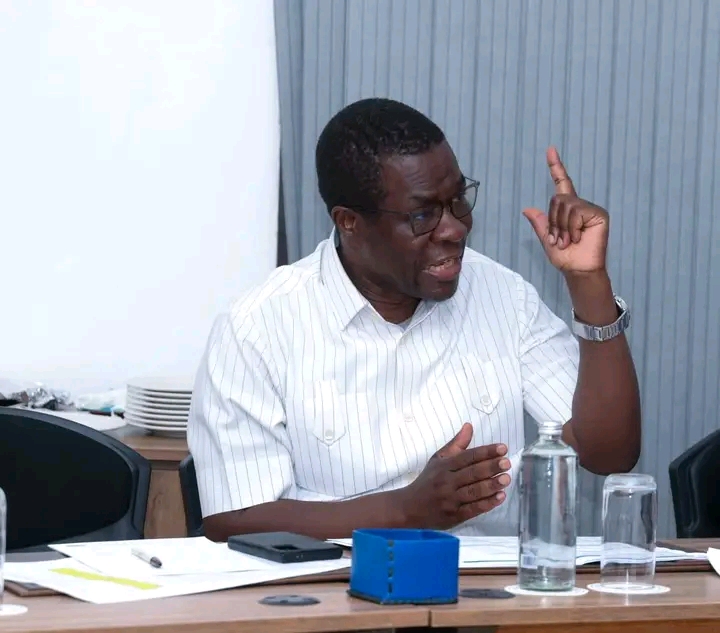
Breaking Barriers: Gusii Women Unite To Lead Amid Patriarchal Norms
 The Mt Kenya Times
Gusii Women Unite To Lead Amid Patriarchal Norms
By Elizabeth Angira
In Gusii region where traditional patriarchal values still hold sway, a powerful wave of transformation is quietly taking shape. Women leaders, youth representatives, and advocates have gathered in a rare forum aimed at empowering one another and forging a path of inclusive leadership not in defiance of their culture, but in conversation with it.
The meeting, held under the theme “Sisterhood and Leadership for Change,” brought together women who have defied societal expectations and are now using their influence to create space for others. It became both a reflection and a call to action: a reminder that even in a male-dominated society like the Gusii community, women’s leadership is not only possible it is essential.
“Today, we sat together as sisters to remind ourselves that we are part of a larger web one of shared responsibility and purpose,” said Lilian Gor, a nominated Member of the County Assembly (MCA) in Kisii County. “For society to thrive, every person must play their part. We must come together as women and create ripples that lead to real change.”
According to UN Women Women’s equal participation and leadership in political and public life are essential to achieving the Sustainable Development Goals by 2030. However, data show that women are underrepresented at all levels of decision-making worldwide and that achieving gender parity in political life is far off
Gender mainstreaming policy
Despite the barriers imposed by cultural gender roles, Gor and her colleagues have made significant strides. She pointed to the recent adoption of the Gender Mainstreaming Policy by the Kisii County Assembly in October last year a groundbreaking step in a region where budget decisions have historically been dominated by male voices.
“This policy ensures that both men and women are considered in every decision we make, especially in budgeting. It’s not about replacing men, but about recognizing the value that each gender brings,” Gor explained.
Currently, the Assembly is working on a Child Welfare Protection Policy, which aims to safeguard children, particularly girls, from harmful practices such as early marriages and gender-based violence. While still pending, the policy is high on the Assembly’s agenda.
“We are giving it priority,” said Gor. “But we also recognize that without the support of men, we cannot go far. What we are asking is for men to walk beside us, not ahead of us. Let them open the doors and allow women to walk through.”
This appeal to male allies is especially powerful in the Gusii context, where male elders and leaders often have the final say in family and community decisions. Gor’s message was clear: empowering women is not a threat to men it is an investment in the entire community.
Jeannette Collier, CEO of Imaginary Grass Ceiling, who traveled to Kisii to share lessons from global women leadership movements and inspire policy-level change in rural communities.
“I would like to see policies that fight against early childhood marriages and female genital mutilation issues that still quietly affect many girls in this region,” Collier said. “Women must be allowed to pursue education and leadership without apology.”
She acknowledged progress, but noted there is still a long way to go. “Some policies have moved the needle, but we are not yet where we need to be. We must continue pushing, especially in rural areas where cultural norms are harder to shift.”
Collier said that in a region where tradition runs deep and male leadership is often assumed, this gathering of women is more than a meeting it is a quiet revolution. In addition, as more women rise, speak, and lead, they are not just challenging the status quo; they are redefining what leadership means in the Gusii community.
Challenges
Among the youngest voices in the gathering was Mary Maria Nyagaka, President of the Kisii University Law Students Association. As a youth leader, she understands firsthand the weight of societal expectation and the challenge of navigating spaces where women’s voices are still undervalued.
“One of our biggest challenges as young women is the lack of mentorship. Many of the women who went before us are also still trying to find their footing in male-dominated spaces,” Nyagaka noted. “But things are changing. We are seeing women come together to mentor each other and build a support system.”
She emphasized the need for authentic sisterhood a sentiment not often spoken aloud in communities where women are sometimes pitted against each other in silent competition.
“I’ have often felt there is no emotional connection among women. Now, I see seeds of real sisterhood being planted. We are learning to uplift each other, and that gives me hope,” she said.
Women in executive government positions
According to Data compiled data by UN Women show that women represent 22.9 per cent of Cabinet members heading Ministries, leading a policy area as of 1 January 2025.
Women in local government
Data from 145 countries show that women constitute more than 3 million (35.5 per cent) of elected members in local deliberative bodies. Only two countries have reached 50 per cent, and an additional 26 countries have more than 40 per cent women in local government.
Women in national parliaments
Only 27.2 per cent of parliamentarians in single or lower houses are women, up from 11 per cent in 1995.
Women hold 36 per cent of parliamentary seats in Latin America and the Caribbean and make up 33 per cent of parliamentarians in Europe and Northern America. In sub-Saharan Africa, there are 27 per cent of women legislators, followed by Eastern and South-Eastern Asia with 23.5 per cent, Oceania with 20 per cent, Northern Africa and Western Asia with 19 per cent, and Central and Southern Asia with 17 per cent of women Members of Parliament
Advice
Nyagaka urged her fellow youth to occupy leadership spaces and speak up for issues that affect them. “Our voices matter. We are each other’s sisters and keepers. When we hold hands, we become legacy leaders.”
“This is not a fight against men,” Gor concluded. “This is a call to walk together because when women are empowered, the entire community rises.”
The forum concluded with a commitment from the women present to continue supporting one another and to build bridges with male leaders and elders in the Gusii community not in conflict, but in collaboration
Similar Posts by The Mt Kenya Times:
- Nigeria Starts Making Its Own Next-Generation Malaria Nets
- Diaspora Times Global Oct 3 – Oct 9, 2026
- Kwale’s electricity push moves from grid to growth
- Linguistic Features Of Chromatonyms In English And Uzbek
- A Poem, a Universe: A poetry book gaze at Jumaniyoz Jabborov’s “Ko‘zgudagi sanam”
About the Author