Can Kenyans abroad become the untapped force that transforms Kenya?
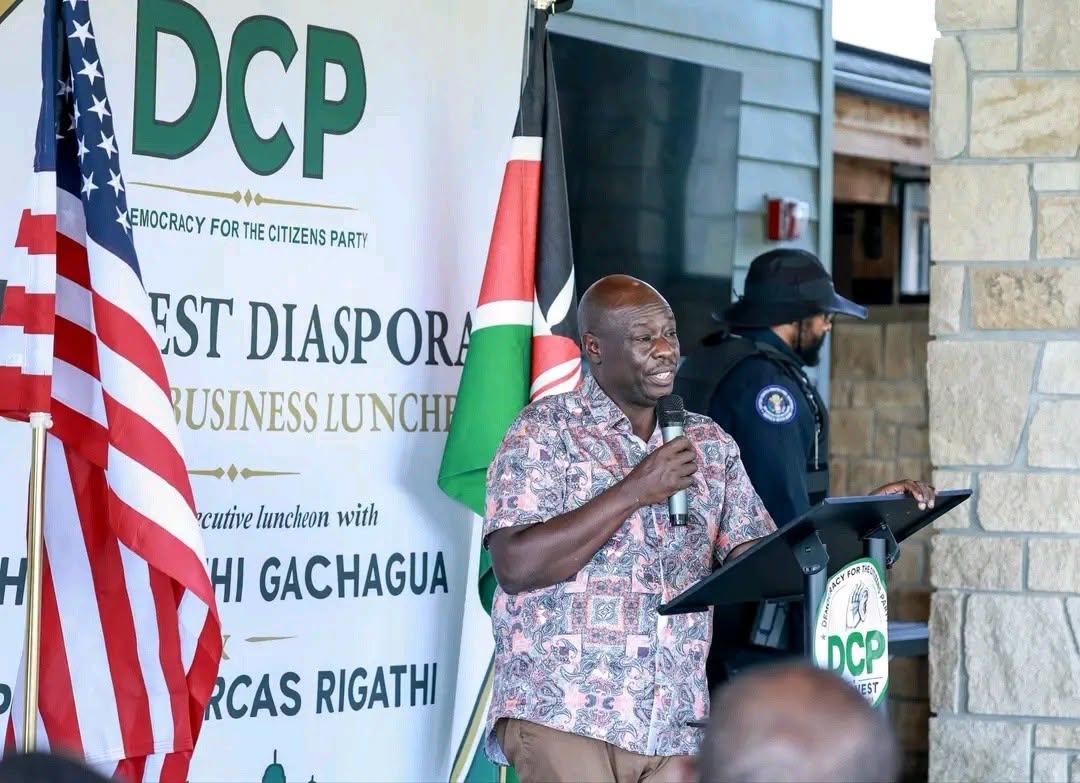
DCP Party leader Rigathi Gachagua meeting Business Executives at Silo Modern Farmhouse in Kansas City, Missouri USA.
Beyond remittances lies a deeper resource: skills, networks, and ideas that could reshape the nation’s future.
By Collins Kibet
For decades, Kenyans living and working abroad have been a quiet but vital thread in the country’s economic fabric. Every year, money wired home helps families pay school fees, cover household expenses, build homes, start businesses and navigate emergencies. That financial lifeline is real, it is significant, and millions of people depend on it. But is sending money home the full extent of what Kenyans in the diaspora can offer their country? The honest answer is: probably not, not by a long way.
Beyond the remittances flowing into Kenyan bank accounts every month lies something harder to measure but potentially far more transformative. Kenyans living abroad have accumulated skills, professional experience, international networks and knowledge drawn from some of the world’s most dynamic economies and institutions. A nurse working in London, an engineer in Houston, a tech developer in Berlin, a finance professional in Dubai — each carries expertise shaped by systems, standards and innovations that Kenya is still working to develop. The question worth asking is not whether those resources exist. They clearly do. The more pressing question is whether Kenya has built the conditions for them to flow back home in a meaningful way.
That question matters more urgently today than it did a generation ago. Kenya’s economy has grown, but youth unemployment remains stubbornly high, and competition for skilled opportunities in the formal sector is fierce. Young Kenyans graduate in large numbers every year and enter a labour market that does not always have enough room for them. Meanwhile, professionals in the diaspora have navigated career paths, built expertise and established networks that younger people at home rarely have access to. The gap between those two realities represents an opportunity that has barely been touched.
Mentorship is one of the most direct and accessible ways to bridge it. Professionals abroad do not have to physically return to Kenya to make a difference in the life of a young engineer in Eldoret or a medical student in Nairobi. Virtual mentorship programmes, online training sessions, internship pipelines, scholarship networks and professional communities can connect experienced Kenyans abroad with the next generation at home. Some of this is already happening informally, driven by individuals and small organisations. But it remains fragmented, under-resourced and largely invisible to most young Kenyans who would benefit most from it. Giving these efforts structure, scale and visibility is a practical step that neither requires enormous funding nor years of policy reform to achieve.

Investment presents a different but equally important opportunity. Kenyans abroad already invest at home — most visibly in real estate, where diaspora-built homes dot the outskirts of towns and cities across the country. That investment is personal and understandable. But the productive economy — the sector that creates jobs, drives innovation and expands local enterprise — sees considerably less diaspora capital than it could. Part of the reason is structural. Investment channels that are opaque, bureaucratic or perceived as unreliable discourage participation from people who may want to invest but cannot afford to take risks with hard-earned money managed from thousands of kilometres away.
There is a clear case for strengthening the systems that make investment accessible and dependable for diaspora Kenyans. Transparent regulatory frameworks, efficient remittance corridors, credible investment vehicles and reliable information about opportunities with clear returns are not luxury policy goals — they are the practical infrastructure that determines whether diaspora capital stays largely in the family or begins to fuel wider economic activity. The government has acknowledged this challenge periodically, but meaningful reform has been slow and uneven.
To be fair, the responsibility does not rest entirely with the state. Kenyans abroad also have a role to play, and it is a role that goes beyond writing a cheque. Living thousands of kilometres from home does not mean the connection to Kenya has to weaken or become purely transactional. Knowledge can be shared. Professional networks can be opened up. Business ideas that have worked elsewhere can be adapted and introduced at home. Students can be encouraged, enterprises can be supported, and the kind of practical guidance that is difficult to find in a classroom can be passed from one generation of Kenyans to another, regardless of geography.
There is also something important in the simple act of staying engaged — reading about home, following developments, contributing to public conversations, pushing back when things go wrong. The diaspora has a voice. In an era when digital tools make it easier than ever to participate across borders, choosing not to use that voice is itself a choice with consequences.
The relationship between Kenya and its citizens abroad is long overdue for an honest rethink. For too long, the conversation has defaulted to one number: how much money is being sent home. That number matters, and Kenya’s diaspora remittance figures — regularly among the most significant sources of foreign exchange the country receives — are worth acknowledging and building on. But reducing the entire relationship to a financial transaction does a disservice to both sides. It reduces Kenyans abroad to ATMs and overlooks the full range of what they have to offer. It also lets policymakers off the hook by allowing them to measure diaspora value in the narrowest possible terms.
The conversation Kenya needs to have is broader and more honest. How can skills accumulated abroad be transferred to institutions and industries at home? How can the business acumen developed in competitive international environments be channelled into Kenyan enterprises that need it? How can the international connections that diaspora professionals have built over careers become entry points for investment, trade and collaboration? How can young Kenyans at home gain access to the mentors, networks and opportunities that their peers in wealthier countries take for granted?
None of these questions have simple answers. But they are the right questions, and asking them seriously is a necessary first step. Kenya’s development over the next generation will not be driven by remittances alone. It will require ideas, expertise, innovation and the kind of partnerships that can only emerge when people with different experiences work toward shared goals. Kenyans abroad possess many of the ingredients that national development requires. The challenge — and the opportunity — is building the bridges that allow those ingredients to reach the places where they are most needed.
The real question facing Kenya today is not whether its diaspora citizens can contribute to national development. They already do, every single day, in ways large and small. The bigger question is whether Kenya can create the right conditions — the right policies, the right systems, the right culture of partnership — to transform the skills, experience, capital and connections of its citizens abroad into a genuine and lasting force for national progress. The answer to that question will say a great deal about the kind of country Kenya is choosing to become.
Similar Posts by The Mt Kenya Times:
- Trump launches AI Force: A new front in the battle for global technology dominance
- From the runway to youth empowerment
- Breach at Vote 8: What the Attack on the Namibian Defence Establishment Means for National Security
- Inspired by the poem “Time”
- The use of digital educational technologies in the prevention of dental diseases
About the Author