China’s battery strategy in Africa: Morocco takes the lead as BYD eyes South Africa
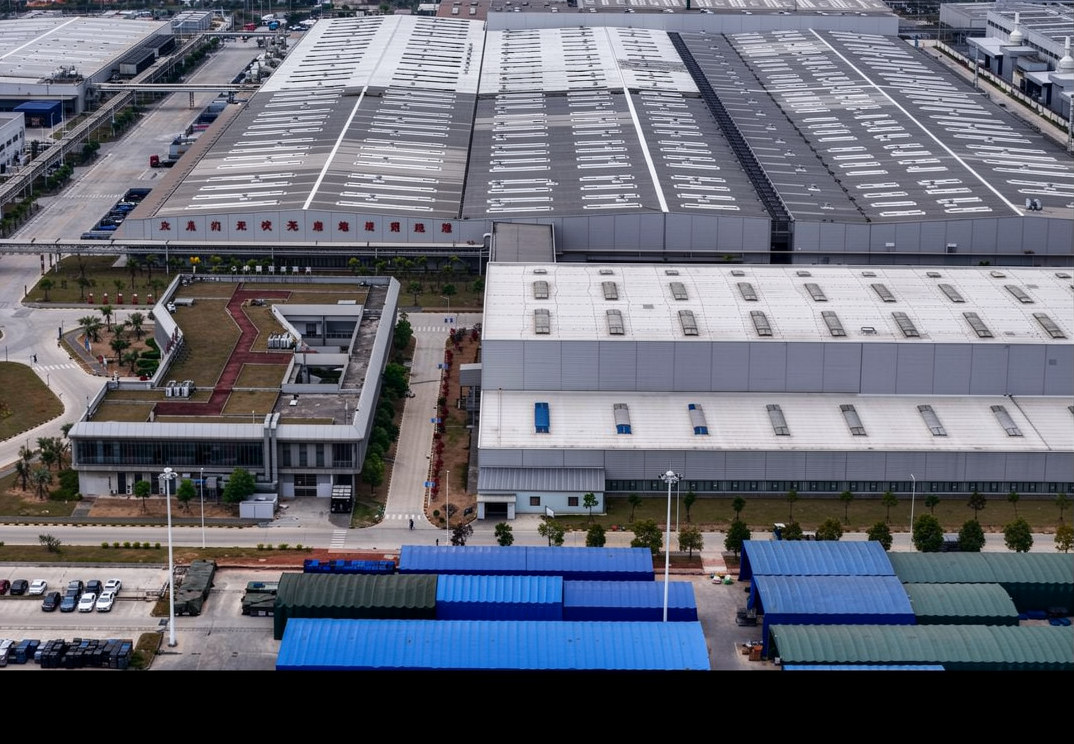
An aerial view of BYD's largest battery production base, Nanning Fudi Battery Co., Ltd., in Nanning, Guangxi Zhuang Autonomous Region, China. Photo | Courtesy
From gigafactories to joint ventures, Chinese investment is reshaping Africa’s electric vehicle value chain — and policy will decide who wins
By Njenga Hakeenah
China’s electric vehicle technology in Africa is expanding well beyond vehicle exports and assembly. Recent developments in Morocco confirm that battery and components manufacturing is now bankable on the continent — and the money is beginning to follow.
The African Development Bank’s approval of a $114M loan for Sino-German battery maker Gotion High-Tech’s gigafactory in Morocco marks one of the largest development finance commitments to an African battery manufacturing project. It signals that major institutions are prepared to back battery production, which could unlock similar funding elsewhere on the continent.
The bank’s support comes as Chinese companies, working with a range of partners, increasingly invest in battery manufacturing and materials alongside their vehicle exports and assembly operations. Battery components production is already under way, with Abu Dhabi-headquartered Falcon Energy Materials commissioning a 25,000-tonnes-per-year anode materials pilot project in Jorf Lasfar, near Casablanca. The company holds technical and strategic partnerships with Chinese firms Shanghai Shanshan New Material Co. and Hensen for the Morocco project.
Further south, the continent’s most sophisticated vehicle market is also emerging as a distinctive opportunity. South Africa has attracted the attention of BYD, the world’s largest producer of battery electric and plug-in hybrid vehicles — and indications are that its ambitions there go well beyond selling cars. Rather than following rivals into local vehicle assembly, BYD is exploring battery manufacturing, betting on the core technology that built its global dominance.
Several key lessons from Morocco are already apparent. The North African country has secured financing, signed manufacturing agreements and begun factory construction while South Africa is still assembling the policy framework needed to attract comparable investment. The contrast between the two is instructive: policy, more than mineral wealth, will determine which African countries capture industrial activity in the electric vehicle value chain and which are left behind.
Morocco has moved fast. Post-COVID, it rapidly established itself as Africa’s leading battery manufacturing destination by combining Chinese industrial investment with government backing and development finance. In 2024, the country signed a $300M agreement with China’s BTR New Material Group to build a cathode materials plant in Tangier. Cobco, a Chinese-Moroccan joint venture, has also opened a battery components factory expected to produce enough materials for nearly one million electric vehicles annually once fully operational. Together, these investments complement Morocco’s growing vehicle manufacturing sector, creating an integrated ecosystem where battery materials, components and vehicle production reinforce one another.
BYD’s approach to South Africa tells a different story. The company’s interest in battery manufacturing became clearer during the July launch of its BYD Finance joint venture with South African banking group Absa, where executives outlined ambitions that extend well beyond vehicle sales. Long before BYD became one of the world’s largest EV makers, it built its business on battery technology. Manufacturing batteries in South Africa would allow the company to leverage that expertise while supplying electric vehicles, energy storage systems and potentially other industries.
South Africa’s evolving policy direction could support those ambitions. The government has updated its Critical Minerals and Metals Strategy and proposed expanding automotive incentives so that half the value of critical minerals sourced from Southern Africa counts as local value addition in EV battery production. The measures are designed to encourage regional mineral processing while attracting battery manufacturers. Should BYD proceed with local battery production, it could reduce reliance on imported components while benefiting from existing and future incentive programmes.
The two countries together offer a snapshot of where Africa’s battery industry is heading. Morocco demonstrates how Chinese manufacturers, government policy and development finance can combine to establish battery production at scale. South Africa is working to create the conditions for similar investment but has yet to secure a major battery manufacturing commitment.
For other African countries hoping to move beyond vehicle assembly, mineral resources alone will not be sufficient. Building a battery industry also requires coordinated, stable industrial policy capable of attracting investors and opening access to long-term financing. The African Development Bank’s backing of Gotion’s factory suggests that development finance institutions are broadening their support to include battery manufacturing — not just EV deployment or charging infrastructure. That shift could significantly improve the bankability of future battery projects across the continent.
Similar Posts by The Mt Kenya Times:
- Mt Kenya Times ePAPER October 7, 2026
- Ruto signs KSh389B electric vehicle deal at State House
- Kenya mobilises KSh70B to fight Ebola as US and World Bank step in
- High Court freezes law school admissions over disputed entry rules
- Grade 11 textbooks head to schools as CBC transition gathers pace
About the Author