Clashes erupt in Congo’s capital as opposition resists constitutional changes
 The Mt Kenya Times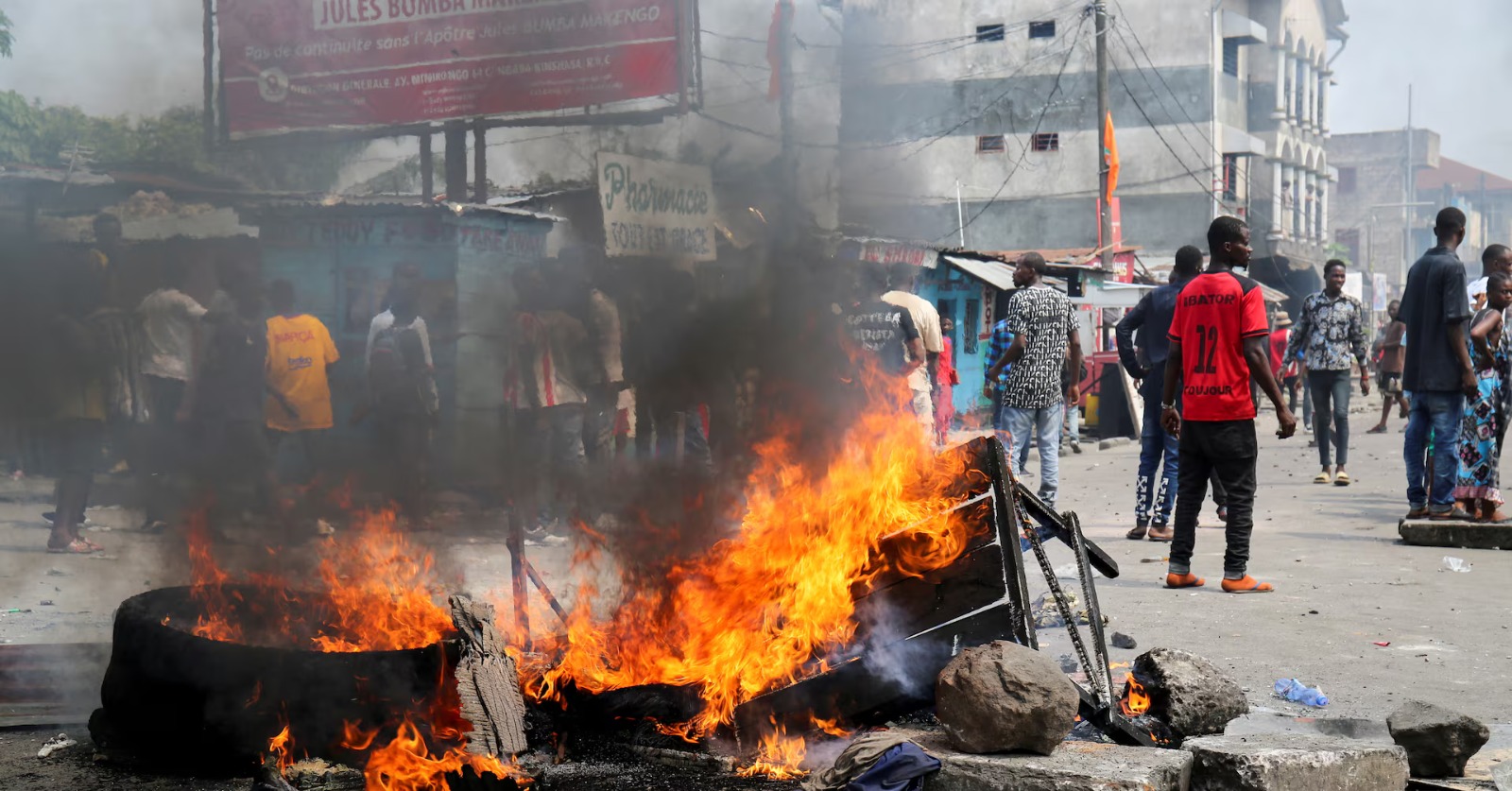
Security forces fire tear gas and live rounds as thousands converge on parliament in Kinshasa to oppose amendments that could hand President Tshisekedi a third term.
By Norman Mwale
Security forces in the Democratic Republic of Congo fired tear gas and live ammunition on Friday to disperse thousands of opposition supporters who marched on parliament in Kinshasa to protest proposed constitutional amendments that could allow President Félix Tshisekedi to seek a third term — a confrontation that left several prominent opposition figures bloodied and the capital on edge.
The demonstration, organised by the opposition coalition C64, or Coalition Article 64, brought together a broad front of parties that had spent recent years divided but reunited in May around their shared opposition to what they describe as a bid by Tshisekedi to extend his grip on power. C64 spokesman Prince Epenge said more than 20,000 sympathisers had mobilised for the sit-in outside the Palais du Peuple, parliament’s seat — a figure that underscored the depth of public feeling even as authorities had moved the previous day to ban the protest outright. Organisers pressed ahead regardless.
The gathering began peacefully near Boulevard du 30 Juin but escalated sharply within hours. Police moved to block routes leading to the National Assembly, and skirmishes broke out between opposition supporters and pro-government activists before security forces intervened in force. Protesters responded by hurling stones and setting alight tyres, sending plumes of black smoke across the city centre and forcing shops to close early. Witnesses described scenes of panic as crowds scattered through side streets. Red Cross volunteers stationed nearby treated several people for injuries. Hospitals in the Gombe district reported receiving at least 37 casualties, most suffering from gas inhalation and minor wounds, while opposition sources alleged two fatalities — claims that could not immediately be confirmed by independent sources or city authorities.
Among the injured was Martin Fayulu, one of Congo’s most prominent opposition leaders and runner-up in the 2018 presidential election. Video posted on his official Facebook page showed Fayulu with blood visible around his eyes and on the collar of his white shirt, supporters guiding him through the crowd. Fellow opposition figure Prince Epenge was also slightly wounded. Several other senior opposition figures, among them Delly Sesanga and Jean-Marc Kabund, sustained injuries during the clashes. Those who were hurt took refuge in the headquarters of Fayulu’s party, Commitment to Citizenship and Development, where police and activists linked to the ruling party’s Forces of Progress youth movement briefly attacked the building. Speaking from inside, Fayulu accused President Tshisekedi of deploying “the Forces of Progress militia alongside the police to attack unarmed activists.”
The interior ministry attributed the unrest to “provocation by political actors seeking to destabilise the republic,” a characterisation the opposition dismissed as a cynical attempt to deflect responsibility. Civil society groups and several opposition representatives were swift to condemn the violence, calling for independent investigations into the conduct of both security forces and pro-government activists.
At the heart of the dispute are constitutional amendments that would scrap the two-term presidential limit introduced in 2006 and reset presidential mandates — a change opponents have branded a “constitutional coup.” The National Assembly had, just 72 hours before Friday’s protest, passed a referendum bill widely seen as the key step toward enabling that reform. The ruling coalition argues the move is necessary for continuity and stability. A senior government official defended the proposals, telling reporters that “the constitution must serve the people, not shackle their choices,” and insisted parliament would follow due process.
Tshisekedi, 62, has been in office since 2019 and is due to complete his second five-year term in 2028. He has stopped short of formally declaring an intention to stand again, telling a press conference in May that he would accept a third term only “if the people demand it” — a formulation critics say is calculated ambiguity rather than a genuine disavowal. Former president Joseph Kabila, himself no stranger to constitutional controversy during his own tenure, added his voice to the opposition on Friday, warning against what he called the “Sudanisation” of the country and arguing that the proposed changes undermined the social contract and must be resisted by all Congolese regardless of political affiliation.
Opposition leaders rejected the government’s position outright. “We will not allow democracy to be rewritten at gunpoint,” a C64 coalition spokesperson told demonstrators, addressing the crowd from atop a van before police moved in. Civil society groups warned that the amendments risked reversing hard-won democratic gains made since the country’s last peaceful transfer of power. A Kinshasa-based analyst noted that the anger on the streets was driven less by the precise text of the amendments and more by the perception that the process had been conducted without meaningful public consultation. “When institutions are perceived as closed,” he said, “the street becomes the parliament.”
The confrontation also unfolded against an already strained national backdrop. Congo is simultaneously grappling with an active Ebola outbreak and an escalation of the decades-long conflict in its eastern provinces, where the Rwanda-backed M23 rebel movement is among more than 100 armed groups vying for control. The constitutional question has added a volatile political dimension to a country already stretched across multiple simultaneous crises.
By late afternoon the city had quietened, though tension remained palpable, with army patrols visible at key intersections and mobile internet services reported intermittent across parts of the capital. The African Union called for restraint and dialogue, while the United Nations mission in the DRC urged investigations into any excessive use of force. A student protester who had joined the march said that fear would not silence a generation that had grown up watching power change hands through the ballot, not the barrel.
For now, Kinshasa waits — caught between a government determined to press ahead with reforms it insists are democratically grounded and an opposition that has made clear the final word on the constitution will not be spoken inside parliament alone.
Similar Posts by The Mt Kenya Times:
- Mt Kenya Times ePAPER October 1, 2026
- Museveni backs Lamu but keeps Uganda’s money at home
- Sifuna’s party wins its name — and Kenya’s opposition race begins in earnest
- Lamu’s $16B gamble: Africa’s biggest refinery divides the region
- Ruto launches KSh2.2 trillion Lamu refinery in East Africa’s biggest energy bet
About the Author