The Mt Kenya Times
Exploring how our education system stifles creativity and nurtures conformity in the name of productivity
By: Midmark Onsongo
Worth Noting:
- When the national curriculum is reduced to a mere checklist of facts, we sacrifice innovation on the altar of compliance. Think of the late 20th-century reforms that aimed to bolster our educational framework: No Child Left Behind in 2001, for instance. Intended to elevate educational standards, it instead shackled teachers with the heavy chains of standardized testing, ultimately producing students who can regurgitate answers rather than engage in meaningful discourse.
- Consider my friend James, a brilliant young man with a knack for unraveling complex problems. He dreamt of revolutionizing technology, but after years of navigating a rigid educational structure, he found himself trapped in a cycle of monotony, where creativity was suffocated under the weight of assessments.
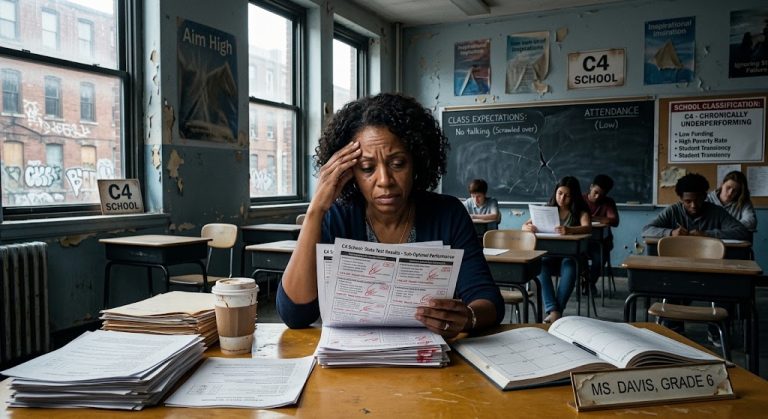
It is a well-known fact, as acknowledged by countless scholars and frustrated educators, that our education system operates like a well-oiled machine, cranking out obedient workers instead of curious minds. Picture a sprawling factory: rows of desks and chairs, students lined up like assembly line products, all neatly packaged into pre-determined roles.
The bells ring, the teachers instruct, and the students comply, marching dutifully through their days. It’s ironic that in an age where innovation is paramount, our classrooms resemble a Victorian factory more than a vibrant marketplace of ideas. The ringing of bells echoes through the halls like the clanging of hammers, reminding us that punctuality and compliance are more valued than creativity and critical thought.
When did the quest for knowledge become synonymous with rote memorization and mindless repetition? As we question the very foundation of our education system, we must confront a paradox: how can we ignore the reality that our schools prioritize conformity over creativity?
The visionaries of the past, like Sir Ken Robinson, an education reform advocate, have long criticized this system, famously stating that “creativity is as important as literacy.” Yet, this profound statement often falls on deaf ears. Our institutions, like clockwork, continue to churn out students who fear questioning authority, a tragedy masked by the euphemism of “standardized education.”
When the national curriculum is reduced to a mere checklist of facts, we sacrifice innovation on the altar of compliance. Think of the late 20th-century reforms that aimed to bolster our educational framework: No Child Left Behind in 2001, for instance. Intended to elevate educational standards, it instead shackled teachers with the heavy chains of standardized testing, ultimately producing students who can regurgitate answers rather than engage in meaningful discourse.
Consider my friend James, a brilliant young man with a knack for unraveling complex problems. He dreamt of revolutionizing technology, but after years of navigating a rigid educational structure, he found himself trapped in a cycle of monotony, where creativity was suffocated under the weight of assessments.
Ironically, as James immersed himself in his corporate job, he realized that the very skills he had honed—those of obedience and compliance—were all that mattered. Instead of challenging the status quo, he became another cog in the wheel, his dreams quietly eroded like sandcastles washed away by the tide.
Such is the fate of many bright minds who slip through the cracks of an education system that prizes obedience over inquiry. Our political leaders play a role in this dance of conformity, perpetuating an educational model that champions compliance. Figures like George W. Bush and Barack Obama, with their sweeping educational reforms, focused on accountability and metrics, often neglecting the deeper issues at play.
They fail to recognize that while we may produce workers who can perform tasks, we are not nurturing individuals who can think critically or innovate. A society that values conformity will inevitably face stagnation, as the innovative sparks of creativity flicker out in favor of the dull glow of obedience. Education should be a journey, not a regimented march towards a predetermined destination.
Instead, we see students shackled by an assembly-line mentality, where critical thinking is sacrificed at the altar of practicality. We need only look to Finland’s education system, often hailed as one of the best in the world, for inspiration.
Finnish educators emphasize student autonomy, creativity, and critical thinking—qualities that produce thinkers rather than drones. Students in Finland enjoy longer recesses and fewer standardized tests, creating a rich environment for exploration and engagement. Their approach serves as a glaring antithesis to the rigid systems we currently uphold.
Yet, even as we look outward for inspiration, we must confront the harsh reality of our own system here in Kenya. The Kenya National Examinations Council (KNEC) perpetuates a cycle of rote learning and examination anxiety. As students prepare for the Kenya Certificate of Secondary Education (KCSE), the focus shifts entirely to passing tests rather than fostering genuine understanding or igniting curiosity. It is an irony not lost on us that our brightest students, those who excel in exams, may be ill-equipped to tackle real-world challenges.
Are we, then, willing to let this cycle continue unchallenged? Must we remain passive observers in a system designed to produce obedient workers rather than thinkers? The answer lies in our collective willingness to challenge the narrative that has long dictated our educational policies. It is time to embrace educational reform that values creativity, critical thinking, and the courage to question authority.
Education should not merely be a means to an end, a conveyor belt that churns out compliant workers ready to join the workforce. It should be a sacred space, a vibrant community where students are encouraged to explore, experiment, and express their thoughts without fear of repercussion. Our classrooms should ring with the sounds of spirited debates and innovative ideas, rather than the monotonous drone of conformity.
Yet, how do we achieve this transformation? It begins with educators and policymakers redefining success. We must ask ourselves: Is it success if our students can regurgitate information, or is true success found in their ability to think critically, to innovate, and to challenge the world around them? By embracing this ethos, we can create a system that nurtures thinkers rather than workers. Time for complacency has passed.
As we peel back the layers of our education system, we reveal a stark truth: we must ignite a movement that values creativity and critical thought above all. Let us not become a society of drones, where conformity reigns supreme, but rather a community of thinkers, innovators, and dreamers who dare to challenge the status quo.
It is time to dismantle the assembly line of education and build a vibrant marketplace of ideas that fosters the next generation of critical thinkers. The future depends on it, and it is up to us to demand the change we wish to see.
This article was scripted by;
MIDMARK ONSONGO, SGS
(Socio-Geographic Scholar)
Similar Posts by The Mt Kenya Times:
- Mt Kenya Times ePAPER September 28, 2026
- Kalonzo turns 40-year jibe into rule of law defence
- Roseline Njogu emerges as leading voice in Kenya’s diaspora and labour mobility agenda
- Ruto: Expansion of Mzima Springs water project to begin this year
- Linda Mwananchi settles on Sifuna as 2027 presidential flagbearer
About the Author