Educational empowerment: A non-negotiable investment in Kenya’s future
 The Mt Kenya Times
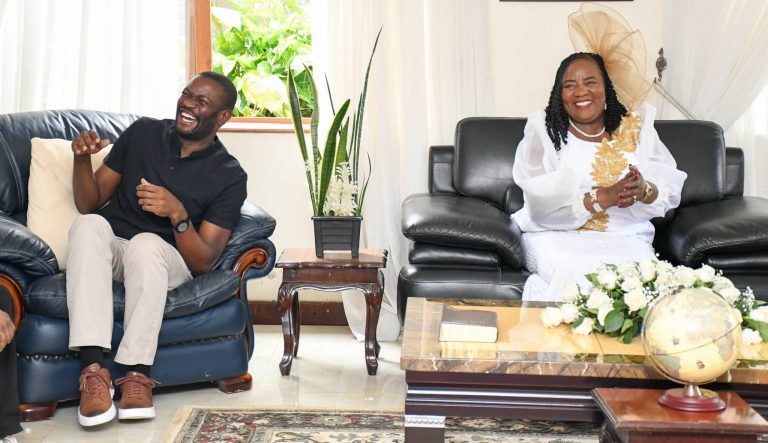
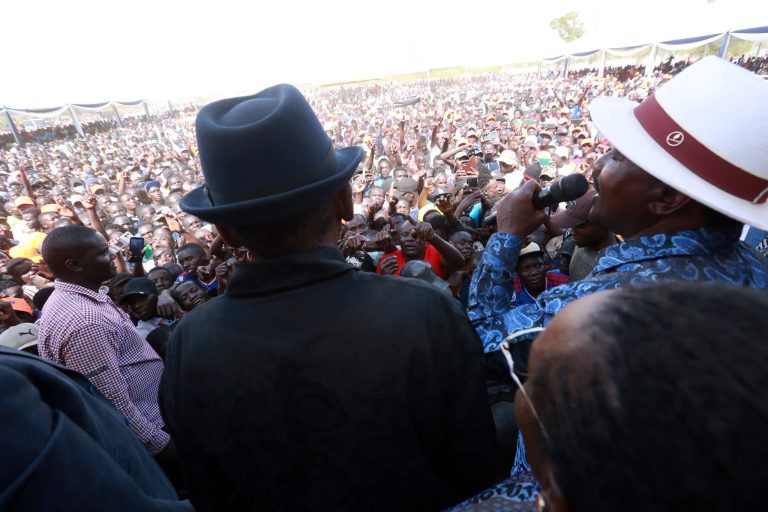
Cabinet Secretary Opiyo Wandayi's joins Stephen Letoo for an educational empowerment programme in Oldanyati

When leaders show up for young people, they affirm a truth the nation cannot afford to ignore.
By James Kilonzo Bwire
Cabinet Secretary Opiyo Wandayi’s decision to join journalist Stephen Letoo for an educational empowerment programme in Oldanyati, Kilgoris Constituency, Narok County — alongside Governor Patrick Ntutu, Senator Eddy Oketch, Rebecca Tonkei and other leaders — is a welcome affirmation of a simple but vital truth: real national progress depends on equipping young people with the tools to learn, grow and participate fully in society.
Such initiatives are not peripheral projects to be celebrated as political gestures. They are core investments in the future of the nation. They expand opportunity, strengthen communities and reinforce the social compact between leaders and the people they serve.
Education is the pathway through which individuals translate potential into meaningful contribution. Programmes that focus on empowering young people remove barriers that would otherwise confine talent and ambition to the margins. When leaders take visible, sustained interest in educational empowerment, they send a clear message: youth development matters, and public resources and attention must be aligned to create environments where learning can flourish.
The presence of national and local leaders at grassroots programmes signals accountability, reinforces commitment and helps sustain momentum for practical interventions that benefit learners directly.
Educational empowerment also shapes not only individual lives but the character and resilience of entire communities. When young people acquire knowledge and skills, they are better positioned to address local challenges, participate in civic life and contribute to social cohesion. Investing in education is, at its core, an investment in civic maturity — one that fosters informed citizens capable of deliberating about community needs, evaluating choices and holding leaders to account.
This dynamic is essential for a functioning democracy. It roots political life in a population that can articulate priorities and engage constructively in public affairs.
The value of initiatives such as the one in Oldanyati is further reinforced by the collaborative dimension of leadership on display there. When figures from different levels of government and civil society come together for educational empowerment, it reflects a shared responsibility toward youth. That unity matters because education intersects with nearly every area of public policy — governance, health, infrastructure and economic opportunity. A coordinated approach ensures that educational empowerment is not isolated from the broader services young people need to thrive.
Visible collaboration among leaders also establishes expectations for integrated support that can sustain educational gains over time.
Maintaining a focus on educational empowerment also guards against short-termism in public life. Political cycles and competing priorities can easily divert attention and resources away from enduring needs. But when education remains a visible and ongoing priority, it anchors development strategies to long-term outcomes that benefit successive generations. Sustained engagement with communities — not isolated, episodic events — is what delivers lasting progress.
The moral dimension of prioritising youth empowerment should not be overlooked either. Leaders carry an ethical obligation to create conditions in which all young people can realise their potential. Supporting programmes that expand access to learning is a practical expression of that obligation. It affirms the dignity and worth of young people and the collective responsibility to build a society where every citizen has a genuine chance to contribute.
The Oldanyati initiative, with Wandayi and a broad range of local and national leaders present, models the kind of leadership that places educational empowerment at the centre of national development. It is a reminder that investments in learning are investments in stability, prosperity and democratic engagement.
As a nation, sustaining and scaling such initiatives must be a priority — because our future depends on the capacity and opportunity we give to the next generation.
Similar Posts by The Mt Kenya Times:
- Mt Kenya Times ePAPER October 16, 2026
- Oburu marks birthday and brother’s death from Nairobi Hospital bed
- Natembeya and Orengo demand answers over security withdrawal
- Linda Mwananchi Movement: The brand that could reshape Ruto’s path to 2027
- ODM and Linda Mwananchi clash at Raila’s Bondo memorial
About the Author