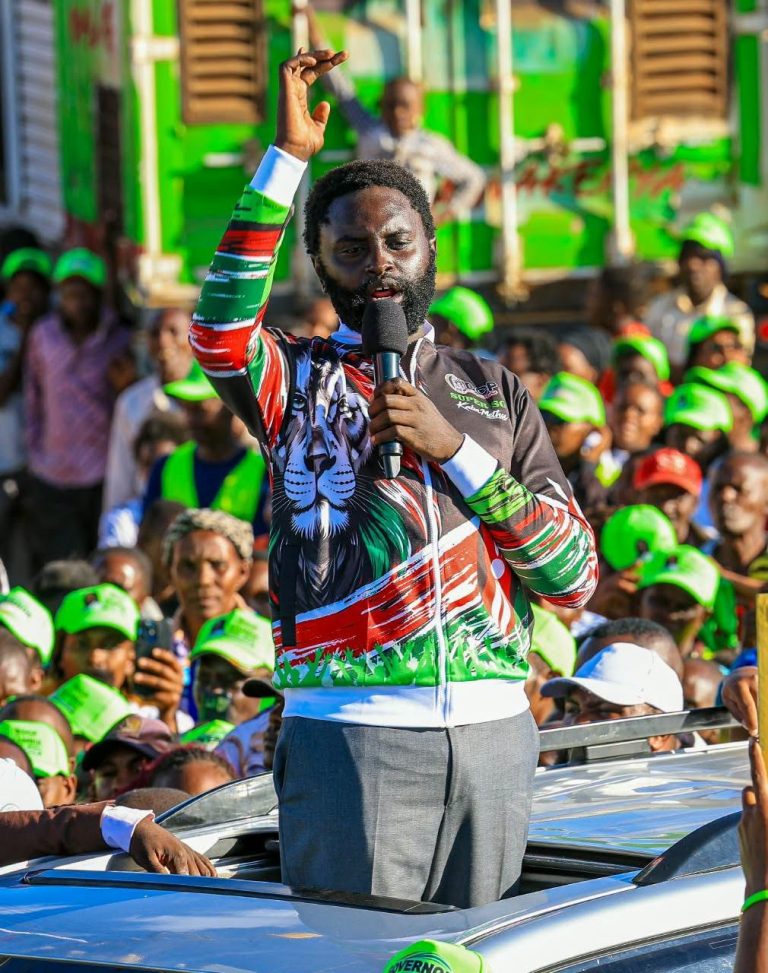
“Enough Is Enough”: Tom Odege Calls Out Rigathi Gachagua and Justin Muturi for Divisive Tactics

Tom Odege Member of Parliament for Nyatike Constituency
By John Kariuki
In a fiery and unapologetic critique, Tom Odege, the Member of Parliament for Nyatike Constituency, has launched a scathing attack on former Deputy President Rigathi Gachagua, accusing him of fueling tribal animosity and propagating dangerous rhetoric that risks plunging the nation into ethnic tensions. Speaking during a live morning interview on a local TV station, the outspoken legislator also questioned the motives of Justin Muturi, raising concerns about the politicization of personal grievances.
Addressing Gachagua’s recent remarks, Odege did not hold back. “Let’s call it as it is. You talk about Gachagua speaking for the people. Which people? Can he go and talk to the public in Nyanza or Coast? What he is trying to do will make him a tribal leader,” Odege asserted. He accused Gachagua of exploiting ethnic divisions under the guise of leadership, warning that such actions could escalate into full-blown tribal animosity, jeopardizing the country’s fragile unity.
But Odege’s critique didn’t stop there. Shifting his focus to Justin Muturi, the legislator expressed skepticism about the timing and approach Muturi used while addressing a sensitive issue in a recent press conference. “The approach Muturi took while releasing that presser raises many questions,” Odege observed. “As much as he is in pain as a parent, the timing will make it seem political.” His remarks alluded to the fine line between addressing personal matters and using such moments for political gain, a tactic Odege strongly condemned.
The Nyatike MP, known for his fearless and candid nature, has been vocal about the need for leaders to prioritize national cohesion over personal or tribal interests. “Leadership is about building bridges, not burning them,” he emphasized. “Kenya needs leaders who speak for all people, not just their tribes. What we are witnessing is not leadership—it’s a dangerous game that puts the country’s future at risk.”
Odege’s sentiments have struck a chord with many Kenyans who are weary of divisive politics and are calling for a more inclusive and constructive political discourse. His call for accountability comes at a time when the nation is grappling with a polarized political environment and is yearning for leaders to rise above narrow interests to address pressing national issues.
By taking on two prominent figures, Tom Odege has reaffirmed his position as a fearless defender of unity and justice. His critique is not just a challenge to individual leaders but a rallying cry for all politicians to abandon divisive rhetoric and focus on the collective good. As Kenya navigates a critical juncture in its history, voices like Odege’s serve as a crucial reminder of the responsibility leaders bear in shaping the nation’s future.
With his powerful words and unwavering stance, Odege has ignited a much-needed conversation about the kind of leadership Kenya requires—one that prioritizes unity, accountability, and integrity over personal and tribal ambitions.
Similar Posts by The Mt Kenya Times:
- Mt Kenya Times ePAPER October 19, 2026
- DCP takes healthcare pledge to Murang’a heartland
- Sifuna bets his political life on a presidential run
- Ruto turns Nandi rally into opposition assault as 2027 battle lines harden
- Kenya’s Ebola cases climb to eight as outbreak spreads beyond health workers
About the Author