Environmental Education And Sustainable Development In Preschool Education
Environmental Education And Sustainable Development In Preschool Education
By: Abdirashidova Ozoda
ABSTRACT:
Today, preserving nature is the most important condition for giving a decent life to future generations. Forming the ideas of ecological and sustainable development in preschool educational institutions means, in fact, building our tomorrow. This article highlights ways to instill in young children such qualities as love for nature, a careful attitude to the environment, and appreciation of a green lifestyle at an early age.
KEYWORDS: Ecological education, sustainable development, nature conservation, waste sorting, preschool education.
INTRODUCTION
In today’s era of globalization, environmental education is a pressing issue not only for adults, but also for the youngest generation – children of preschool age. Because if the culture of nature conservation is instilled from an early age, it becomes an indispensable value for a person throughout his life.
By focusing on the process of environmental education in preschool institutions, strengthening children’s love for nature, and instilling in them a sense of responsibility for the environment, it is possible to contribute to the ideas of sustainable development.
MAIN PART
Today, the figures of the environmental crisis around the world are sobering: according to the UN, about 10 million hectares of forest area are reduced every year, while greenhouse gases released into the air are increasing global temperatures by an average of 0.2 °C annually. In Uzbekistan, the depletion of water resources and soil degradation pose a direct threat to the future of children. Therefore, environmental education is the strongest guarantee of securing tomorrow.
Preschool education is the golden age for the formation of environmental awareness. As psychologists note, children are most actively developing environmental sensitivity between the ages of 3 and 6. Unfortunately, today in many kindergartens, environmental classes are not systematized, teaching aids are not enough, and parental participation is weak. The solution requires a simple but systematic approach: Practical experience areas – creating a small green corner in the kindergarten, vegetable gardens, mini greenhouses, interesting games and projects – role-playing games on waste separation, water conservation, interactive activities such as building bird nests organizing activities, strengthening environmental culture in the family through parent-child cooperation, organizing eco-flash mobs and walks together;
Media and technologies – through cartoons, animated textbooks, and digital games for children, environmental topics can be made interesting; covering local problems, explaining local initiatives to restore the Aral Sea ecosystem and conserve water resources in children’s language.
It is also important to enrich professional development programs for teachers and develop methodological guides adapted to local conditions. Studies show that in institutions where environmental education lessons are regularly and creatively organized, children’s positive attitude towards nature increases by 40-60%.
The article reveals the advantages of these approaches and develops proposals for deeper integration of sustainable development ideas into the preschool education system. As a result, the younger generation will grow up as environmentally conscious, nature-loving, and responsible citizens for a green future.
Today, environmental problems have become one of the most pressing issues facing humanity. Environmental protection, rational use of natural resources and the creation of a healthy living environment for future generations are the main requirements of sustainable development. Therefore, it is important to start the process of environmental education from an early age, that is, from the preschool education period. If a child is instilled with love for nature, thrift, and a sense of responsibility from an early age, he will become a conscious citizen in the future. Below we will consider effective ways to provide environmental education in preschool educational institutions.
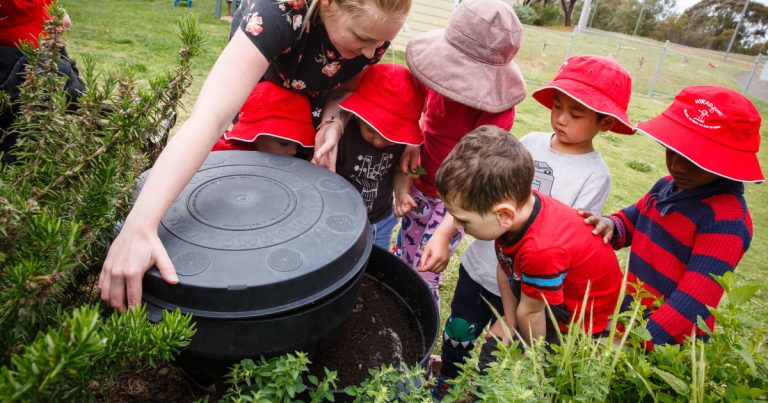
Children are first taught to love nature by showing them the beauty of nature, such as caring for flowers, planting and caring for trees, and showing kindness to animals and birds. Through these, children learn to appreciate nature.
Teachers conduct small experiments with them and explain the role of nature in human life. The culture of waste recycling should be instilled in children from an early age. Teaching children to separate waste into plastic, paper and organic types from an early age forms an ecological culture. Organizing this process in the form of a game increases efficiency. Teaching children to use water economically and not waste electricity is also an important part of ecological education. Simple habits such as turning off the light and closing the door strengthen ecological responsibility in children’s minds. Educators can instill this in children through various fairy tales or songs. By conducting ecological education in preschool institutions in the form of practical classes, it is possible to achieve high efficiency. Such classes develop not only knowledge in children, but also practical skills. Through ecological education, children develop a love for nature, a culture of environmental protection, and rational use of resources.
Skills are formed. This will form the basis for the future generation to grow up conscious, responsible, and ready for sustainable development.
Also, holding events such as environmental holidays, Nature Day, Clean Air Week, Let’s Save Water, and Transport-Free Day in preschool educational institutions will help further develop and strengthen environmental awareness.
Recommendations are given to strengthen educational work through practical experiences, interesting games, cooperation with parents and modern pedagogical approaches. The article discusses how the concept of “sustainable development” can be adapted to the upbringing of children, and presents current issues in the upbringing of the younger generation to the general public in a simple and understandable language.
CONCLUSION
In conclusion, the introduction of environmental education in preschool education is one of the most important steps towards sustainable development. This is an important process not only for the current life of children, but also for the future of the entire society. A child who loves nature and is accustomed to preserving it will become a responsible citizen in the future. Therefore, educators and parents should jointly form an ecological culture. After all, every small step taken towards sustainable development serves the great happiness of future generations.
Teaching children to protect nature is a noble seed planted for the future.
Abdirashidova Ozoda, Born in Chiraqchi district of Kashkadarya region, studied at the Pedagogical Faculty of Karshi State University, majoring in Preschool Education. Ambassador and member of international organizations. Holder of international certificates.
REFERENCES USED:
- Laws of the President of the Republic of Uzbekistan “On Environmental Protection”.
- UNESCO. Education for Sustainable Development in Early Childhood. Paris, 2020.
- H. Abdullayeva. Fundamentals of ecological education in preschool education. Tashkent, 2019.
- Methodological manuals of the Agency for Preschool Education of the Republic of Uzbekistan.
Similar Posts by The Mt Kenya Times:
- AI Curse or boon: The Future of Intelligence: Artificial or Emotional?
- Dr. Ekrah Ndung’u wins TVET advocacy award after 12 years
- Mt Kenya Times ePAPER October 17-18, 2026
- Ruto bets billions on Kerio Valley — with one eye on 2027
- Ruto’s health ministry kills Murang’a’s digital hospitals
About the Author