Kenya’s opposition meets again — but the harder questions remain unanswered
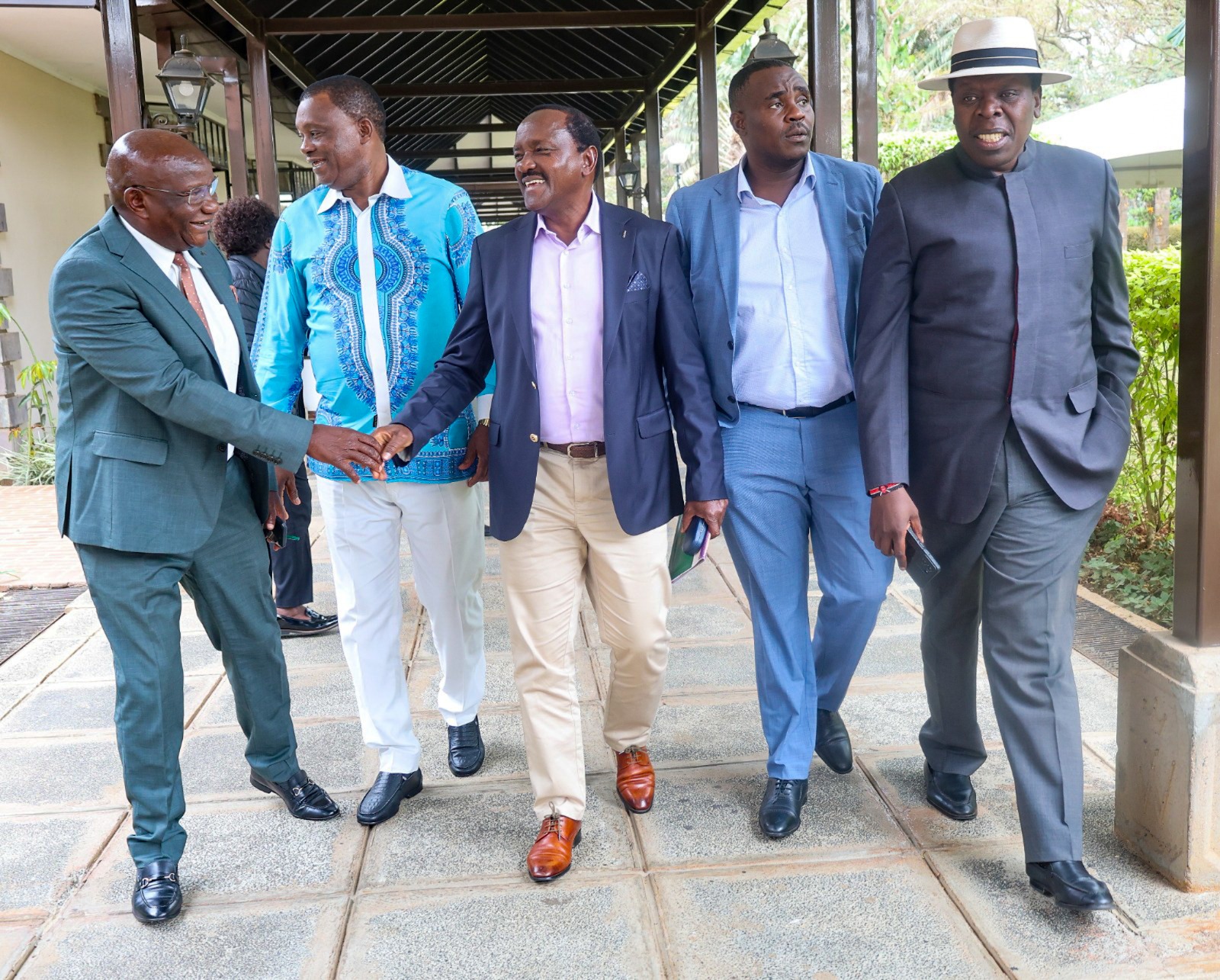
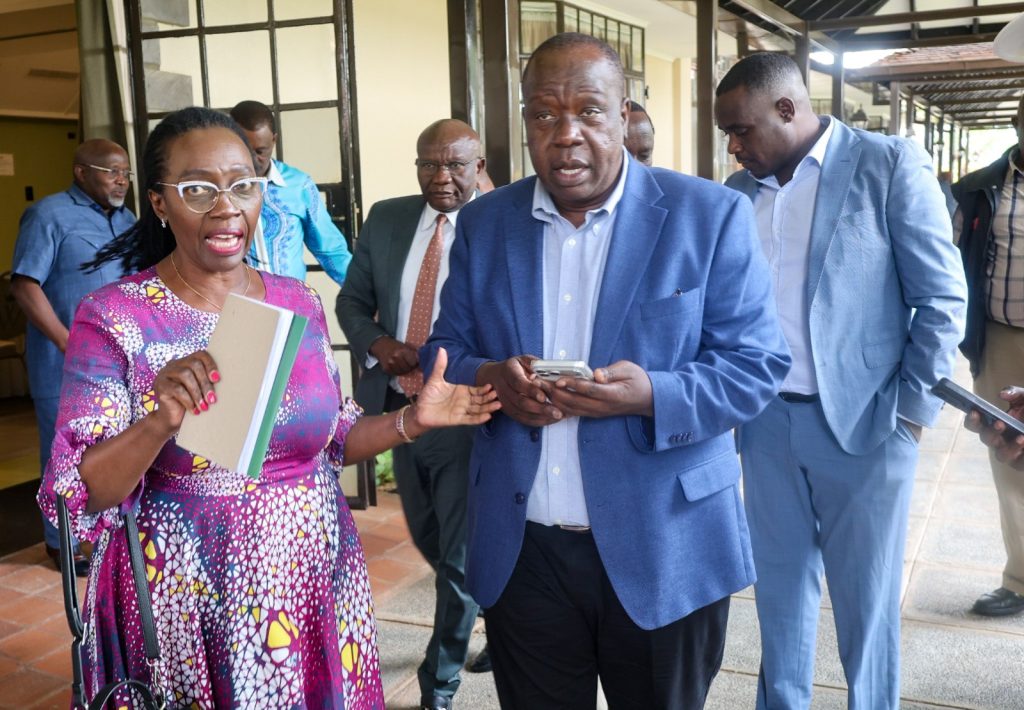
Wiper Patriotic Front leader Kalonzo Musyoka yesterday convened a second consultative meeting of the United Alternative Government principals
The United Alternative Government is holding together on paper, but the battle over who leads it into 2027 is becoming the alliance’s most dangerous internal front.
By James Mwangi
Wiper Patriotic Front leader Kalonzo Musyoka yesterday convened a second consultative meeting of the United Alternative Government principals, projecting unity and determination ahead of the August 10, 2027 general election — even as deep unresolved tensions over the coalition’s presidential candidate, selection method and campaign timeline continue to simmer beneath the surface.
“We held a consultative meeting with the UAG principals today to deepen our unity and chart the way forward for our alliance. Our mission remains clear: unite Kenyans, restore hope, and Komboa Kenya,” Kalonzo said after the meeting, offering little detail on what was actually deliberated.
The brevity of that statement was telling. The UAG is a coalition that has committed, in writing, to unity — but has not yet agreed on the most fundamental question of any presidential alliance: who will be its candidate?
The coalition brings together some of the most consequential figures in Kenyan opposition politics. Kalonzo, the Wiper Patriotic Front leader and UAG co-convener alongside Martha Karua of the People’s Liberation Party, is the most prominent. Alongside them sit Jubilee Deputy Leader Fred Matiang’i, Democratic Party leader Justin Muturi, DAP-Kenya’s Eugene Wamalwa, Party of National Unity’s Peter Munya and former Deputy President Rigathi Gachagua’s Democracy for Citizens Party, represented in absentia at the August 24 Kiambu retreat by Cleophas Malala, who signed the unity covenant on Gachagua’s behalf.
That retreat, held at Windsor Hotel in Kiambu on August 24 and originally scheduled for two days, ended after only one day’s deliberations — without resolving the critical structural and political questions that will ultimately determine whether the UAG becomes a genuine electoral force or another opposition formation that fractures before polling day. The principals signed a Personal Unity Pledge and a Coalition Unity Agreement committing to support whoever emerges as the presidential candidate. But the mechanism for selecting that candidate, and the timeline for doing so, remain firmly contested.
Kalonzo has been proposing boardroom negotiations as the method for selecting the flag bearer, while a faction led by Gachagua and Matiang’i has been pushing for scientific polling. Gachagua has also rejected calls to unveil the candidate soon, insisting the announcement should come closer to the election — pointing to 2002 as the model — and arguing that principals should focus on consolidating their respective bases before engaging in serious coalition talks after Christmas.
The disagreement is not merely procedural. It reflects fundamentally different assessments of political reality. Those pushing for an early announcement, including allies within Kalonzo’s camp, argue that the opposition needs a clear identity and a named presidential candidate to give voters something concrete to rally around. Those urging caution, led by Gachagua, argue that premature announcement would expose the chosen candidate to sustained government targeting before the campaign has properly begun.
Democratic Party leader Justin Muturi has already declared publicly that if he does not secure the coalition ticket himself, the only principal he would support is Kalonzo. “If I’m not selected as the presidential candidate, the only other principal in the united opposition I can support is Kalonzo. Let’s stop beating around the bush,” Muturi said. The declaration has accelerated speculation that Kalonzo is emerging as the coalition’s frontrunner — speculation that has generated both encouragement from some quarters and resistance from those who insist the selection must follow a transparent, agreed process.
Karua has been careful to manage those expectations. “As Principals and Co-Convenors of the United Alternative Government, we are committed to building a coalition founded on consultation, mutual respect, inclusivity and fidelity to agreed processes,” she said. “These values distinguish our coalition and inspire confidence among Kenyans who seek a credible, democratic and principled alternative.” A technical committee chaired by former Cabinet minister Kipruto arap Kirwa has been developing proposals on how the coalition should be formally structured and governed, with its recommendations expected to be presented to principals soon.
The structural challenge is significant. Without a fully established secretariat, the coalition remains heavily dependent on the goodwill and availability of individual principals — a fragile foundation for an alliance that will need to coordinate campaign operations, manage regional outreach, negotiate running mate arrangements and mount a credible electoral infrastructure across 47 counties in less than twelve months.
The political environment in which the UAG is operating has also shifted considerably in recent weeks. The abduction of Standard Group Associate Editor Alex Kiprotich on Monday night — the second targeting of a journalist critical of the government in two months — has sharpened the opposition’s narrative about democratic backsliding under President William Ruto. Kalonzo has been among those calling on the international community to take note of Kenya’s deteriorating democratic environment, and events like the Kiprotich abduction provide precisely the kind of evidence that the UAG needs to sustain a credible reform argument.
Ruto, for his part, is not standing still. His administration has been moving aggressively to consolidate support outside traditional Kenya Kwanza territory, offering development projects, appointments and political attention to regions the opposition is counting on. Deputy President Kithure Kindiki’s mobilisation across Mt Kenya East has been intensive, and the ruling coalition’s financial and institutional advantages remain formidable.
The UAG’s greatest asset — and its most persistent vulnerability — is its diversity. It brings together leaders from across Kenya’s ethnic, regional and ideological spectrum, which gives it a theoretical national reach that no single-community coalition can match. But that same diversity makes consensus enormously difficult to achieve. Every decision involves multiple competing interests, every announcement carries the risk of alienating one principal or another, and every delay in resolving the candidate question allows Ruto’s camp to further consolidate its position.
Yesterday’s meeting was described by Kalonzo as a deepening of unity. The harder truth is that unity in a coalition at this stage of the election cycle is not measured in consultative meetings or signed pledges — it is measured in the willingness of powerful, ambitious individuals to subordinate their personal interests to a collective decision, even when that decision does not go in their favour.
That test has not yet arrived for the UAG. When it does, Kenya will learn whether yesterday’s gathering was the beginning of a genuine alternative government — or simply another chapter in the long, complicated story of Kenya’s opposition learning to lose together.
Similar Posts by The Mt Kenya Times:
- Mt Kenya Times ePAPER October 17-18, 2026
- Ruto bets billions on Kerio Valley — with one eye on 2027
- Ruto’s health ministry kills Murang’a’s digital hospitals
- Kenya bets on Mount Kenya to drive a billion-shilling tourism revival
- Do you have a wealth vision? Or are you just working until you die?
About the Author