The Mt Kenya Times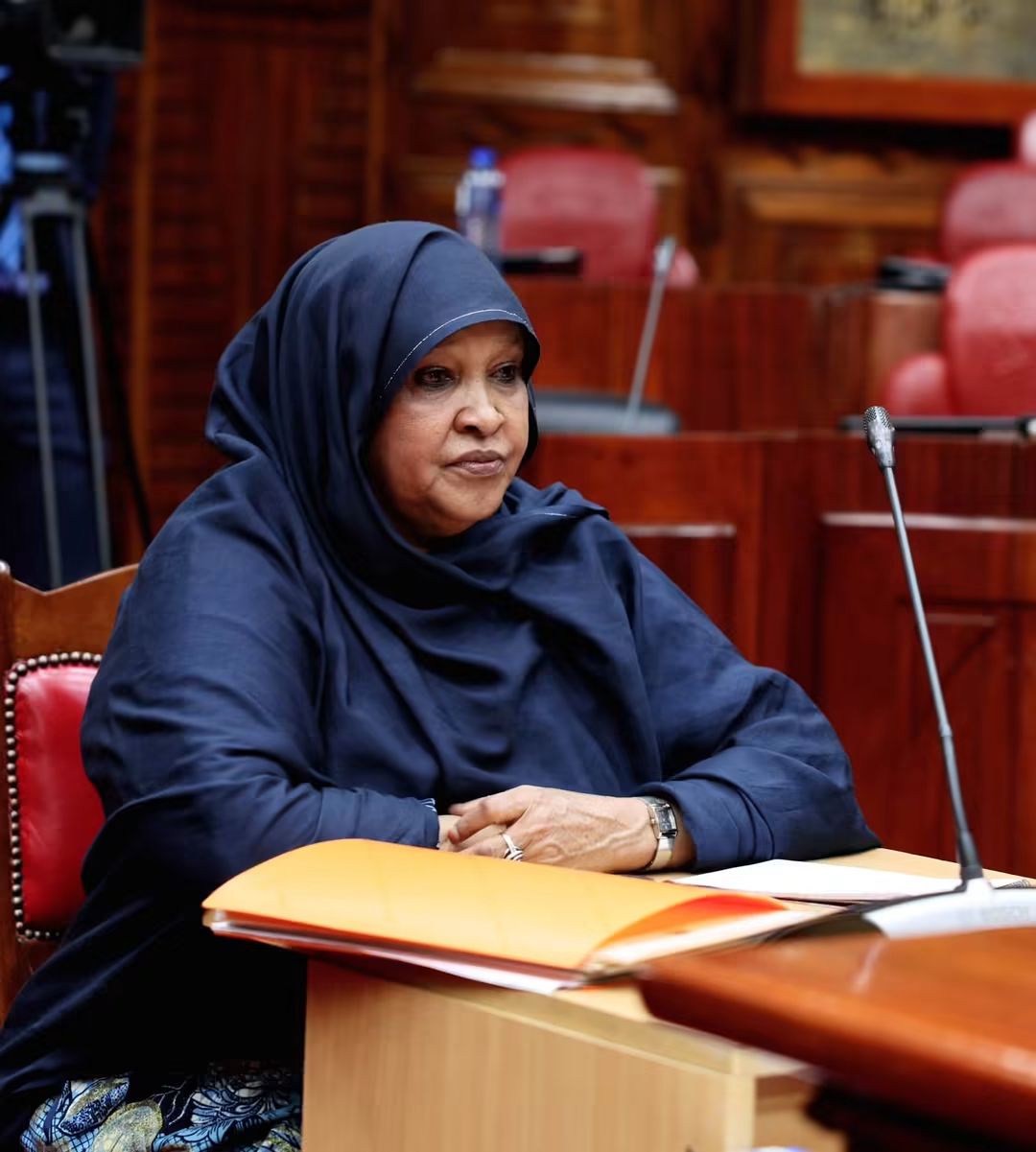
Hon. Fatuma Ibrahim Ali
Former Wajir MP and human rights commissioner tells vetting panel her record spans Parliament, civil society and institutional reform
By John Kariuki
The Senate Standing Committee on Justice, Legal Affairs and Human Rights Tuesday vetted Fatuma Ibrahim Ali for appointment as a female non-Member Commissioner of the Parliamentary Service Commission, putting her decades-long record in public administration under formal scrutiny.
Fatuma appeared before the committee on Monday, September 29, 2026, following her nomination to the commission. Senators examined her academic qualifications, professional history and integrity before the committee proceeds to table its report to the full Senate.
Her nomination has drawn attention to a career that has moved across Parliament, human rights institutions and civil society over more than two decades. She served as Wajir County Woman Representative in the National Assembly and previously as a Commissioner at the Kenya National Commission on Human Rights. Records at the commission show she was among the commissioners who helped build and operationalise the institution during its formative years, with a reappointment in November 2007.
That institutional history formed the backbone of the case she put to the committee. Fatuma told senators that her experience had given her a working understanding of Parliament, constitutional commissions and civil society, and that her earlier parliamentary service had exposed her directly to legislative procedure, committee work, constituency representation and the administrative machinery on which Parliament depends.
“My experience in recruitment, promotion and staff welfare has given me practical exposure to human-resource management, which I would seek to bring to the commission,” she told the committee.
Her emphasis on staff welfare and institutional operations was deliberate. The Parliamentary Service Commission is responsible for the administrative and institutional functions that support Parliament and its members and staff. It is not a legislative body. Its mandate is the unglamorous but essential business of keeping Parliament operational — managing human resources, setting terms of service, overseeing institutional budgets and ensuring that the legislature can function independently of the executive.
Fatuma’s argument was that her record positions her to serve that mandate from both the policy and the administrative side. At the human rights commission she encountered the mechanics of running a constitutional body — recruitment panels, staff welfare decisions, operational management — while her time in Parliament gave her direct exposure to how legislators are served and supported.
Her connection to northern Kenya runs throughout her public profile. Wajir, which she represented, is among the counties that have historically faced significant development challenges. Her interest in girl-child education and the advancement of women in marginalised communities has featured consistently in her public engagements. That background informs the breadth of her institutional experience, which has taken her from advocacy and civil society into elected office and then into regulatory and human rights work.
The sequence matters. Kenya’s constitutional commissions, including the Parliamentary Service Commission, are increasingly expected to draw on commissioners who combine technical experience with familiarity with Kenya’s social and regional diversity. A commissioner who has served in northern Kenya, worked on human rights in a constitutional body and sat in Parliament brings a range of perspectives that a career spent in a single institution would not produce.
At the same time, the vetting process is not a formality. The Senate committee is tasked with assessing integrity as well as qualifications and experience. Fatuma’s record will be weighed against those criteria before the committee’s report reaches the full chamber.
Her public-service journey is also not without complexity. A career that spans elected office, constitutional commissions and civil society across more than two decades necessarily includes periods of institutional change, political transition and shifting mandates. The Senate committee’s role is to examine that record in full, not to accept it at face value.
The non-Member position on the Parliamentary Service Commission is designed to bring external perspective to an institution that might otherwise become too inward-looking. Parliament’s own members sit on the commission, but the non-Member slots exist to introduce experience from outside the legislature. Fatuma’s record at KNCHR and in civil society would, in principle, meet that requirement.
She told the committee that her priorities, if confirmed, would centre on improving service delivery to parliamentarians and staff, promoting equal opportunities within the institution and strengthening its operational systems. Those commitments are broad, but they are consistent with the commission’s mandate.
The Senate will now consider the committee’s report. The outcome will determine whether Fatuma Ibrahim Ali’s career in public service translates into a seat on one of Parliament’s key oversight and administrative bodies.
For a woman whose public journey began in advocacy and has passed through elected office and constitutional commission work, the appointment, if confirmed, would represent the latest in a succession of institutions she has helped to staff and shape.
The Senate’s verdict will come soon enough.
Similar Posts by The Mt Kenya Times:
- Olise seals France win over Belgium in Nations League thriller
- Birik: Lokichar first oil on course for December
- Eng Mwangi: Dangote refinery could reshape Kenya’s industry
- Mt Kenya Times ePAPER September 29, 2026
- Kenya’s ageing crisis: Act now or pay later
About the Author