Gachagua’s silent return: The emerging political temperament that could redefine Kenya’s 2027 elections
 The Mt Kenya Times
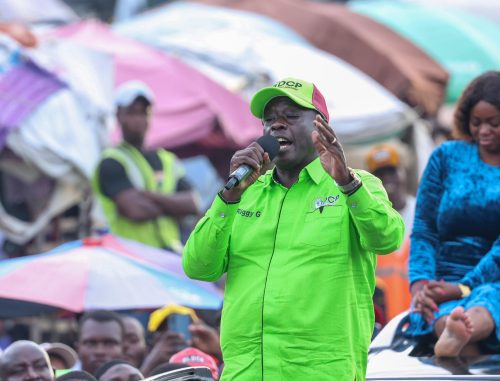
Former Deputy President Rigathi Gachagua
By Mr. Fredrick Kipchumba Chelimo – PWD
Email; fkipchelimo@yahoo.com
“The true test of democratic maturity is not how ruthlessly politicians pursue power, but how responsibly they compete for it, how honestly they account for their stewardship, and how faithfully they place the interests of citizens above their personal ambitions.”
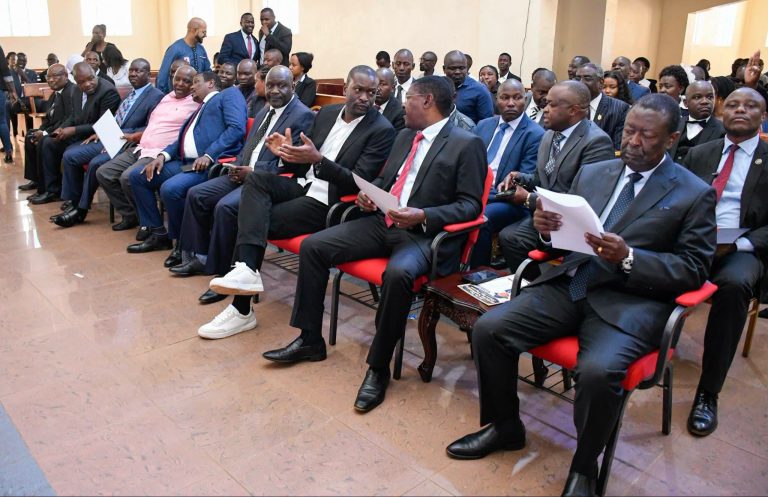
Kenya’s political landscape may be approaching a defining moment, not necessarily because a new alliance has been announced or a presidential contest settled, but because the manner in which political actors engage their rivals appears to be changing. On Tuesday, October 20, 2026, as the nation gathered in Eldoret to celebrate Mashujaa Day, former Deputy President Rigathi Gachagua returned from the United States in a comparatively subdued fashion. At his Wamunyoro residence in Nyeri County, he subsequently met Nairobi Senator Edwin Sifuna and other figures associated with the Linda Mwananchi movement. Beneath the apparent simplicity of this encounter lies a potentially consequential message: Kenya’s opposition may be discovering that political influence is built not merely through confrontation, but through calculated restraint, strategic consultation and the ability to forge common ground without surrendering ideological differences.
For a political culture accustomed to dramatic airport receptions, combative declarations, rival crowds and public demonstrations of strength, the quietness surrounding Gachagua’s return was striking. His return in August 2025 attracted considerable attention and was accompanied by violence and disruption. The contrast invites reflection on whether Kenya’s political class is beginning to appreciate that spectacle is not synonymous with strength, just as hostility is not proof of conviction. Silence can be strategic, restraint can be powerful, and a conversation behind closed doors can sometimes achieve more than a week of political theatrics. Nevertheless, the real significance of this change will depend on whether it represents a deliberate political philosophy or merely a temporary adjustment in tactics.
The Wamunyoro engagement is important because it creates room for conversations among actors whose political interests, constituencies and ambitions do not necessarily align. Gachagua and Sifuna occupy distinct political spaces, yet their willingness to engage illustrates a fundamental democratic truth: disagreement need not become permanent estrangement, and political competition need not eliminate the possibility of cooperation. No meeting, however politically suggestive, should be mistaken for a concluded coalition or an agreed presidential candidature. Its significance lies in the opportunity it creates to test whether personal differences can be subordinated to a coherent national agenda.
Kenya desperately needs this recalibration. For decades, electoral competition has too often been transformed into a contest of political survival, with communities mobilised along ethnic and regional lines, opponents demonised, and ordinary citizens left to bear the consequences of elite rivalries. The damage extends beyond election-day violence. It erodes public trust, weakens social cohesion and distracts the nation from the persistent problems that determine whether families eat, children learn, patients receive treatment and young people find meaningful work. A more sober opposition, willing to coordinate its efforts and challenge government through ideas, evidence and constitutional means, could help move the country away from political hostility towards a more productive democratic contest.
In the North Rift, this distinction carries particular weight. Uasin Gishu, Trans Nzoia, Nandi, Elgeyo-Marakwet, West Pokot and Baringo cannot feed their populations with political slogans, nor can changing alliances guarantee farmers fair prices, young people employment, households affordable healthcare or persons with disabilities equitable access to public services. These counties need leaders capable of translating political influence into measurable development. The region’s citizens must therefore resist the temptation to interpret every emerging alliance through the narrow question of who gains power. The more important question is what the proposed political arrangement intends to deliver, how it will finance its commitments and what mechanisms will hold its leaders accountable.
As 2027 approaches, Kenyans must firmly reject the dangerous notion that elections are do-or-die affairs. An election is neither a declaration of war nor a licence for political intolerance. It is a constitutional opportunity for citizens to examine the national leadership’s scorecard and determine whether the promises made have translated into tangible improvements in their lives. What was promised? What was delivered? How much public money was spent? Who benefited? What failed, and who accepted responsibility? These are the questions that should dominate the political season, rather than insults, personality cults and the manufacture of fear. Incumbency is not a permanent entitlement, and opposition is not an automatic certificate of competence. Every politician must earn public trust.
Equally, citizens must not be held hostage to the uncertainty of political succession. Healthcare, education, agricultural support, social protection, infrastructure and disability inclusion are public obligations, not personal gifts from politicians. A change of government should not become an excuse to abandon beneficial programmes, punish perceived political opponents or dismantle legitimate commitments without evidence and due process. Effective programmes should be strengthened, failed interventions reviewed, and public expenditure subjected to transparent scrutiny. The continuity of essential services must remain stronger than the ambitions of those temporarily entrusted with political authority.
This is where constitutionalism must become more than a convenient campaign slogan. Kenya’s Constitution establishes the rules of political competition and the standards by which public power must be exercised. Parliament, the judiciary, the electoral commission and other independent institutions must be allowed to discharge their lawful mandates without intimidation or political manipulation. Democracy is not secured merely by counting votes; it also requires respect for the law, protection of fundamental rights, credible electoral processes and the peaceful transfer or retention of power through constitutional procedures. Political leaders who preach reform while undermining these principles are offering the country a change of personalities, not a transformation of governance.
The emerging opposition must therefore prove that cooperation means more than negotiating positions, distributing influence or settling on a presidential candidate. It must produce a credible reform programme, articulate realistic economic priorities, confront corruption, protect civil liberties and demonstrate how public institutions can serve citizens more effectively. The government, for its part, must understand that opposition is not an act of national sabotage. A legitimate, organised and peaceful opposition is indispensable to accountability because power without scrutiny easily becomes complacent, while authority insulated from criticism risks confusing public office with personal ownership.
Gachagua’s return and the Wamunyoro engagement may yet prove to be an ordinary political episode. Their greater significance will emerge only if the apparent restraint develops into sustained cooperation, principled competition and a demonstrable commitment to national unity. Kenya has witnessed enough political realignments that promised transformation but ultimately reproduced familiar struggles for power. This time, citizens should demand something more consequential: a politics that measures success by public welfare rather than the number of allies recruited, the size of rallies assembled or the intensity of insults exchanged.
The 2027 election should not be a referendum on the survival of individual politicians. It should be a national examination of stewardship, integrity, competence and the credibility of competing visions. Leaders may change, coalitions may rise and fall, and political fortunes may reverse overnight. But the Constitution must endure, institutions must remain dependable, and the welfare of citizens must never be sacrificed at the altar of political ambition. Kenya does not merely need a quieter contest for power; it needs a more responsible understanding of what power is for.
Similar Posts by The Mt Kenya Times:
- Ruto passes the baton as Africa’s trade bloc faces a fragmenting world
- Kenya’s recall law: Parliament sets the threshold — but the real test comes in 2027
- Kenya’s deadliest bridge to be replaced in KSh7.5B project
- Shell V-Power Tanker among seven merchant shipping tankers calling at the port of Mombasa
- KRA’s new import rules: Will mandatory cargo insurance push up the cost of goods?
About the Author