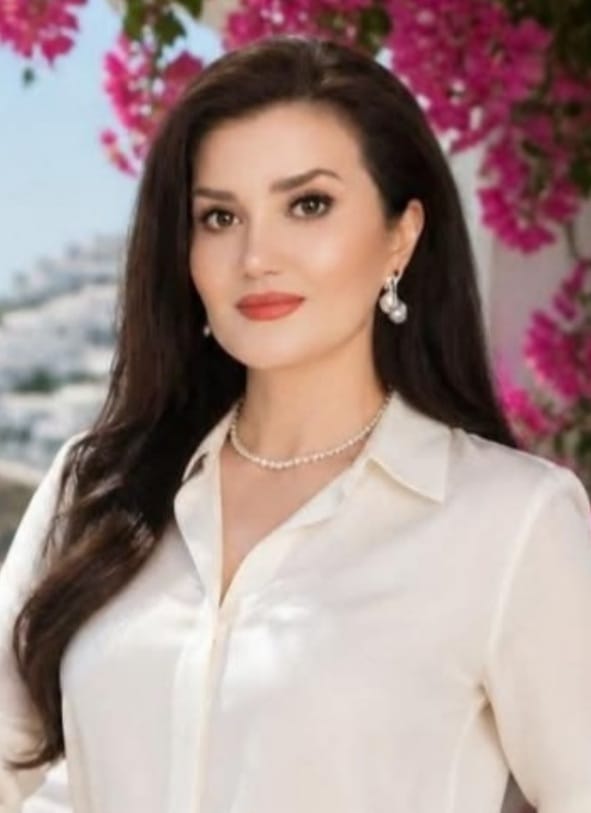
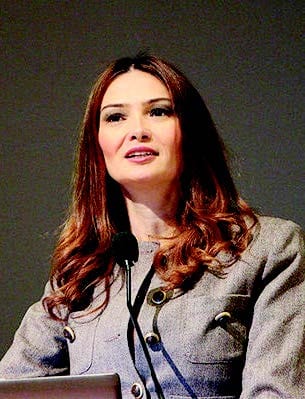
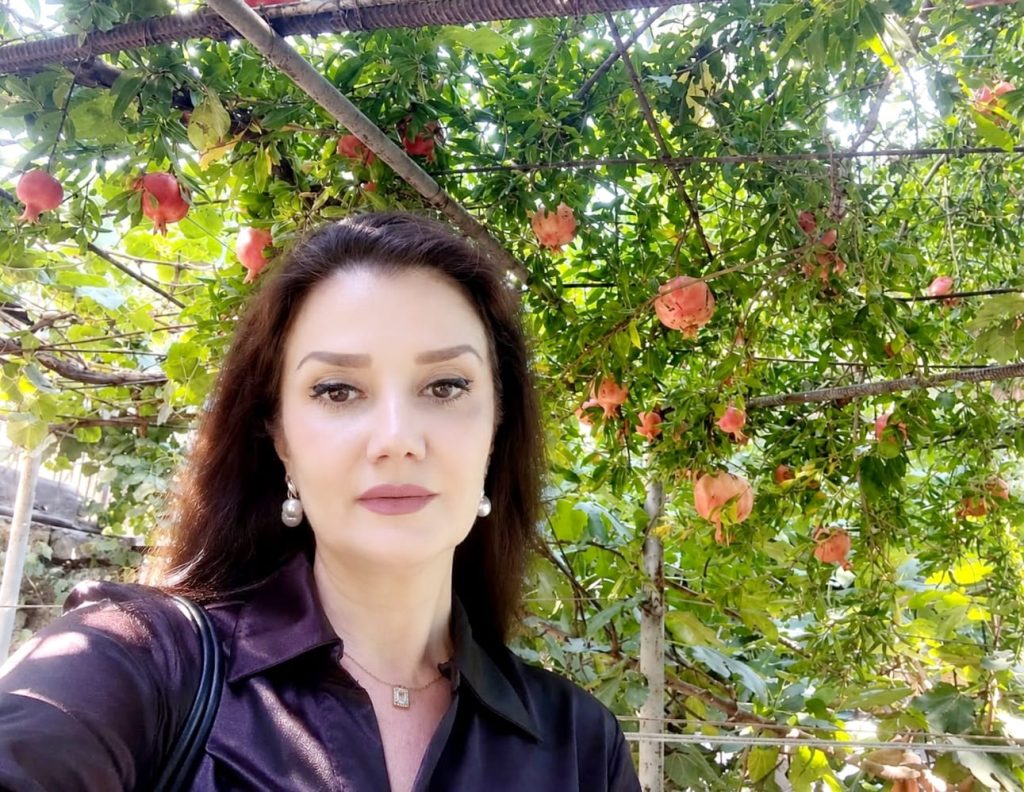
Prof.Dr. Tarana Turan Rahimli
An Interview with Prof. Dr. Terane Turan Rehimli by BÖRTE Media (Turkey) correspondent Oguzhan Ozbek
— Dear Professor, first of all, perhaps we can talk about the Turkish Academicians Association. What is its purpose? What is its importance? Who has come together to form this organization? Could you briefly inform us about these matters?
— First of all, I would like to sincerely thank BÖRTE Media, and especially you, for giving us this opportunity to conduct this meaningful interview and to share our thoughts with the public regarding the international congress organized by the Turkish Academicians Association. I have been with the Turkish Academicians Association for one year. During this one year, we have repeatedly shared comprehensive information about our mission and vision in press interviews. Our aim is to introduce Turkish science to the world, to help it reach leading positions in the world, and to contribute to this. For this purpose, we have our missions and a clear roadmap. Based on this, we hold meetings, organize panels, workshops, and congresses, and in this way we try to contribute to the development of Turkish science.
— As the Turkish Academicians Association, you have dedicated this international congress to the memory of the late Ganira Pashayeva. How do you aim to convey Ms. Ganira’s identity as a “person of struggle” in the unity of the Turkic world to today’s youth and politics by filtering it through academia and science?
— Ganira Pashayeva was a very valuable person of struggle for the Turkic world. When we look at her life, we see that the ideal of unity and solidarity of the Turkic world was not merely a thought or political discourse for her; it was the fundamental purpose of her life and a great cause for which she fought with complete sincerity. Ms. Ganira did not see the different geographies of the Turkic world merely as regions separated from one another by borders on a map. She believed that our common history, language, culture, and civilizational values constituted a strong bridge connecting us to one another. Therefore, throughout her life, she tried to establish heartfelt ties with every corner of the Turkic world and to strengthen these bonds. As the Turkish Academicians Association, while dedicating this congress to the blessed memory of Ganira Pashayeva, we primarily regard this as a debt of loyalty to her. However, our aim is not merely to commemorate her. We want to convey her thoughts, struggle, and intellectual legacy that she left to the Turkic world to future generations by filtering them through academia and science. For this reason, at our congress, Ganira Pashayeva’s thoughts on literature, culture, politics, diplomacy, history, and the ideal of unity of the Turkic world will be discussed by academics from different disciplines. We will evaluate the ideas she put forward from a scientific perspective, reveal their strong and original aspects, and focus on how this legacy can be interpreted in today’s world.
In particular, we want to convey a very important message to our young people through Ganira Pashayeva’s life: When a person sincerely and determinedly struggles for the values in which they believe, they can leave behind an intellectual legacy that will live much longer than themselves. We want Ms. Ganira not to remain merely a name that is remembered. We want her ideas to be researched, her struggle to be explained to new generations, and her ideals regarding the future of the Turkic world to be carried further by our youth. Because one of the greatest legacies Ganira Pashayeva left to the Turkic world is her strong belief that the ideal of unity should be built not only on political foundations, but also on cultural, scientific, literary, and heartfelt ties. Through this international congress, we want to transform our loyalty to her blessed memory into an academic endeavor and make a scientific contribution to the common future of the Turkic world.
— The unity of the Turkic world and the Turan ideal require strategic planning for the future, alongside their historical roots. How do you position the role of academic studies in this congress in producing practical and concrete policies for this ideal?
— You have touched upon a very important point. We do not evaluate the ideal of unity of the Turkic world solely through our historical and emotional ties. Of course, our common history, language, culture, and civilizational heritage constitute the foundation of this ideal. However, we believe that for a vision of unity oriented toward the future to be lasting, it must also be based on scientific knowledge, realistic objectives, and strategic planning. Academia has a very important role here. Because academia is not merely an area that researches the past; it is also a center of thought that asks the right questions about the future and develops solutions. Our expectation is that academic studies concerning the Turkic world should not remain merely studies that make observations; rather, they should put forward concrete and applicable proposals in areas ranging from economic cooperation to education, from science and technology to culture, and from common media to youth policies.
For example, for the common future of the Turkic world, scientific studies can provide a very important roadmap in areas such as joint educational projects, student and academic exchange programs, joint research centers, stronger opportunities for communication among Turkic varieties, and common cultural and digital platforms. Here, of course, there is no question of academia replacing the political institution. The role of academia is to conduct data-based analyses, identify existing problems, develop different models, and present scientifically grounded recommendations to decision-makers. Political and state institutions, in turn, can evaluate this knowledge and these recommendations in accordance with their own strategic objectives.
Therefore, we do not separate theory and practice from one another. Theory shows us the direction, science provides us with the method, and strategic planning reveals how we will reach this goal. We actually see important traces of this understanding in Ganira Pashayeva’s struggle as well. She did not merely express the ideal of unity of the Turkic world; she actively worked to strengthen cultural and political relations by visiting different geographies and bringing people together. The aim of our congress is also to carry this idea further on an academic basis. In other words, rather than merely saying, “The Turkic world should unite,” we seek scientific answers to the question, “How can this unity be made stronger, more sustainable, and more functional for future generations?” I believe that this is one of the most important issues facing the Turkic world today: to plan our common future together through science, education, culture, technology, and strategic cooperation, drawing strength from our common past.
— Today, strengthening cultural ties across the Turkic world is also forming the foundation of political and strategic unity. What concrete contributions do you expect the declaration or outcomes of this congress to make to intellectual integration among the Turkic states?
— One of the most important features of this congress from our perspective is that scientific discussions should not remain only in the congress hall or in academic texts. We want the ideas that emerge to be transformed into concrete outcomes that can contribute to the future of the Turkic world. First of all, the papers presented at the congress, the academic evaluations made, and the common ideas that emerge will be brought together in a scientific congress book. Thus, while Ganira Pashayeva’s intellectual legacy is recorded, the scientific approaches put forward by academics from different countries regarding the literature, culture, politics, and ideal of unity of the Turkic world will also become a permanent academic resource.
Secondly, we do not want this congress to remain merely a one-time scientific event. It is extremely important for us that academics from different countries get to know one another, identify common research topics, and lay the groundwork for joint publications, projects, conferences, and research activities in the future.
Thirdly, and perhaps most importantly, we want to establish a communication and cooperation network among young academics and researchers. Because the intellectual integration of the Turkic world will be possible not only through today’s academics but also through the scientists of tomorrow knowing one another and producing together.
We do not think of integration here merely as institutions or states coming together. Intellectual integration means asking common questions, conducting joint research, sharing knowledge and experience, and benefiting from one another’s scientific accumulation. Therefore, if I were to express the outcomes of this congress in three words, they would be: memory, cooperation, and future. We want to strengthen our memory through Ganira Pashayeva’s intellectual legacy, enrich our present through academic cooperation, and build our future through joint projects.
I believe that this is one of the strongest elements that will make the ideal of unity of the Turkic world lasting: just as important as speaking about the same history is producing knowledge together and developing common projects for the future.
— The late Ganira Pashayeva was not only a cultural ambassador, but also one of the figures with the strongest voice on important issues concerning the Turkic world. In the face of the geopolitical risks that the Turkic states encounter today on the global stage, is the determined stance she put forward receiving sufficient resonance in academia?
— One of Ganira Pashayeva’s most important characteristics was that she did not remain silent in the face of the issues she saw. She possessed a will that not only brought the problems of the Turkic world to the agenda but also assumed responsibility for solving these problems. I believe this is precisely what made her different and effective. Today, the Turkic states face very important opportunities as well as serious geopolitical risks on the global stage. The balance of power in the world is changing rapidly; areas such as energy, transportation corridors, security, technology, information, and culture are becoming increasingly strategic. In such a period, it is as important for the Turkic world to recognize its own historical and cultural potential as it is to develop a scientific and strategic perspective toward the future.
So, can academia adequately respond to Ganira Pashayeva’s determined stance? I would answer this question by saying, “We must do more.” Because the role of academia is not only to analyze current developments, but also to foresee the risks of the future and provide decision-makers with a scientific perspective.
One of Ms. Ganira’s strengths was that she tried to bridge the gap between academic thought and realities on the ground. She did not discuss the issues of the Turkic world only from podiums; she traveled to different geographies, met with people, saw problems on site, and brought them to the attention of the public. What academia needs to do today is to carry this spirit of struggle further through scientific methods. We must evaluate the geopolitical risks facing the Turkic world together from the perspectives of different disciplines such as history, political science, international relations, economics, security, energy, technology, and culture. Because historical consciousness reminds us who we are; scientific thought shows us what we need to do in the future. Therefore, I believe that Ganira Pashayeva’s determined stance needs to find a stronger resonance in academia. We must not merely commemorate the legacy she left behind; we must research it, analyze it, and transform it into scientific strategies for the future.
I especially believe that young academics will play a very important role here. Because when we talk about the future of the Turkic world, we are actually talking not only about today but also about planning the coming several decades. If we can combine the spirit of struggle Ganira Pashayeva left us with scientific knowledge, we can carry her ideals into the future in a much stronger way.
— One of the most critical issues in the integration of the Turkic world is also cultural and linguistic rapprochement. Do you expect the papers to be presented at this congress to make a practical contribution to creating a common understanding and unity of action (awareness of a common language/alphabet) among Turkic-speaking peoples?
— Absolutely, we do. In fact, I believe that the issue of a common language and alphabet is a strategic matter in terms of the intellectual integration of the Turkic world. However, an important distinction must be made here. We do not aim to eliminate the differences among all the varieties and languages of the Turkic world; rather, we aim to create common areas of communication where we can understand one another more easily while preserving this richness. Because our linguistic differences are not an element of division, but rather the richness of our common cultural heritage.
As for a common alphabet, I believe that a common writing system would significantly facilitate communication, scientific knowledge exchange, publishing, and cultural interaction among the Turkic world. This is not merely a linguistic issue; it is also a strategic matter in terms of education, science, media, digital communication, and cultural diplomacy.
I believe that the papers to be presented at our congress will make direct and indirect contributions to this issue. Because the studies put forward by academics will scientifically reveal the commonalities and differences among the Turkic varieties, while also creating a basis for developing new proposals in the fields of common terminology, translation, publishing, education, and communication.
I consider the creation of a common scientific language and a common academic communication space particularly important. If an Azerbaijani, Kazakh, Kyrgyz, Uzbek, Turkmen, or Anatolian Turkish academic can more easily share the knowledge produced in their own country with other academics of the Turkic world, then not only linguistic but also intellectual unity is formed.
For this reason, I believe that every step to be taken regarding a common language and alphabet should proceed scientifically, gradually, and on the basis of mutual understanding. In my opinion, our goal should not be to create a “single language,” but to establish a common linguistic and communication ground through which we can understand one another.
Because it is as important to be able to access the same knowledge, understand the same concepts, and produce together as it is to speak the same language.
Common language and cultural ties also had a very special place in Ganira Pashayeva’s ideal of the Turkic world. By supporting her sensitivity on this issue through academic studies, we want to evaluate language and alphabet unity not merely as an ideal, but as one of the important instruments of the future intellectual cooperation of the Turkic world.
Absolutely, we do. In fact, I believe that the issue of a common language and alphabet is a strategic matter in terms of the intellectual integration of the Turkic world.
However, an important distinction must be made here. We do not aim to eliminate the differences among all the varieties and languages of the Turkic world; rather, we aim to create common areas of communication where we can understand one another more easily while preserving this richness. Because our linguistic differences are not an element of division, but rather the richness of our common cultural heritage.
As for a common alphabet, I believe that a common writing system would significantly facilitate communication, scientific knowledge exchange, publishing, and cultural interaction among the Turkic world. This is not merely a linguistic issue; it is also a strategic matter in terms of education, science, media, digital communication, and cultural diplomacy.
I believe that the papers to be presented at our congress will make direct and indirect contributions to this issue. Because the studies put forward by academics will scientifically reveal the commonalities and differences among the Turkic varieties, while also creating a basis for developing new proposals in the fields of common terminology, translation, publishing, education, and communication.
I consider the creation of a common scientific language and a common academic communication space particularly important. If an Azerbaijani, Kazakh, Kyrgyz, Uzbek, Turkmen, or Anatolian Turkish academic can more easily share the knowledge produced in their own country with other academics of the Turkic world, then not only linguistic but also intellectual unity is formed.
For this reason, I believe that every step to be taken regarding a common language and alphabet should proceed scientifically, gradually, and on the basis of mutual understanding. In my opinion, our goal should not be to create a “single language,” but to establish a common linguistic and communication ground through which we can understand one another.
Because it is as important to be able to access the same knowledge, understand the same concepts, and produce together as it is to speak the same language.
Common language and cultural ties also had a very special place in Ganira Pashayeva’s ideal of the Turkic world. By supporting her sensitivity on this issue through academic studies, we want to evaluate language and alphabet unity not merely as an ideal, but as one of the important instruments of the future intellectual cooperation of the Turkic world.
— At points where political and diplomatic relations may become blocked, literature, culture, and art come into play as forms of ‘soft power.’ What do you think should be the main carriers of the intellectual diplomacy bridge that you, as the Turkish Academicians Association, seek to establish through this congress?
— Absolutely. Today, diplomacy is not limited merely to relations between states and official institutions. Literature, art, culture, and especially academic cooperation are very powerful elements of soft power that bring societies closer together. As the Turkish Academicians Association, the foundation of the intellectual diplomacy bridge we seek to establish should be knowledge and joint production. Bringing academics from different Turkic states together, conducting joint research and publications, and developing literature and cultural projects are the strongest pillars of this bridge.
We attach particular importance to involving young academics and artists in this process. Because lasting relations are established not only at diplomatic tables, but through people getting to know one another and producing together. Ganira Pashayeva was actually a strong representative of this understanding. She carried out a diplomacy of the heart that connected people, cultures, and geographies. We, too, aim to build a stronger intellectual bridge among the Turkic world by combining the power of science, culture, and art on the path she opened.
— Today’s young generation is growing up under the influence of the digital world and global culture. How can we convey the unwavering awareness of the Turkic world that the late Ganira Pashayeva left behind to the minds and hearts of today’s youth in the right way?
— I think it is not enough simply to tell young people about the past; we need to show what the past means for our present lives and our future. When conveying Ganira Pashayeva’s awareness of the Turkic world to young people, we should tell them about the examples from her life rather than merely her words. Because she did not only defend the values in which she believed; she traveled, met people, got to know different geographies, and tried to bring the youth of the Turkic world closer together.
The way to reach today’s youth is to touch their world. We must use digital platforms, social media, literature, art, documentaries, and youth projects more effectively. Most importantly, we should not be content with telling young people, “You are the inheritors of the past”; we should give them the feeling, “You are the generation that will build the future of the Turkic world together.”
I believe that the best way to keep alive the unwavering awareness of the Turkic world that Ganira Pashayeva left behind is to tell her ideal in the language of young people and make them active participants in this ideal.
— In an era dominated by global media barons and disinformation networks, it is vital for the Turkic world to defend its common memory and truths through its own media. What is the primary responsibility of academics and intellectuals at this point?
— I believe that the most important responsibility of academics and intellectuals at this point is to preserve the distinction between information and propaganda and to reveal the truth through scientific and reliable sources. The Turkic world should not wait for others to tell its history, culture, and problems; it should strengthen its own academic studies, archives, publications, and media platforms.
Especially in the fight against disinformation, we should establish a communication language based on documents, data, and scientific research rather than emotional reactions. Here, academics should be not only researchers but also reliable sources in conveying accurate information to society and the world. One of Ganira Pashayeva’s most important sensitivities was also that the realities of the Turkic world should be conveyed to the world accurately. We want to carry this approach further through scientific studies, strong communication channels, and the contributions of young academics.
— Considering the dynamics of Generation Z and the digital age, what strategic steps are you planning as the Turkish Academicians Association in the coming period to convey the concept of the “Turkic world and the ideal of unity” to new generations through concrete projects?
— We want the ideal of unity of the Turkic world not merely to be explained to new generations, but to be lived. For this purpose, in the coming period, we plan to develop joint research and publication projects centered particularly on young academics, science and cultural platforms where young people from the Turkic world can come together, and joint digital projects. We also consider it important to transfer the common history, literature, and cultural heritage of the Turkic world to the digital environment through contemporary content that young people can understand. Joint conferences, young academic networks, and international scientific projects will also be important parts of these efforts.
For us, the Turan ideal is not merely a romantic ideal; it is a vision of building the future by producing together in the fields of education, science, technology, culture, and youth. As the Turkish Academicians Association, we will continue our efforts with determination to strengthen the academic dimension of this vision.
— This congress, which will be held online on September 27–28, is a major step toward leaving a mark in history. What is your greatest expectation from the participants and academics, and what is your main objective regarding the future of the ideal of unity?
— Our greatest expectation is that this congress, beyond keeping alive the blessed memory of Ganira Pashayeva, will create a lasting academic foundation for cooperation toward the common future of the Turkic world. Our expectation from our academics is that they present their knowledge, ideas, and recommendations with an open scientific understanding and continue their joint work after the congress. We attach particular importance to the active participation of young academics in this process.
Our main objective is very clear: to think about our common future together, to produce together, and to build it together with an awareness of our common past. I believe that the congress we will hold on September 27–28 will be a meaningful and lasting gift from the academic world to Ganira Pashayeva’s ideal of unity of the Turkic world.
— Thank you very much, Dear Prof. Dr. Terane Turan Professor, for your valuable thoughts and for this interview.
— Dear Professor Oğuzhan, I would like to thank you once again for this meaningful interview and wish the BÖRTE Media family success in its work. I also particularly appreciate your sensitivity in bringing the common values of the Turkic world and the valuable legacy of Ganira Pashayeva to wider audiences.
Thank you for giving us the opportunity to share these thoughts. I hope that the congress we will hold on September 27–28 will make a valuable contribution to the Turkic world, our academic community, and especially our young people.
Similar Posts by The Mt Kenya Times:
- Mt Kenya Times ePAPER September 14, 2026
- Diaspora Times Global Sep 12 – Sep 18, 2026
- When political words become weapons: Kenya must lower the temperature before it is too late
- Kenya’s youth are not asking for handouts — they are asking for opportunities
- Review of the novel Twilight in Delhi by Ahmed Ali
About the Author