The Mt Kenya Times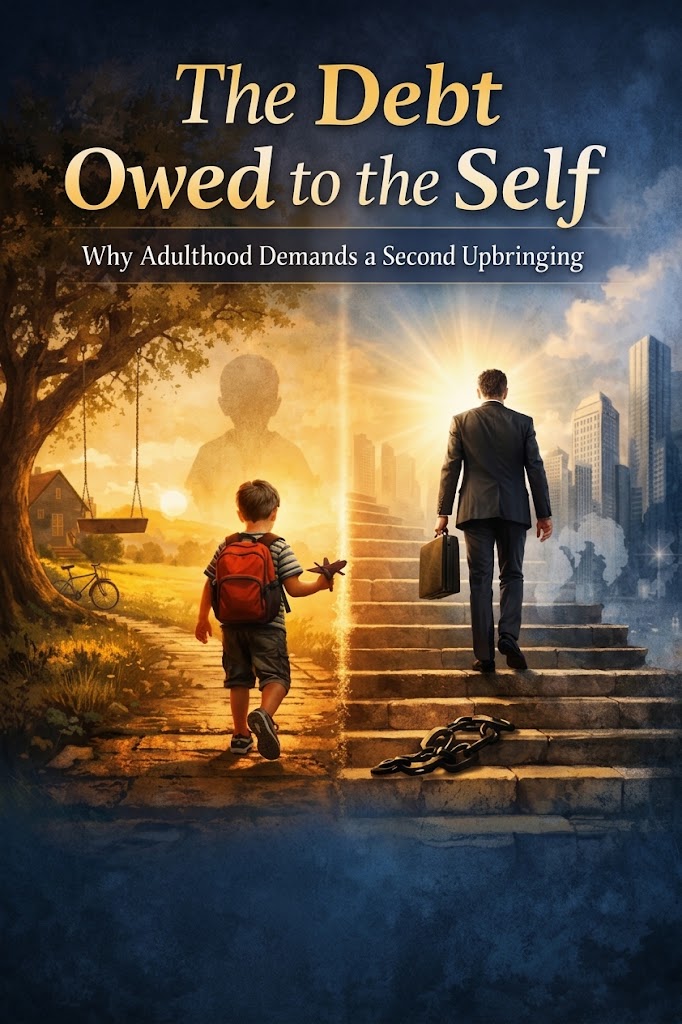
Why Adulthood Demands a Second Upbringing
By Silas Mwaudasheni Nande
An Inheritance No One Chooses
No child selects the household into which birth occurs. No child selects the temperament of a mother, the patience of a father, or the tension that settles over a home after an argument. Yet by adulthood, patterns absorbed in that unchosen household shape marriages, friendships, workplaces, and the raising of a next generation. This is a central paradox of human development. The earliest years, over which an infant has no command, become the template against which later relationships are measured.
Developmental psychologists have long argued that the bond between an infant and a primary caregiver produces what John Bowlby termed an internal working model. This is a largely unconscious set of expectations about whether the world is safe and whether the self deserves care (Bowlby, 1969/1982). That model does not stay confined to childhood. It travels forward, quietly organising how adults interpret conflict, criticism, distance, and closeness.
This reality supports a genuine and defensible claim. A great deal of adult struggle has origins in an upbringing over which the adult held no authority. A person raised amid shouting may flinch at raised voices decades later. A person raised by an inconsistent caregiver may distrust affection that arrives too easily. These reactions are not invented excuses. They are documented, researched, and clinically recognised consequences of early experience.
However, acknowledging the origin of a wound differs from excusing its continuation. This article examines that distinction with care. It argues that, regardless of fairness in early years, adulthood carries an obligation that childhood could never carry. That obligation is to notice harmful patterns, name them honestly, and work toward changing them. This is not a rejection of compassion for the wounded child a person once was. It is an insistence that such compassion must eventually produce a different adult, one no longer governed entirely by inherited reflexes.
The argument that follows draws on decades of research into attachment, family systems, and trauma recovery. It also draws on lived observation, particularly within African communities where communal upbringing complicates and enriches this discussion. The conclusion reached is simple to state and demanding to practise: the past explains, but only the present can decide.
The Architecture Built Before Memory
Much of what forms adult character is laid down before conscious memory begins. Attachment researchers Mary Ainsworth and John Bowlby demonstrated that infants develop distinct attachment styles, commonly categorised as secure, anxious, avoidant, or disorganised, depending on how consistently a caregiver responds to distress (Bowlby, 1969/1982). A caregiver who responds with warmth and consistency helps build a nervous system that expects comfort. A caregiver who responds with unpredictability, hostility, or absence helps build a nervous system braced for disappointment.
Family systems theory adds a further layer. Murray Bowen argued that families function as emotional units, in which patterns of anxiety, blame, and closeness pass between generations largely without conscious intention (Kerr & Bowen, 1988). Recent research supports this claim. A 2022 study found that the degree to which parents had achieved differentiation of self, meaning the capacity to remain emotionally steady while still connected to others, predicted the degree of differentiation achieved by children decades later (Jozefczyk, 2022). Families with low differentiation tend to produce members who react rather than reflect, who either fuse anxiously with others or cut off from them entirely.
Trauma compounds this architecture further. A parent who endured abuse, war, displacement, or chronic hardship often parents from an unhealed place, even while intending only good for a child. Research into intergenerational trauma transmission within family systems has found that unresolved parental trauma correlates strongly with anxious or avoidant patterns in children, even when no direct abuse occurs within that specific household (Fitzgerald, London-Johnson, & Gallus, 2020). The transmission is often silent. A flinch, a raised eyebrow, an unexplained fear of authority, or an inability to tolerate a raised voice can move from one generation to the next without anyone naming what is happening.
None of this is presented to assign blame to any particular parent. Most parents work with the tools that an earlier upbringing gave them. The point is structural rather than personal. Human beings are formed, to a very large extent, by forces entirely outside individual control, and this formation happens before a child possesses the cognitive capacity to resist, question, or correct it. Recognising this structural truth is a necessary first step toward the argument that follows. It is not the final word.
Where Explanation Ends and Excuse Begins
If formation happens largely outside individual control, a difficult question follows. At what point does a person become responsible for patterns which that person did not choose to acquire? The reflection on which this article is based offers one answer with unusual clarity. An upbringing may explain why a person struggles with communication, anger, accountability, or correction. But when the same behaviour keeps hurting other people, and when that person keeps being told about it, the past can no longer answer for the present.
This distinction between explanation and excuse deserves close attention, because the two are frequently confused in everyday conversation. An explanation is a causal account. It states, in effect, here is why this pattern exists. An excuse is a moral discharge. It states that, because a pattern exists, no further action or accountability is required. Psychological research on attachment and trauma provides explanations in abundance. It rarely, if ever, provides excuses. Even researchers most sympathetic to the lasting effects of early adversity, including trauma specialist Bessel van der Kolk, insist that recognising the biological imprint of trauma marks the beginning of recovery, not a justification for remaining unchanged (van der Kolk, 2014).
There is a moral asymmetry worth naming directly. A child who experienced neglect, harsh discipline, or inconsistency bore no responsibility for that experience. The adult that child becomes bears full responsibility for what happens next, because that adult, unlike the child, possesses choice, resources, and often language that the child never had. A child cannot seek therapy. A child cannot read a book on communication. A child cannot offer a meaningful apology to a partner or a colleague. An adult can do all of these things, and the failure to do them, once a pattern has been identified and named repeatedly by others, becomes a decision rather than a wound.
This does not mean change is simple, quick, or free of setback. It means only that the moral weight shifts. A person may have inherited a temper. That inheritance does not permit indefinite repetition, used as a permanent shield against the people it continues to injure. The line between explanation and excuse is precisely the line between a difficult childhood and a chosen adulthood.
 The Science of a Second Chance
A sceptic might reasonably ask whether change of this kind is realistic, or whether early attachment and family patterns remain fixed for life. Fortunately, several decades of longitudinal research answer this question with cautious optimism. The concept most directly relevant here is what attachment researcher Mary Main termed earned secure attachment, describing adults who experienced genuinely difficult or insecure childhoods yet went on to develop the coherent, self-aware, emotionally regulated functioning associated with secure attachment (as discussed in Roisman, Padrón, Sroufe, & Egeland, 2002).
A twenty-three-year longitudinal study following a high-risk sample found that adults capable of constructing a coherent, honest narrative about a difficult childhood, one that neither denied pain nor remained trapped inside it, showed attachment functioning indistinguishable from adults who had experienced continuously supportive parenting (Roisman et al., 2002). Coherence, in this research, did not mean a happy story. It meant an honest and processed one. This finding matters greatly for the present argument, because it demonstrates empirically that a trajectory set in childhood is not a life sentence. It is a starting position, capable of alteration through reflection, relationship, and deliberate effort.
Neuroscience broadly supports this picture. The human brain retains meaningful plasticity well into adulthood, particularly in regions governing emotional regulation and self-reflection. Therapeutic approaches that ask a person to examine, narrate, and reinterpret early experience, rather than merely relive it, have been associated with lasting shifts in relational behaviour. Family systems researchers similarly report that individuals who deliberately raise their level of differentiation of self, often through therapy, mentorship, or sustained self-examination, function with greater emotional steadiness even within families that themselves remain reactive and unchanged (Kerr & Bowen, 1988; Jozefczyk, 2022).
It should be stated plainly that this process is neither quick nor guaranteed. Some individuals attempt this work and struggle for years without full resolution. Any specific timeline or success rate would require consultation of primary research directly, since figures vary considerably between studies and populations, and precise statistics are not confidently reported here. What the evidence supports with reasonable confidence is a general claim rather than a precise statistic: meaningful change after a difficult upbringing is documented, possible, and achievable through sustained effort, though it is neither automatic nor easy.
Differentiation: Becoming a Self Inside the Family
Bowen family systems theory offers a particularly useful concept for understanding what raising the self again actually requires. That concept is differentiation of self, defined as the capacity to remain a distinct, thoughtful individual while still remaining emotionally connected to family and community (Kerr & Bowen, 1988). A poorly differentiated person tends toward one of two extremes. Either that person fuses so completely with family opinion and mood that independent thought becomes impossible, or that person cuts off from family entirely, mistaking distance for freedom.
Neither extreme constitutes growth. True differentiation allows a person to sit at a family gathering, disagree respectfully with a parent, tolerate the discomfort that disagreement produces, and still remain present and connected. It allows a person to recognise inherited anger without either suppressing it destructively or discharging it onto a partner or a child. Research indicates that a highly differentiated family produces members who can express emotion and opinion without triggering rejection, and that this capacity appears to reduce transmission of harmful patterns into the next generation (Chokshi, Pukatch, Ramsey, Dzienny, & Smiley, 2023).
Achieving differentiation as an adult, when it was never modelled in childhood, requires deliberate practice rather than natural inclination. It typically involves learning to separate feeling from action, so that anger, for instance, can be noticed and named without being immediately enacted upon a nearby person. It involves developing tolerance for the anxiety produced by disagreement, rather than resolving that anxiety through either capitulation or explosion. It often involves therapy, mentorship, or a trusted community capable of reflecting behaviour back honestly, since self-observation alone frequently fails to catch inherited patterns that feel entirely normal from the inside.
This is demanding work precisely because inherited patterns rarely announce themselves as inherited. A person raised in a home where shouting served as the primary language of conflict may simply believe that shouting is what conflict requires. Differentiation asks that person to question an assumption that feels less like a choice and more like a fact of nature. That questioning, uncomfortable as it is, forms the practical core of raising the self for a second time.
Trauma Is Real, and Responsibility Still Stands
None of the preceding argument should be read as minimising the reality or severity of trauma. Trauma leaves measurable marks. Bessel van der Kolk has documented extensively how traumatic experience becomes stored not only in memory but in the body itself, altering stress response systems in ways that persist for decades without deliberate intervention (van der Kolk, 2014). Survivors of childhood abuse, neglect, displacement, or chronic instability frequently carry heightened startle responses, difficulty trusting others, and patterns of emotional reactivity that feel, from the inside, entirely involuntary.
Clinical research into intergenerational trauma transmission confirms that these effects can pass silently between generations, shaping parenting long before a parent consciously decides how to parent (Fitzgerald et al., 2020). Preliminary research exploring differentiation of self as a protective factor has suggested that individuals with higher differentiation are less likely to translate childhood trauma into harmful relational patterns as adults. This particular finding is exploratory and based on data gathered at a single point in time, and it should be treated as suggestive rather than conclusive until confirmed by further longitudinal research.
It is precisely because trauma is real that the responsibility argument must be stated with care rather than harshness. No person should be shamed for the presence of trauma symptoms, nor told simply to overcome them through willpower alone. Trauma recovery is frequently a clinical process requiring professional support, time, and patience. What can reasonably be asked of any adult, however, is willingness to begin that process once patterns have become visible, particularly once those patterns have begun to cause repeated harm to other people.
The distinction, again, is not between those who suffered and those who did not. It is between those who use suffering as a permanent explanation for causing harm and those who use suffering as a starting point for seeking help. A person may need years of therapy to address a startle response rooted in childhood violence. What that person cannot reasonably ask of others is indefinite patience for behaviour already named, repeatedly, as harmful, while making no visible effort toward change.
The Weight of Communal Upbringing in Africa
In many African contexts, including within Namibian communities, upbringing has never been the responsibility of parents alone. Children have traditionally been raised by an extended network including grandparents, aunts, uncles, and the wider community, an arrangement often summarised by the well-known principle that raising a child requires a village. This communal structure carries genuine strength. It distributes emotional and material support across many adults rather than concentrating it in two individuals who may themselves be under-resourced or unwell.
However, this same structure can complicate the argument developed above. When correction, criticism, and shaping of character arrive from many directions rather than one, individuals sometimes struggle to identify precisely which relationship produced a particular pattern. A harsh word from a grandmother, a punitive silence from an uncle, and inconsistent affection from an overstretched mother may combine into a single adult temperament with several distinct sources. Communal upbringing can also make it harder to name harmful patterns honestly, since criticising an inherited behaviour can feel, wrongly, like criticising an entire extended family or cultural tradition rather than one specific harmful habit.
Yet the communal structure also offers resources uniquely suited to the second upbringing this article describes. Where a nuclear household might isolate a struggling adult, an extended African family and community can provide several potential sources of honest reflection, mentorship, and accountability, provided that community remains willing to speak difficult truths rather than protect harmful silence out of misplaced loyalty. Churches, traditional leadership structures, and school communities across Namibia and the wider region frequently already perform some of this reflective function, offering counsel, correction, and modelling that a struggling adult may not have received in early childhood.
The obligation to raise the self again, therefore, need not be a solitary project undertaken apart from culture or community. It can be, and arguably should be, a communal project, in which elders, spiritual leaders, teachers, and peers actively help an adult examine inherited patterns honestly. What communal upbringing cannot do, however, is complete the work for the adult in question. Community can offer mirrors, counsel, and support. Only the individual can choose to look into those mirrors and act on what is seen.
The Practice of Raising the Self Again
Having established that change is both morally required and empirically possible, a practical question remains. What does raising the self again actually involve, in concrete terms? Several elements recur consistently across psychological literature and clinical practice.
The first element is honest naming. A pattern cannot change while it remains unspoken or minimised. This requires willingness to state plainly, to the self and sometimes to others, that a particular reaction, whether anger, withdrawal, dishonesty, or control, causes harm and originates in early experience rather than present circumstance alone.
The second element is separating feeling from behaviour. Emotional reactions inherited from childhood frequently arrive with genuine force and cannot simply be willed away. What can be interrupted is the automatic translation of that feeling into harmful action. A person can feel anger without shouting. A person can feel fear of abandonment without exerting control over a partner. This separation is learned slowly, often with professional support, and is rarely achieved without difficulty.
The third element is seeking corrective relationships. Research on earned secure attachment consistently identifies later relationships, whether therapeutic, romantic, mentoring, or spiritual, as central to healing patterns established in childhood (Roisman et al., 2002). These relationships work by offering repeated experiences that contradict earlier expectations, gradually teaching the nervous system that closeness need not lead to harm and that honesty need not lead to rejection.
The fourth element is accepting correction without collapsing into either denial or shame. Many people raised amid harsh criticism respond to feedback with either defensive denial or overwhelming shame, both of which prevent genuine change. Differentiation of self allows a person to hear correction, consider it honestly, and adjust behaviour without experiencing that correction as an attack on the whole of a persons worth.
The fifth element, and perhaps the most demanding, is patience with the slowness of the process. Because inherited patterns took years to form, they rarely dissolve within weeks. Setbacks should be expected and treated as information rather than proof of failure. A person committed to raising the self again will likely repeat old patterns many times before consistently choosing new ones, and this repetition does not indicate that the effort is futile.
None of these elements requires wealth or privilege. They require honesty, humility, and a decision, made repeatedly, to place the wellbeing of people affected by inherited behaviour above the comfort of remaining unchanged.
Conclusion: What Is Owed to the People Around Us
Every adult carries an inheritance received without consent. Temperament, reflexes, fears, and habits of communication were largely assembled before conscious memory began, shaped by caregivers who themselves inherited patterns from caregivers before them. This chain of transmission is real, well documented, and deserving of compassion rather than blame directed at any single generation.
Yet compassion for the chain does not excuse a refusal to interrupt it. Adulthood introduces a capacity that childhood never possessed, namely the capacity to reflect, to seek help, to apologise, and to choose differently. The research surveyed throughout this article, from attachment theory through family systems work to studies of earned secure attachment, converges on a single conclusion. Early experience predicts later behaviour, but does not determine it absolutely. Meaningful change remains possible across the lifespan, provided a person remains willing to undertake the difficult, often uncomfortable work required.
Trauma is real. Unlearning inherited patterns can be extraordinarily difficult, sometimes requiring years of dedicated effort and professional support. None of this article should be read as dismissing that difficulty. What it insists upon, instead, is a distinction between explaining harmful behaviour and excusing its continuation once it has been named repeatedly by the people harmed by it.
A person did not choose the household of birth, the temperament of a parent, or wounds inflicted before memory began. That same person does choose, every day thereafter, whether to examine those wounds honestly or to let them continue governing behaviour indefinitely. Communities, families, and cultures can offer support, correction, and companionship throughout this process, and in African contexts of communal upbringing, they frequently already do. But the final decision belongs to the individual alone.
The past explains. It does not decide. What a person refuses to change becomes, eventually, no longer the fault of an upbringing long finished, but the responsibility of the adult still choosing, each day, to remain the same.
References
Bowlby, J. (1969/1982). Attachment and loss: Vol. 1. Attachment. Basic Books.
Chokshi, B., Pukatch, C., Ramsey, N., Dzienny, A., & Smiley, Y. (2023). The generational trauma card: A tool to educate on intergenerational trauma transmission. Journal of Loss and Trauma, 28(5), 464–471.
Fitzgerald, M., London-Johnson, A., & Gallus, K. (2020). Intergenerational transmission of trauma and family systems theory: An empirical investigation. Journal of Family Therapy, 42, 406–424.
Jozefczyk, A. (2022). Multigenerational transmission of differentiation of self: Toward a more in-depth understanding of Bowen’s theory concept. Journal of Marital and Family Therapy, 49, 634–653.
Kerr, M. E., & Bowen, M. (1988). Family evaluation: An approach based on Bowen theory. Norton.
Roisman, G. I., Padrón, E., Sroufe, L. A., & Egeland, B. (2002). Earned-secure attachment status in retrospect and prospect. Child Development, 73(4), 1204–1219.
van der Kolk, B. A. (2014). The body keeps the score: Brain, mind, and body in the healing of trauma. Viking.
Similar Posts by The Mt Kenya Times:
- Mt Kenya Times ePAPER September 14, 2026
- Diaspora Times Global Sep 12 – Sep 18, 2026
- When political words become weapons: Kenya must lower the temperature before it is too late
- Kenya’s youth are not asking for handouts — they are asking for opportunities
- Review of the novel Twilight in Delhi by Ahmed Ali
About the Author