The economy of grief: What Tooro’s succession debate reveals about Africa’s orphans and widows
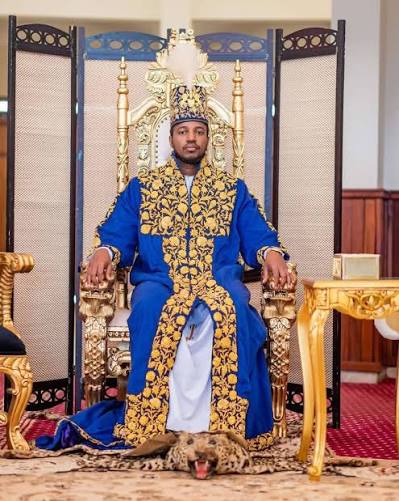
King Oyo Nyimba Kabamba Iguru Rukidi IV
When a king dies, the vultures count his throne before his mother has counted her tears
By Mukama Phillip Kahigiriza
Let me tell you what happens the day after your father dies. It is not what they show you at the burial.
The Batooro have a saying: “Enju efire mukama, embwa zinyena omwana” — when the owner of the house dies, even the dogs bark at the child. The Banyankore put it differently: “Nyineka kwaba atariho ebinya nibitemba enzu” — the lizards overrun the homestead in the absence of its head. And the Book of James said it plainest of all: pure religion is to visit orphans and widows in their affliction. God knew that everyone else would visit the coffin. Only He would remember the orphan.
I write this as one of them — an orphan, the son of a widow widowed young, just as Best Kemigisa, the Queen Mother of Tooro, was widowed young.
Her story is now our story, and it must be told plainly, without prejudice or sentiment.
She lost her husband, King Patrick David Matthew Kaboyo Olimi III, in August 1995, when he died suddenly at 49. She was 24 years old, nursing a sick child in London while her husband was being buried at home. That child was Princess Celia. She died in October 1997, aged four, of leukaemia. Best buried her. A few weeks ago, she buried another daughter, Princess Elizabeth. And on 27 August 2026, in a hospital in the United States, after a long battle with aggressive cancer that had taken him from Germany to America, she buried her only son, King Oyo Nyimba Kabamba Iguru Rukidi IV — the three-year-old boy who became king on 12 September 1995 and remained king until he died at 34.
She has now buried a husband, two daughters and a son who was a king.
As one mourner said when the military helicopter landed and the casket was transferred to the Mercedes hearse for its slow journey to Fort Portal, she had struggled to believe Oyo was gone until she saw the coffin. The coffin made it real.
Now watch what the world does to her, and you will understand exactly what the world does to the rest of us.
When our fathers die, the family comes alive. Uncles who never sent a coin for school fees, who never asked if we had eaten, arrive in expensive cars with loud voices and hold long meetings under the mango tree. They do not ask about our hunger or our school requirements. They argue, with great passion, about one thing: the coffin. “We must give our brother a befitting send-off,” they declare. And so they buy a shiny, expensive casket that costs more than a year’s school fees, parade it, and take photographs beside it to prove to the world how much they loved their brother — men who never sent a birthday message when he was alive, never brought a piece of chocolate, never once appeared at his door with a rose. They save their finest words for eulogies delivered to a man who can no longer hear them.
But the children of that man’s blood become invisible. That is when you learn the most painful lesson of losing a father: you do not just bury him. You bury the illusion of family.
In the palace of Tooro, it is the same script — only with a royal carpet.
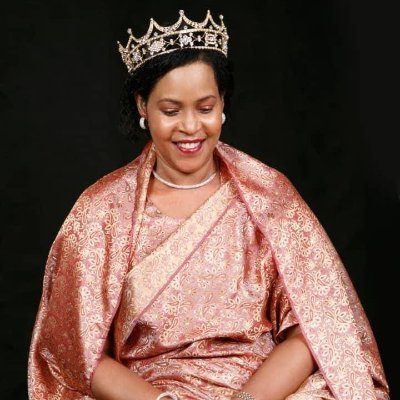
The kingdom’s official communication, delivered through Prime Minister Calvin Armstrong Akiiki and confirmed by President Yoweri Museveni, who said the Queen Mother had informed him personally, is that King Oyo left behind a young prince whose identity will be revealed in accordance with Tooro custom. The response from some elders of the Babiito royal clan — from which Tooro kings are drawn — was to question whether the child existed at all. The head of the clan, Charles Kamurasi, said he was unaware of any heir. Others demanded to know why they had not been informed.
The mother is still counting the hours since her son’s last breath. They are already counting heirs and questioning the existence of her grandchild before the body has reached the Karambi Royal Tombs.
Everyone around a widow and an orphan becomes an economist of grief. They calculate. They calculate the land your father left, the house, the pension — and in Tooro, they calculate the throne. For ordinary orphans, they help our mother sell the land to pay for the funeral. For the Queen Mother, the world has suddenly produced experts on succession, tradition and who should be king next.
The Bible speaks plainly to this, though it is conveniently ignored. Exodus 22:22 says you shall not afflict any widow or fatherless child. Isaiah 1:17 commands us to seek justice, correct oppression and plead the widow’s cause. Psalm 68:5 declares that God is a father to the fatherless and a defender of widows.
So if God is our father now, why are you fighting us for our father’s chair?
The African widow and orphan are not mourned. They are audited.
Toni Morrison wrote that the function of freedom is to free someone else. But too many of our relatives believe the function of death is to free property for themselves. They love to bury a king, but they do not want to raise his prince. They love to say “our late brother,” but they cannot bring themselves to say “our late brother’s children need school shoes.”
The Prime Minister of Tooro was compelled to plead publicly that words spoken in grief can deepen divisions that take years to repair. The Minister of Culture had to appeal for restraint, reminding the public: she has not lost a king the way the rest of us have. She has lost someone cut from her own umbilical cord.
Why must a grieving mother be defended from her own elders?
Because after the burial, when the helicopters leave Kyegegwa and the hearse that moved slowly through trading centres — where shopkeepers stood outside and boda-boda riders waited in silence along the road to Fort Portal — has gone, the crowds will go home.
Who remains?
A Queen Mother in a palace that has slowly become a tomb. A woman who has buried almost everyone she gave birth to or married. And a little boy — a prince — who, if he truly exists, is exactly where Oyo was in September 1995: fatherless at three years old, with a crown far too heavy for his head, surrounded by elders already debating his existence while his father is not yet in the ground.
We know that loneliness. After our father’s magnificent coffin went into the earth, our uncles drove home, our school fees remained unpaid and our mother became both mother and father — just as Best Kemigisa became both queen mother and mother to an entire kingdom.
True love for the dead is proven by how you treat the living they left behind.
If Tooro loved Oyo, let Tooro protect his mother from humiliation and his son from exploitation. If our families loved our fathers, let them stop contributing to expensive coffins and start contributing to cheap exercise books.
A coffin is for one day.
But an orphan, a widow, a queen mother and a little prince — they are for a lifetime.
Part II: To those who betray us
There is a particular pain that only an orphan and a widow know. It is not the pain of death itself — death is cruel for everyone. It is the pain of what comes after.
When your defender was alive, you respected us not because you loved us, but because you feared him. You called our mother “our wife” because our father was there to make you say it. You called us “our children” because our father was there to make you remember. The minute his eyes closed, yours opened — to what you had always wanted.
You did not come to cover our nakedness. You came to count what he left behind.
We watched you. Children see clearly. We saw how your voice changed when you spoke to our mother — how the respect drained out of it, how you who once knelt to greet our father now expected our mother to kneel before you to beg for land that was rightfully hers. How you who used to carry us on your shoulders could not buy us a pencil.
You moved the boundary at night. You took the garden that fed us. You took the house our mother had helped build. You told her she was a stranger in her own home — and you did it all in the most holy language. You said tradition demands. You said culture demands. You said the clan has decided.
Culture never demanded that a child go hungry. Tradition never demanded that a widow be humiliated.
Chinua Achebe wrote that the lizard who jumps from the high iroko tree praises himself if no one else will. That is what you do at funerals. You praise yourselves for buying the coffin because no one will praise you for feeding the child.
To the elders of Tooro questioning a little prince before his father’s grave is closed: that boy, if he exists, is not a threat to you. He is a three-year-old child who will grow up knowing that when his father died, the elders who were meant to protect him were busy doubting him in public.
You love the dead because the dead cannot ask for school fees. You love the dead because a coffin is silent and does not challenge your greed.
But we, the living, are still here. We, the orphans of the village and the little prince of the palace, are still asking the same question: if you truly loved the man in that magnificent coffin, why do you hate what he loved most?
Part III: To the widow, and to every orphan reading this
If you want to know what strength looks like, do not look at the men in expensive cars who come to buy the coffin. Look at the widow who is still standing after they leave.
They thought Best Kemigisa would break when she lost her husband at 24. They thought she would go mad when she lost Celia at four. They thought she would have no tears left when she buried Elizabeth. They thought that burying Oyo — the son she had guarded since he was three — would finally bring her down.
She is still standing.
That is what they do not understand about widows and the mothers of orphans. We do not have the luxury of collapsing.
My own mother, like the Queen Mother, had to learn how to be both mother and father in one body — soft enough to wipe our tears at night when we cried for our father, and hard enough to face the uncles during the day who came for the land. Psalm 27:10 says: “Though my father and mother forsake me, the Lord will receive me.” But before the Lord received us, our mother did. She is the one who stayed.
They took our father’s land. They could not take our mother’s hands that dug another garden. They removed our father’s name from clan meetings. They could not silence our mother’s voice that called us “my child” every morning and reminded us we still belonged to someone.
To every widow reading this — whether you live in a palace in Fort Portal or a small house in Kyegegwa, in Nairobi, in Kisoro, anywhere — your survival is your answer. Your child still going to school, even without shoes, is your victory.
To Queen Mother Best Kemigisa: the world sees a queen mother who has lost a king. We, the orphans, see a mother who has lost a son. We know what awaits you after the last funeral song, when the Karambi Royal Tombs are sealed and the ministers and prime minister have gone home — the silence, and the footsteps that will never come.
You protected Oyo from three to 34. You protected a kingdom for him. Now protect yourself. Protect your grandchild. Let them argue over the throne. You fight for healing.
Because in the end, thrones are temporary. Crowns are passed around. Elders come and go.
But a mother’s love? A mother’s love buries a husband, buries a daughter, buries a son — and still has enough left to welcome a grandchild.
They loved the coffin more than the child.
You, Mama Best, loved the child more than the coffin.
And that is why history will remember you.
Similar Posts by The Mt Kenya Times:
- Mt Kenya Times ePAPER September 14, 2026
- Diaspora Times Global Sep 12 – Sep 18, 2026
- When political words become weapons: Kenya must lower the temperature before it is too late
- Kenya’s youth are not asking for handouts — they are asking for opportunities
- Review of the novel Twilight in Delhi by Ahmed Ali
About the Author