Netanyahu loses his majority: Israel’s election throws the Middle East into fresh uncertainty
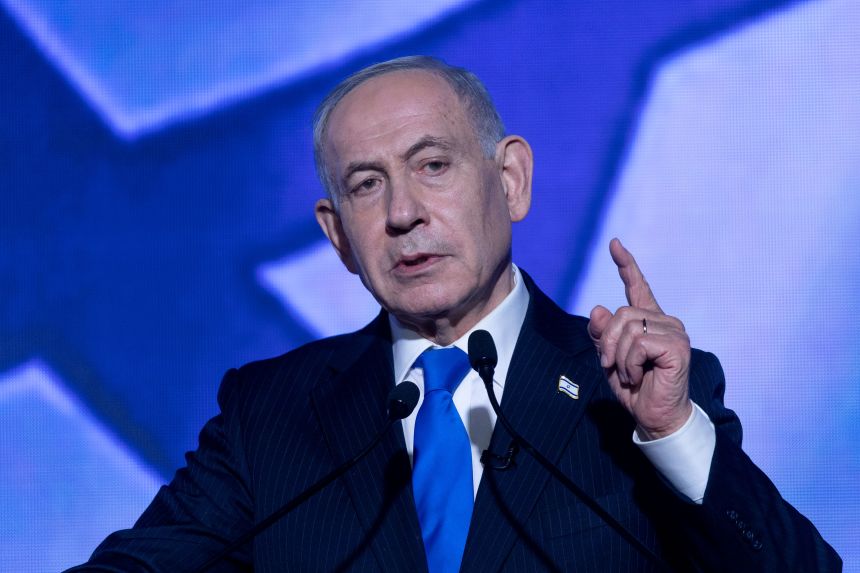
Prime Minister Benjamin Netanyahu
The Israeli prime minister won more seats than any rival but fell short of a governing majority, opening a political crisis with profound implications for the region and for Washington
By Jack Roberts
Israel woke on Wednesday to a political landscape as fractured as the conflicts still raging on its borders. The results of the 27 October 2026 Knesset elections have confirmed what many observers feared going in: no bloc has won a clear majority, and the country that has been at the centre of the Middle East’s most consequential wars now faces the very real prospect of prolonged political paralysis at precisely the moment it can least afford it.
Prime Minister Benjamin Netanyahu’s right-of-centre Likud party emerged as the single largest party in the 120-seat parliament, securing 27 seats. The wider bloc of parties aligned with Netanyahu won 53 seats in total — more than any rival grouping, but still short of the 61 seats needed to form a government. The centrist Yashar party, led by former military chief Gadi Eisenkot, led a rival bloc that secured 48 seats. Arab-led parties, which have declared their opposition to Netanyahu, claimed the remaining 19 seats — a record high that has already become one of the most contested features of an already contentious result.
Netanyahu has wasted little time in raising allegations of election fraud linked to Arab-led parties, a move that Israeli authorities have greeted with notable scepticism. Some have opened investigations; others have stated publicly that the allegations appear to lack evidence. For a man who has led his country longer than any other prime minister in its history — serving between 1996 and 1999, again from 2009 to 2021, and continuously since 2022 — the accusations carry a familiar ring. Netanyahu has navigated inconclusive elections before, leading successive caretaker governments for over a year following the inconclusive polls of April and September 2019. He has been on trial for corruption-related charges since 2020. His political resilience, admired by supporters and unnerving to opponents, has become a defining feature of Israeli public life.
Under Israeli law, President Isaac Herzog must assign the task of forming a government within seven days of the official publication of results, expected on 4 November. The designated leader will then have 28 days — extendable by a further 14 — to assemble a coalition. If that effort fails, other figures may be given the opportunity. Should the entire process reach a dead end, Netanyahu’s current administration would remain in office on a caretaker basis pending a fresh election, most likely in early 2027.
The arithmetic of coalition-building is fiendishly complicated. The most immediate question is whether the uncertainty will force some form of power-sharing arrangement between Netanyahu and Eisenkot, potentially featuring a rotation of the prime ministership — a mechanism Israel has used before, with mixed results. Netanyahu is reportedly not without leverage in any such negotiation. According to analysts tracking the talks, he may seek to exploit the possibility of renewed joint military action with the United States against Iran as a bargaining chip, using the threat of regional escalation to pressure rivals into a unity government on his terms. Before the election, Eisenkot rejected any arrangement that would see Netanyahu serve as prime minister. Whether that position holds under the pressure of coalition arithmetic remains to be seen.
A second possibility, more politically combustible, involves Eisenkot’s bloc forming a minority government with the support of Arab-led parties. The Ra’am party, which was part of the eight-party coalition that briefly unseated Netanyahu in 2021 before that government unravelled in 2022, could in theory provide the numbers needed. So could passive backing from the Arab-led Joint List. During the election campaign, however, significant voices within Eisenkot’s own bloc publicly opposed accepting Arab support. The Hamas-led attacks on Israel on 7 October 2023 — which killed around 1,200 Israelis and triggered the military campaign in Gaza — have deepened mistrust and made the prospect of Arab involvement in a governing coalition politically sensitive in ways that go beyond tactical positioning. Eisenkot has reportedly indicated that any coalition partner, including Ra’am, would need to formally recognise Hamas as a terrorist organisation and support its destruction. Whether Ra’am would accept such conditions remains an open and uncomfortable question.
The implications extend far beyond Israeli domestic politics. Since October 2023, the Netanyahu government has directed military operations that Israeli officials credit with substantially degrading threats posed by Iran and its regional allies — in Gaza, in Lebanon and elsewhere. Those same operations have resulted in tens of thousands of civilian casualties and have profoundly destabilised the wider region, drawing sustained international criticism and, in some cases, sanctions from Western governments. Within the cabinet, ultra-nationalist ministers Bezalel Smotrich and Itamar Ben Gvir have shaped policies on Israeli settlements and security operations in the West Bank that critics argue have inflamed Palestinian communities and undermined what little remains of the Palestinian Authority’s capacity to govern.
A change of government could, in principle, alter some of those policies. Eisenkot has pledged that no Palestinian state would be established under his leadership — a position that aligns with Netanyahu’s on the central question — but he has also called for a formal state commission of inquiry into the failures that allowed the October 2023 attacks to occur, the repeal of legislation passed under the previous government that critics say politicises Israel’s judiciary, and a resolution of the long-running and deeply divisive dispute over military conscription for ultra-Orthodox Haredi Jews. Such a government might also be more willing to engage with American and European pressure on West Bank policy, potentially reducing some of the friction that has strained Israel’s relationships with its traditional allies.
Washington’s role in whatever emerges will be closely watched. President Donald Trump endorsed Netanyahu near the end of the campaign, a public gesture of support that was noted carefully in Jerusalem and in regional capitals alike. Before the vote, Netanyahu was reportedly in contact with both American and European officials about the possibility of a unity government — one that would include Eisenkot but exclude the ultra-nationalists Ben Gvir and Smotrich. According to one media report, such an arrangement might be more receptive to American-backed regional initiatives and could strengthen the prospects of expanding the Abraham Accords, the normalisation agreements between Israel and several Arab states that were brokered during Trump’s first term. One scenario reportedly under discussion includes a presidential pardon by Herzog for Netanyahu as part of a broader political settlement.
In Washington, the Israeli election has landed in a Congress already sharply divided over American policy towards Israel. Several members of the 119th Congress have proposed conditions on certain military sales, citing the impact of Israeli operations on Palestinian and Lebanese civilians. Others have tabled legislation targeting Israeli settlement construction in the West Bank or individuals deemed to be threatening stability there. The outcome of Israel’s coalition negotiations will shape how those debates develop and what posture American lawmakers adopt towards continued military assistance and defence cooperation in the year ahead.
The harder truth, which the election results have made impossible to ignore, is that Israel faces an extraordinary set of challenges simultaneously: active conflicts on multiple fronts, a polarised domestic politics, an international community growing increasingly critical of its conduct in Gaza and the West Bank, and a governing process that has now, for the fifth time in seven years, produced results too ambiguous to yield a clear mandate.
Netanyahu has survived every previous version of this moment. Whether the mathematics of this particular election, and the character of this particular opposition, finally change that calculation is the question that will dominate Israeli and regional politics for weeks to come. The ghost students in America’s student aid scheme never sat in their classrooms. The ghost government in Jerusalem may soon be all Israel has — and a region already burning cannot afford to wait.
Similar Posts by The Mt Kenya Times:
- Diaspora Times Global Oct 31 – Nov 6, 2026
- US approves $2.1 billion Patriot missile sale to Ukraine, but Zelenskyy warns delivery could take years
- French protests spread nationwide as tear gas and Halloween costumes fill the streets
- Mandela’s most magnanimous act: Inviting the man who sent him to prison to lunch
- Ghost students, real money: How Kenyan nationals became entangled in America’s $130 million student aid fraud investigation
About the Author