Ghost students, real money: How Kenyan nationals became entangled in America’s $130 million student aid fraud investigation
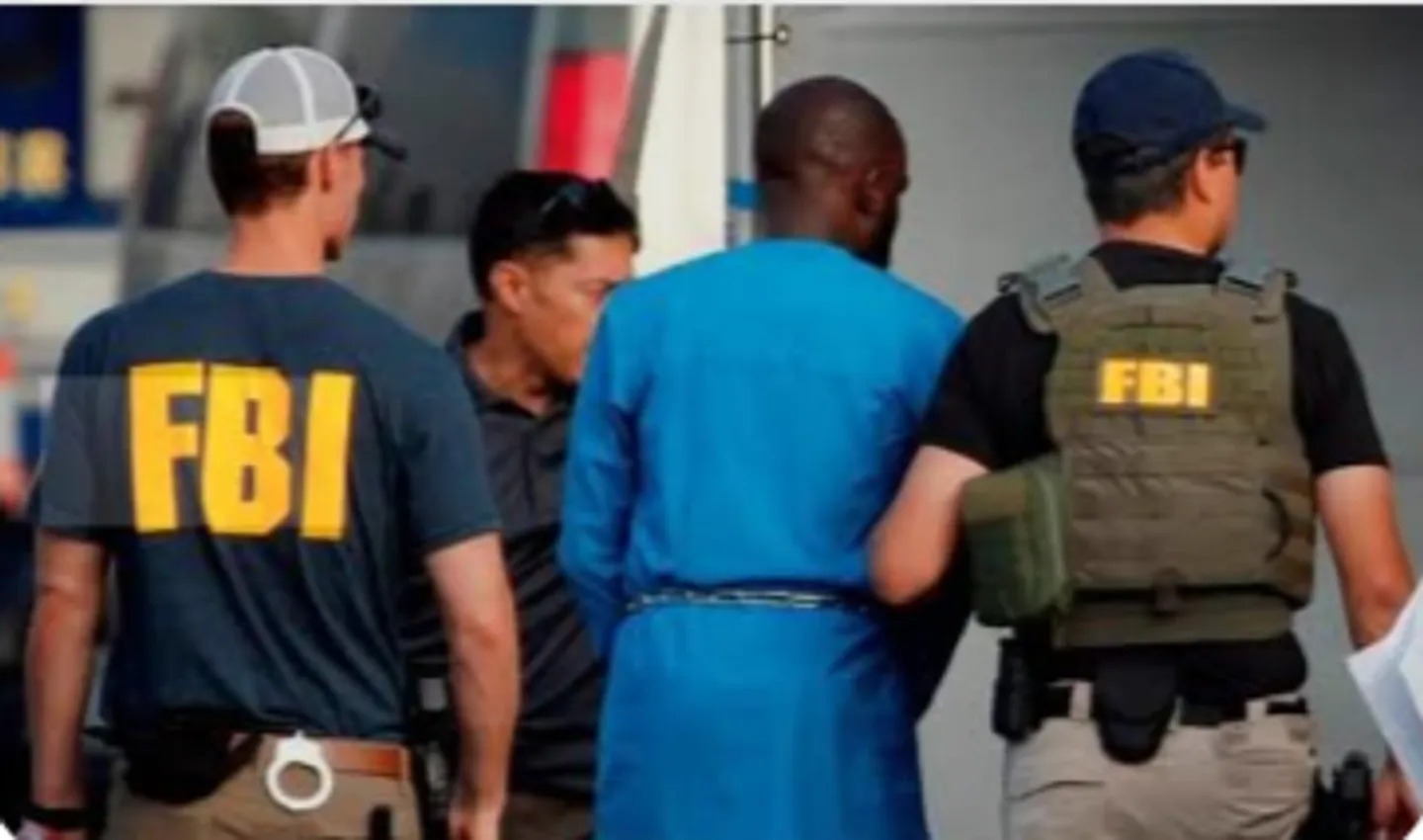
Operation Ghostbusters exposes an alleged cross-border scheme in which stolen American identities and fictitious college enrolments were used to siphon millions in federal student aid — with financial trails leading to Kenya
By Levis Wangamati
An American government programme created to open the doors of higher education to financially disadvantaged students has become the unlikely centre of a sprawling international fraud investigation. It has exposed an alleged network of stolen identities, fictitious college enrolments and millions of dollars in misappropriated public funds — with financial threads stretching from several American states all the way to Kenya. The investigation raises uncomfortable but necessary questions about the security of digital education financing and the growing sophistication of international financial crime.
On 29 October 2026, the United States Department of Justice announced the first indictments arising from what investigators are calling Operation Ghostbusters. The operation targets an alleged nationwide scheme in which criminal actors used stolen identities belonging to genuine American citizens to create fictitious student accounts, fraudulently obtain federal financial assistance and redirect the resulting funds through bank accounts controlled by associates. Among those implicated are Kenyan nationals and American-based defendants accused of facilitating transactions involving associates in Kenya.
For the Kenyan diaspora in the United States, the investigation carries particular weight. It places individuals with alleged connections to Kenya at the centre of a major American financial crime investigation and underscores the growing importance of cooperation between the two countries in combating cross-border criminal activity. One distinction, however, must be clearly drawn at the outset: the $130 million identified by American authorities is associated with potentially fraudulent student aid identification numbers. It is not an amount established as stolen by Kenyan individuals, and the investigation covers a much broader range of suspects, schemes and jurisdictions than any single nationality.
At the heart of the investigation is the Free Application for Federal Student Aid, known by its acronym FAFSA — the American government’s system through which eligible students apply for federal financial assistance to pursue higher education. The programme provides access to student loans and grants, helping millions of Americans meet the cost of attending colleges and universities. Its scale and reach make it an attractive target for individuals seeking to exploit weaknesses in digital application and verification processes.
According to the Justice Department, the alleged fraudsters obtained personal information belonging to genuine American citizens and used it to submit fraudulent financial aid applications. They then enrolled fictitious students in educational institutions, creating the appearance of legitimate beneficiaries entitled to receive federal assistance. These so-called ghost students existed within the education financing system on paper, but they never actually sat in the classrooms for which the funding had been awarded.
The alleged operation did not stop at the submission of fraudulent applications. Once institutions processed the enrolments and released financial aid refunds, the money was allegedly channelled through bank accounts controlled by participants in the scheme. Some individuals reportedly served as money mules — receiving deposits through American financial institutions before transferring substantial portions of the funds to overseas associates. Investigators believe this arrangement enabled the criminal network to exploit a legitimate public programme while concealing both the movement and the ultimate destination of the money.
The consequences for genuine American citizens whose identities were allegedly stolen are deeply troubling. The Justice Department reports that some victims discovered their personal information had been used to enrol them in educational institutions they had never attended or even heard of. Such cases raise serious concerns about identity protection, fraudulent financial obligations and lasting damage to victims’ education and credit records. A programme designed to expand educational opportunity was allegedly turned into a tool for exploiting unsuspecting citizens and public institutions alike.
The Kenyan dimension of the investigation becomes clearer when examining the individual cases announced by American prosecutors. In Nebraska, a federal grand jury returned a ten-count indictment against Francis Mogambi, a Kenyan citizen, on 19 October, charging him with five counts of theft of government money and five counts of aggravated identity theft. According to the indictment, Mogambi allegedly worked with associates in Kenya between November 2025 and May 2026 to obtain stolen American identities, enrol fictitious students and redirect federal student financial aid payments.
Prosecutors allege that Mogambi retained 30 per cent of the proceeds and transferred the remainder to associates in Kenya. Court documents further indicate that he allegedly discussed receiving approximately $2,000 weekly and sought a business through which he could cash larger cheques. The allegations offer a revealing window into how investigators believe the network operated — though the charges against Mogambi have not been proven in court.
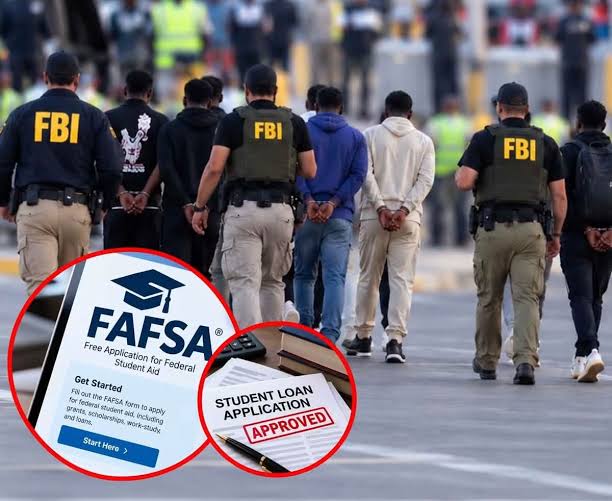 A separate case in Virginia involves another Kenyan national accused of participating in a scheme intended to defraud the American government of more than $1.4 million in student financial assistance. According to prosecutors, this defendant allegedly acted as a money mule in a transnational conspiracy involving individuals in Kenya. More than 700 fraudulent federal student aid refund deposits, totalling approximately $1,439,548, were allegedly received through multiple bank accounts, with at least $1.3 million subsequently transferred through thousands of transactions involving accounts in both the United States and Kenya.
The New Jersey case adds yet another dimension to the alleged network. Three defendants — Mabed Patricia Utate-Alberto, Patricia Arisleydi Perez and George Arturo Alfau Mendez — have been charged with allegedly acting as money mules in a scheme involving more than $1 million in federal student aid funds. Prosecutors allege that the defendants received money obtained through fraudulent FAFSA applications filed using stolen American identities, before transferring funds overseas to associates in Kenya connected to a purported safari company. Two Kenyan-based co-conspirators have been identified, and American authorities have stated their intention to pursue charges as the investigation continues.
Taken together, the three cases illustrate how investigators believe the alleged network operated across different jurisdictions. Two Kenyan nationals have been charged in the Nebraska and Virginia cases, while the New Jersey prosecution involves three additional defendants accused of facilitating transfers to Kenyan associates. These are separate legal proceedings, and the allegations against every defendant remain to be tested through the American judicial process.
Perhaps the most striking figure to emerge from Operation Ghostbusters is the identification of 830,840 potentially fraudulent Federal Student Aid Identification numbers, associated with nearly $130 million in financial assistance disbursed during September and October 2026. According to the Justice Department, investigators recommended that the Department of Education disable the affected identification numbers as part of efforts to prevent further fraudulent applications and disbursements.
That figure demands careful handling. The nearly $130 million represents financial assistance linked to potentially fraudulent identification numbers — it is not a confirmed amount stolen, nor money established as having been transferred to Kenya. The investigation covers numerous suspected operations, individuals and transactions spread across the United States. Presenting the entire sum as proceeds of a Kenyan-linked operation would be a misrepresentation of the evidence and a disservice to readers.
The FBI has separately identified more than $32 million in losses connected to similar ghost student schemes, with additional suspected losses still under review. The Justice Department, meanwhile, estimates that the wider fraud could exceed $200 million in total. More than 40 investigations are open across 26 FBI field offices and over 20 United States Attorney’s Offices. These figures make clear that Operation Ghostbusters is part of a much larger reckoning with the exploitation of American education financing — not a collection of isolated incidents.
Beyond the indictments, Operation Ghostbusters has brought to light meaningful cooperation between American and Kenyan law enforcement agencies. In September 2026, representatives of the American Justice Department and partner agencies travelled to Kenya specifically to discuss extradition, prosecution and the recovery of assets allegedly obtained through financial crime. That engagement underscores the importance of international cooperation when the proceeds of suspected criminal activity move beyond the jurisdiction where the original offences occurred.
According to the Justice Department, assistance from Kenyan law enforcement partners enabled investigators to seize more than $750,000 in cryptocurrency from an account belonging to a Kenyan national connected to the alleged scheme. American authorities described the recovery as the first international seizure of its kind in the history of the Fraud Division. Kenya’s Directorate of Criminal Investigations, Asset Recovery Agency and Office of the Director of Public Prosecutions are among the institutions identified as active participants in that cooperation.
The seizure is significant. Recovering suspected criminal proceeds can be considerably more complicated than identifying individuals accused of participating in a fraud. Investigators must trace the movement of funds, establish beneficial ownership and satisfy the legal procedures required to freeze or recover assets. Cryptocurrency introduces additional complications, given how rapidly transactions can cross borders — making close cooperation between financial intelligence agencies and law enforcement bodies essential.
For Kenyans living in the United States, the investigation raises important questions about identity protection, financial accountability and the security of public education programmes. Individuals whose personal information has been compromised may discover that their identities were used to obtain loans, file education applications or access government services without their knowledge — creating financial and administrative headaches that can be both costly and time-consuming to resolve.
There are also practical implications for legitimate international students. As American institutions tighten their identity verification procedures in response to the alleged fraud, genuine applicants may encounter additional checks designed to prevent fictitious enrolments and fraudulent financial aid applications. Universities and colleges will face the challenge of safeguarding public funding without placing unnecessary burdens on the honest students they exist to serve.
The reputational dimension of the investigation also deserves thoughtful attention. Kenya has a significant diaspora community that makes real and valuable contributions to the country’s economy through remittances, investments, professional expertise and international networks. The alleged conduct of individuals facing criminal charges should not become grounds for sweeping generalisations about an entire nationality or diaspora population. Indeed, the active involvement of Kenyan law enforcement in the investigation makes precisely the opposite case — Kenya is part of the international effort to pursue those responsible.
The broader concern for Kenya itself is whether individuals and financial intermediaries operating within its borders are being used to receive, conceal or transfer proceeds of international financial crime. Addressing that concern calls for robust financial monitoring, stronger identity verification systems and closer cooperation between the institutions responsible for investigating suspicious transactions. It also presents Kenya with an opportunity to demonstrate to its international partners that it takes financial accountability seriously.
Operation Ghostbusters lays bare a difficult challenge facing governments in an increasingly digital world. Financial assistance programmes depend on accurate personal information, reliable verification systems and, ultimately, public confidence. When those safeguards are exploited, the damage extends far beyond immediate financial losses — it erodes trust in public institutions and undermines the confidence of the very people those programmes were designed to help. The American investigation shows how technology and international financial networks can allegedly transform a programme built to expand educational opportunity into an instrument of organised fraud.
For the United States, the immediate priorities are establishing the full extent of the alleged scheme, protecting victims of identity theft, recovering public money and prosecuting those found responsible. For Kenya, the task is ensuring that anyone proven to have participated faces the appropriate legal consequences — while protecting its law-abiding citizens and diaspora communities from the kind of broad-brush association that serves neither truth nor justice.
The ghost students may never have set foot in the classrooms for which the financial assistance was allegedly obtained. But the consequences of the scheme are entirely real — felt by taxpayers, by genuine students, by identity theft victims and by the institutions entrusted with managing public resources. As Operation Ghostbusters continues to unfold, its findings will deepen our understanding of how international financial crime operates and what governments must do to protect public programmes in an ever more interconnected world.
Similar Posts by The Mt Kenya Times:
- Netanyahu loses his majority: Israel’s election throws the Middle East into fresh uncertainty
- Mandela’s most magnanimous act: Inviting the man who sent him to prison to lunch
- Modern methods of supporting socially vulnerable families
- Heavy menstrual bleeding and iron deficiency anemia in women of reproductive age
- The evolution of the female image in Uzbek literature and its role in the socio-cultural structure
About the Author