Government To Ban Over 3m Farmers From Selling Fruit And Vegetables

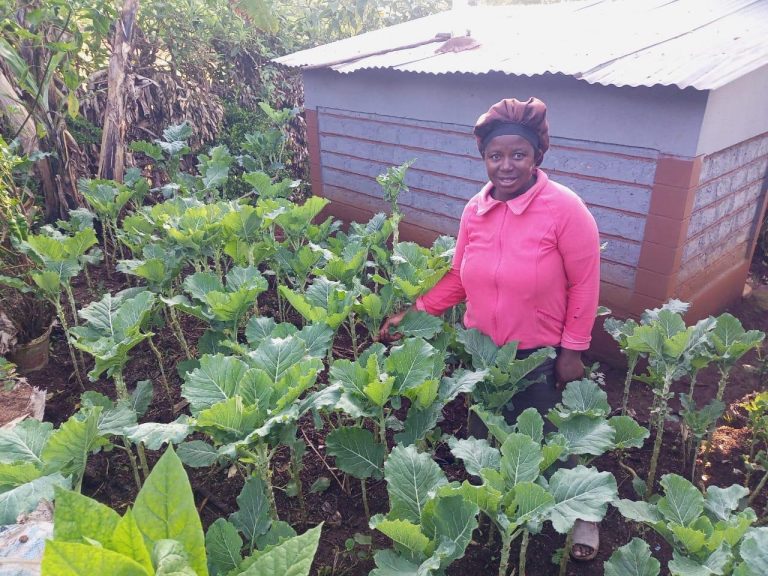
A file photo of a kale farmer. The Kenyan government is planning to implement a ban to over 3 million farmers from selling fruits and vegetables in Kenya.

By Mutua Jameson
Worth Noting:
- Farmers will be required to apply for NEMA licences to grow vegetables at a minimum cost of Sh10,000, carry out soil and water analyses at a cost of Sh2,500 to Sh5,000, pay for Certification with a national or international standards certifier, and prepare dozens more records, including analysing the nutrient content of any compost or manure they use.
- International agricultural NGO CABI reported in July it would not be possible for any individual farmers to cover the cost of the certification.
- Its conclusions followed an aid-funded project that gained certification for the only farmers’ groups yet to be certified, accounting for around 70 of Kenya’s 4.5 million farmers.
The government is preparing to enforce the harshest farm regulations in the world in a move that will prevent more than three million farmers from selling fruits and vegetables in Kenya.
The mandatory rules, which the government has stated will be ‘anchored in law’, will mean only large farmers, companies, and importers will be permitted to supply fruit and vegetables in Kenya, with any trader buying fruit and vegetables from uncertified farmers facing stiff penalties.
The penalties will apply to middlemen, distributors, processors, or any direct buyer who purchases fruit and vegetables from any farmer who has not been certified as having Implemented the 55-page, mandatory, KS1758 Kenyan standard.
Presented publicly as a food safety measure, the standard applies over 500 new rules for farmers that will cut off the supplies of over 90 per cent of the country’s locally consumed fruit and vegetables.
Farmers will be required to apply for NEMA licences to grow vegetables at a minimum cost of Sh10,000, carry out soil and water analyses at a cost of Sh2,500 to Sh5,000, pay for Certification with a national or international standards certifier, and prepare dozens more records, including analysing the nutrient content of any compost or manure they use.
International agricultural NGO CABI reported in July it would not be possible for any individual farmers to cover the cost of the certification.
Its conclusions followed an aid-funded project that gained certification for the only farmers’ groups yet to be certified, accounting for around 70 of Kenya’s 4.5 million farmers.
Rough estimates the cost is likely to exceed Sh250,000 per farmer. A study of Kenyan smallholder farmers done by Mercy Corps found that two-thirds of farmers earn less than Sh7,740 a month from their produce – although the average earnings from fruit and vegetables is higher.
However, in an interview with FarmBizAfrica.com, spokesman for the Horticultural Crop Directorate (HCD) of the Agriculture and Food Authority (AFA) Collins Otieno confirmed that all farmers will be obliged to adhere to the standard, which also requires farmers’ IDs, plot records, and growing records to be kept and submitted to every produce buyer.
The HCD, as well as other agricultural organisations, including the large-farmer lobby groups, The Fresh Produce Consortium of Kenya, and FPEAK, as well as international agricultural organisations have all confirmed the rules will be mandatory for farmers selling produce inside Kenya.
Yet, despite intense foreign-aid funding by TradeMark Africa for workshops, strategies, and the implementation of the new rules, none of these organisations, has addressed the scale of disruption that will be caused to the country’s food supplies, or the temptation for enforcers to accept bribes where no alternative food sources are available for buyers.
Horticulture is the largest agricultural sub-sector in Kenya. In a FarmBizAfrica national survey of 155 farmers in January 2024, 78 per cent reported growing at least one horticultural crop on their farm.
According to an analysis of Kenyan smallholder farmers, these crops earn the country’s farmers earn average total monthly income of Sh21,115.39 a month.
Altogether, the government will be closing down earnings to farmers of over Sh280bn a year.
The new rules have been laid out in the Kenya Standard 1758: 2016 (KS 1758) Horticulture Industry Code of Practice.
Fact sheet: 11 more things Kenyan farmers will need to do to sell fruit and vegetables.
The Kenyan government is making its KSh1758 horticulture industry standard mandatory for all farmers who wish to sell fruit or vegetables in Kenya.
Further requirements for any farmer to sell vegetables, fruits, or herbs, will be: To create and have permanently available at the farm for inspection records justifying the suitability of their land for agriculture, have a daily record of the water they consume, and the fertilizer they use and before irrigating crops, obtain water quality analysis from a laboratory of “known and recognized competence” with the capacity to analyze for NPK, electrical conductivity, Microbial, mineral, and chemical contaminants, PH, biological activity, and heavy metals contaminants, keep the documented results and implement any corrections to the water that the laboratory recommends.
Analyse the quality of irrigation water both at intake and exit at least every three months and keep test records showing if there is any contamination, the types of contaminant and their amounts.
Others are demonstrate an understanding of the ‘most water efficient means of irrigation’ for each type of crop and use this most efficient method and not any alternative.
Keep records of the date of watering crops and volume of water used per unit area.
To use organic manure or fertiliser, an analysis will need to be carried out by a Nationally recognised laboratory to determine the content of nitrogen, phosphorus and potassium in the fertiliser.
Maintain a written fertiliser plan based on regular soil, water, or plant analysis that can be compared with national or international standards to come up with a farm fertilisation plan.
Create a nitrogen management plan that calculates the amount of nitrogen applied on farms every year.
This will need to be within the national limits (where they exist) and/ or international limits. This nitrogen application plan should be documented and cover the start and end of each crop or every site in cases where the farmer practises crop rotation.
Record work contracts for their permanent and seasonal workers as well as every kind of payment they receive.
Conduct at least one yearly self-audit against the standard’s 500+ rules, identify necessary corrective actions, in writing, implement them, and keep the records of this audit and implementation for two years ready for inspection government-authorised personnel.
Similar Posts by The Mt Kenya Times:
- Mt Kenya Times ePAPER October 17-18, 2026
- Ruto bets billions on Kerio Valley — with one eye on 2027
- Ruto’s health ministry kills Murang’a’s digital hospitals
- Kenya bets on Mount Kenya to drive a billion-shilling tourism revival
- Do you have a wealth vision? Or are you just working until you die?
About the Author