Inside Kenya’s Police Brutality Epidemic As A Culture Of Impunity
 The Mt Kenya Times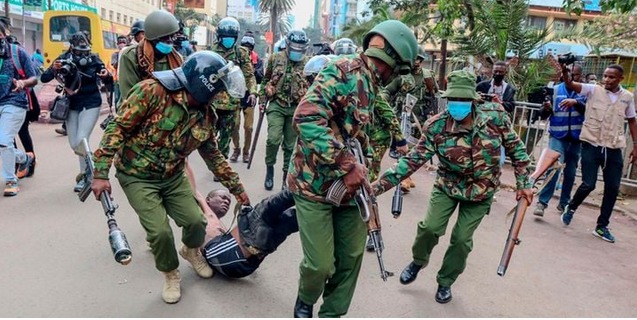
Police Brutality
In a nation where the cries for justice echo in the streets, the harsh reality of police brutality looms large.
By: Midmark Onsongo
Worth Noting:
- The streets of Nairobi, Mombasa, and Kisumu, once vibrant with life, now tremble under the heavy boots of officers more interested in oppression than protection. The narrative has twisted into a tragic comedy where police are the protagonists of brutality while the citizens play the roles of mere collateral damage. Yet, amidst the chaos, we are left to ponder: how did we arrive at this juncture?
- The answer lies in a toxic cocktail of impunity, corruption, and a failure of leadership. In 2018, the Independent Policing Oversight Authority (IPOA) called for urgent reforms, citing rampant cases of abuse. However, instead of accountability, the response has been a deafening silence from the powers that be, allowing the brutality to fester like an untreated wound.
If you think you’re tired of hearing the same lamentations about police brutality, welcome to the harsh reality of Kenya’s law enforcement saga. Gone are the days when we believed our police force was our protector; instead, we are confronted with the chilling truth of a systemic epidemic where violence reigns, and justice is a distant dream.
The grim reports pour in like clockwork: extrajudicial killings, brutal beatings, and harassment paint a dark picture of a police force meant to serve and protect, but instead, they prey on the very citizens they vowed to safeguard. The statistics are staggering and unnerving. According to Human Rights Watch, between 2017 and 2020, more than 200 people died at the hands of the police in Kenya. These aren’t just numbers; they represent lives cut short, families shattered, and communities left in mourning.
Imagine a mother, once filled with hopes and dreams for her child, now faced with the grim reality of a child lost to a stray bullet or a police baton. The cold comfort of statistics becomes a heart-wrenching reality when you realize that many of these victims were unarmed and innocent.
The pain doesn’t stop there. The Kenya National Commission on Human Rights reported in 2021 that 50% of Kenyans fear the police more than they fear criminals. This irony is a paradox we live with daily: those who should be the shield against violence have become the weapon of choice for brutality.
The streets of Nairobi, Mombasa, and Kisumu, once vibrant with life, now tremble under the heavy boots of officers more interested in oppression than protection. The narrative has twisted into a tragic comedy where police are the protagonists of brutality while the citizens play the roles of mere collateral damage. Yet, amidst the chaos, we are left to ponder: how did we arrive at this juncture?
The answer lies in a toxic cocktail of impunity, corruption, and a failure of leadership. In 2018, the Independent Policing Oversight Authority (IPOA) called for urgent reforms, citing rampant cases of abuse. However, instead of accountability, the response has been a deafening silence from the powers that be, allowing the brutality to fester like an untreated wound. The irony is striking: while the government preaches reform, the reality is that perpetrators walk free, emboldened by a system that turns a blind eye to their transgressions.
The case of the late George Floyd in the United States ignited global protests against police violence, yet in Kenya, the flames of discontent are often extinguished before they can even spark. In 2020, the death of 19-year-old Yassin Moyo, who was shot in the back while fleeing police during a curfew, sparked outrage. Yet, where was the accountability? Instead of addressing the brutality, police spokespersons offered euphemisms, labeling the incident an “unfortunate misunderstanding.” Such rhetoric, designed to minimize the horror of state violence, only serves to deepen the wounds and perpetuate a cycle of mistrust.
Let’s not forget the sheer irony of our government’s attempts at community policing. While they preach collaboration and dialogue, the reality is a far cry from their lofty ideals. The notion of “engagement” is merely a facade, masking a culture steeped in violence and coercion. Community policing should foster relationships built on trust, yet the rampant abuse only drives a wedge between the police and the very citizens they are meant to serve.
In the face of this brutality, brave souls rise to challenge the status quo. Activists, human rights defenders, and ordinary citizens are rallying for change, demanding accountability from a system that thrives on impunity. Movements like #EndPoliceBrutalityKE are not merely social media hashtags; they represent a collective cry for justice in a landscape marred by violence.
The youth of Kenya, once marginalized, are now at the forefront of this movement, wielding their phones as weapons against oppression and shining a light on the dark corners of our society. Yet, amidst this glimmer of hope, the question lingers: will change ever come? The road to reform is often paved with resistance, as entrenched interests fiercely guard their power.
The establishment clings to the status quo, using fear as a tool to silence dissent. But we must remember that change is born out of struggle. The fight against police brutality is not just about the present; it is about reclaiming our future, a future where every Kenyan can walk freely without the fear of harassment or violence.
As we confront the bitter truth of police brutality in Kenya, let us not forget the lives lost, the families torn apart, and the communities forever changed. It is our collective responsibility to hold our leaders accountable, to demand transparency and reform, and to stand in solidarity with those who suffer at the hands of a brutal system.
The echoes of justice must ring louder than the silence of complicity, and together, we can dismantle the culture of impunity that has plagued our nation for far too long. This fight requires courage, resilience, and unwavering determination. We must continue to raise our voices, to march, to protest, and to demand change.
Our democracy depends on our ability to confront the harsh truths and forge a path towards justice for all. Together, we can break the chains of brutality and build a society where every Kenyan can live in peace, dignity, and freedom. The time for change is now, and it begins with us.
This article was scripted by;
MIDMARK ONSONGO, SGS
(Socio-Geographic Scholar)
Similar Posts by The Mt Kenya Times:
- Mt Kenya Times ePAPER October 5, 2026
- Sharp school wins national award for career and workforce readiness
- Government takes diaspora jobs drive to the grassroots
- The stolen hands: How we killed the craftsman to create a clerk
- After nearly 60 years in darkness, Nyabiendi awaits the light
About the Author