Junet Muhamed
National Assembly Minority Leader’s admission that money circulated in Parliament during the 2024 ouster triggers demands for investigation and exposes the fault lines of Kenya’s broad-based political arrangement
By David Kimani
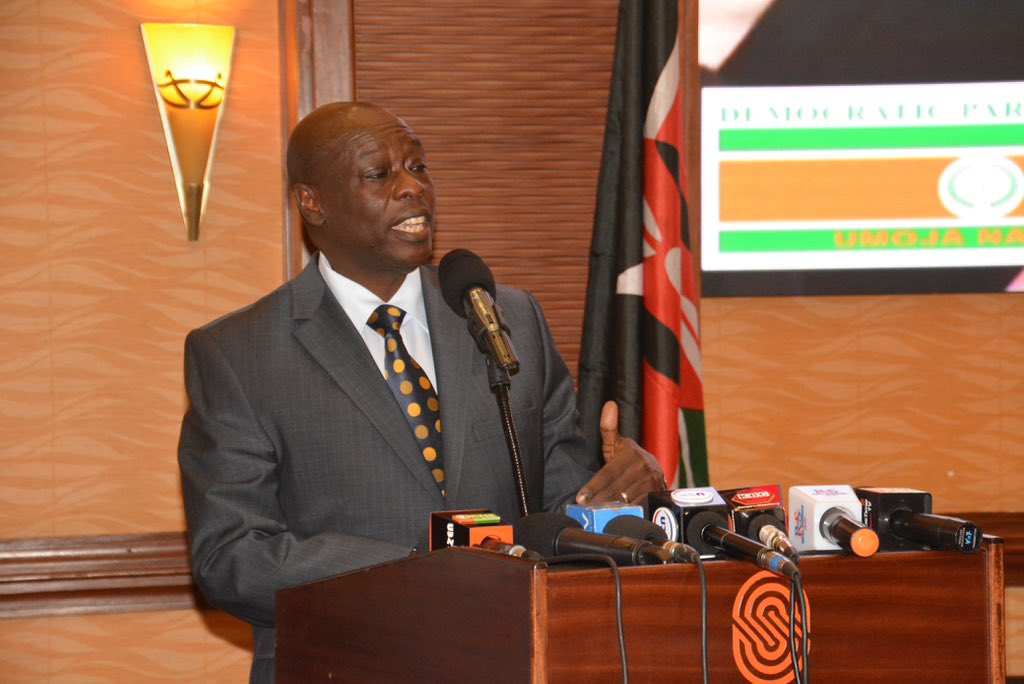
National Assembly Minority Leader Junet Mohamed admitted at an ODM-UDA rally in Malava, Kakamega County, that money changed hands in Parliament during the October 2024 impeachment of former Deputy President Rigathi Gachagua, naming Senate Majority Leader Aaron Cheruiyot as the person responsible for the alleged distributions.
The admission, delivered with a casualness that was itself remarkable, has drawn immediate calls for a formal investigation by the Ethics and Anti-Corruption Commission and reignited one of the most explosive controversies to have shadowed Kenya’s political class since Gachagua’s removal. Speaking to the crowd, Mohamed said there was “something moving around” in Parliament during the impeachment, and advised colleagues who received payments to invest them in their home constituencies rather than spend lavishly in Nairobi. In remarks that drew laughter but also sharp public backlash, he singled out Nairobi Senator Edwin Sifuna, mocking what he described as an underwhelming homestead in Bungoma as evidence that the senator had squandered his alleged share.
The comments were not made in a vacuum. They arrive nearly two years after 281 Members of Parliament voted to impeach Gachagua on charges including corruption, insubordination, undermining the government and promoting ethnically divisive politics, and months after the High Court upheld that impeachment in a judgement delivered on June 8, 2026, while simultaneously awarding Gachagua KSh50 million in damages after finding that senators violated his right to a fair hearing by refusing to grant an adjournment sought on medical grounds.
What makes Mohamed’s remarks so politically incendiary is their source. He is not a marginalised backbencher nursing a grievance; he is the Minority Leader of the National Assembly and one of ODM’s most senior figures in Parliament. He has previously boasted of ODM’s role in the impeachment, claiming that Ruto’s UDA would not have mustered sufficient numbers without ODM support, and that the party weighed the accusations against Gachagua and concluded he was unfit for office. That the same man now jokes about money circulating in the same chamber during the same vote strips the process of whatever institutional dignity remained attached to it.
Gachagua himself had made identical allegations long before Malava. Speaking on Citizen TV, he alleged that MPs were paid KSh500,000 each to support his removal, while senators received as much as KSh10 million apiece, and further claimed that President William Ruto maintained files on every lawmaker who accepted money, locking them into political loyalty ahead of the 2027 elections. Those allegations were widely reported but largely dismissed by his opponents as the grievances of a man who had lost power. Mohamed’s remarks have made them significantly harder to dismiss.
Gachagua has also alleged that Ruto offered him KSh2 billion to resign voluntarily before the impeachment, with assurances of continued security and a salary, an offer he claimed he rejected. Taken together with Mohamed’s Malava remarks, these allegations sketch a picture of an impeachment process conducted less as a constitutional accountability exercise than as a transaction — a characterisation that the institutions involved have every reason to contest but are now finding increasingly difficult to rebut.
The legal backdrop matters enormously here. The three-judge bench comprising Justices Eric Ogola, Anthony Murima and Freda Mugambi delivered a landmark ruling that upheld Gachagua’s removal while simultaneously finding serious procedural irregularities in how the Senate handled his case — marking the first ruling of its kind under Kenya’s 2010 Constitution. Justice Ogolla stated that Gachagua’s fair trial rights were infringed when the Senate declined to allow an adjournment during the impeachment proceedings despite his absence, and the court awarded KSh50 million in damages payable by the Senate. Gachagua has since confirmed he will appeal the judgement, disputing its findings on both law and fact.
Cheruiyot, who is now named by Mohamed as the alleged accounting officer for the payments, responded to the High Court’s June ruling by insisting the Senate would appeal the fair trial finding, maintaining that senators had allowed Gachagua to present his case both orally and through written submissions. He has not publicly responded to the Malava allegations at the time of publication.
The political implications extend well beyond any individual liability. The ODM-UDA cooperation that delivered Gachagua’s impeachment was itself a defining moment in Kenya’s broad-based government experiment, a power-sharing arrangement that folded the principal opposition into the ruling coalition. Petitioners challenging the impeachment argued in court that the 13th Parliament had been captured by the Executive, and that if Parliament could be used to remove a Deputy President, no constitutional office was safe. That argument, once confined to legal submissions, now reverberates more loudly in the public domain following Mohamed’s admission.
The ethical and legal exposure is significant. If the EACC were to open a formal inquiry, investigators would face the question of whether Mohamed’s statement — however flippant in delivery — constitutes evidence or merely political theatre. Under Kenya’s Anti-Corruption and Economic Crimes Act, bribery of a public officer is a criminal offence carrying custodial sentences. The fact that the alleged conduct occurred inside Parliament, during a constitutional process that itself carried the imprimatur of judicial review, complicates any prosecution pathway but does not eliminate it.
There is also the matter of parliamentary integrity. Section 9A of the Parliamentary Powers and Privileges Act protects what is said within the House, but public admissions made outside the chambers — as Mohamed’s were — do not attract that immunity. What was said at a political rally in Malava is fair game for investigators, regulators and the courts.
As 2027 approaches, the political incentives to either expose or suppress the full truth of what happened in October 2024 will intensify. Gachagua, now leading the Democracy for the Citizens Party and maintaining a formidable presence in Mt Kenya politics, has every reason to keep the issue alive. The broad-based coalition, already showing strain over resource allocation and electoral zoning, has every reason to close ranks. Mohamed’s remarks may have been meant to draw applause; instead, they have handed Kenya’s anti-corruption institutions a question they will find it very difficult to leave unanswered.
Similar Posts by The Mt Kenya Times:
- Mt Kenya Times ePAPER September 15, 2026
- Court ruling clips Kenyatta’s wings at the worst possible moment
- Ruto takes the sponsor war to Nyanza — and finds a warmer welcome than his opponents expected
- Kisumu water project lays foundation for dignified urban growth
- The months ahead offer Kenya a golden opportunity to grow tourism
About the Author