Justice’s Highest Aim: Dignity, Punishment, And Moral Renewal In Kenya
 The Mt Kenya Times
By Jerameel Kevins Owuor Odhiambo
Kenya’s criminal justice system has long reflected a tension between retribution and rehabilitation, between the need to maintain social order and the moral imperative to treat every person with dignity. Historically, the country’s penal system was inherited from colonial structures that viewed punishment primarily as a deterrent, emphasizing incarceration, hard labor, and isolation. This retributive model framed crime as a moral failure to be corrected through suffering rather than through restoration or understanding.
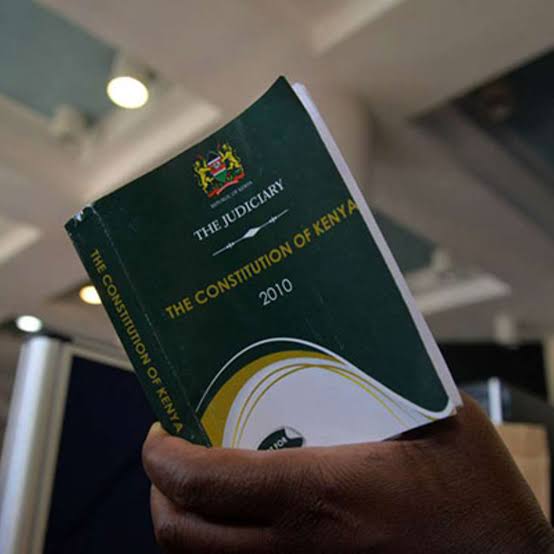
As a result, Kenya’s prisons became overcrowded, underfunded, and punitive, with little room for human development. Inmates were often subjected to inhumane conditions poor sanitation, limited access to education, and restricted healthcare conditions that stripped them of their dignity rather than prepared them for reintegration. The promulgation of the 2010 Constitution marked a paradigm shift, embedding human rights and human dignity at the core of governance and justice. This constitutional reordering called for a transformation of the punitive philosophy, from one that seeks vengeance to one that heals, restores, and affirms the humanity of all, including offenders.
At the heart of a human rights–based approach to punishment lies the principle of human dignity, a cornerstone of both moral reasoning and constitutional law. Article 28 of the Constitution of Kenya explicitly declares that “every person has inherent dignity and the right to have that dignity respected and protected.” This article stands as a moral compass for all state institutions, including the judiciary, correctional services, and law enforcement agencies. It affirms that even when an individual has broken the law, their basic worth as a human being remains intact.
This recognition compels the state to design punishment not as a form of dehumanization but as a process that respects and restores the offender’s dignity. Thus, prisons, probation, and community corrections must operate within frameworks that nurture transformation, reintegration, and social justice rather than perpetuate cycles of degradation. In this sense, dignity is not merely a constitutional ideal; it becomes the ethical foundation upon which just punishment must rest.
From the perspective of legal philosophy, punishment can be analyzed through several theoretical frameworks, each offering a different justification for why society punishes wrongdoers. The retributive theory sees punishment as moral retribution, an act of giving offenders what they “deserve.” The utilitarian perspective justifies punishment as a deterrent to crime and as a means of maintaining public order. In contrast, rehabilitative and restorative theories focus on moral and social healing, viewing punishment as an opportunity for transformation.
The human rights–based approach resonates most deeply with these latter two theories. Philosophers such as Immanuel Kant emphasized that human beings must always be treated as ends in themselves, never merely as means to an end. Similarly, John Rawls argued that justice must be built upon fairness and respect for persons. When applied to punishment, these ideas imply that the state’s response to crime should never strip away an offender’s humanity but instead affirm their capacity for moral renewal. Justice, in this light, is not about inflicting pain but about nurturing the conditions for ethical growth and societal harmony.
Kenya’s legal and correctional frameworks have begun to reflect this evolving understanding. The Prisons Act, the Community Service Orders Act, and the Probation of Offenders Act represent legislative steps toward more humane correctional practices. Programs offering vocational training, literacy education, and psychosocial support within prisons are designed to prepare inmates for reintegration into society.
For instance, rehabilitation centers such as the Lang’ata Women’s Prison have developed creative arts, counseling, and business training programs that empower inmates and rebuild their sense of self-worth. These initiatives embody what may be called correction that dignifies an approach that views offenders not as irredeemable but as persons capable of transformation. Such correctional philosophy recognizes that the ultimate goal of justice is not simply to punish but to heal both the offender and the community harmed by crime.
Kenya’s commitment to international human rights standards further strengthens this shift. The country is a signatory to global and regional instruments such as the Universal Declaration of Human Rights, the African Charter on Human and Peoples’ Rights, and the United Nations Standard Minimum Rules for the Treatment of Prisoners (Nelson Mandela Rules). These instruments collectively emphasize that deprivation of liberty must never translate into deprivation of dignity.
They oblige the state to ensure humane conditions in detention, access to healthcare and education, and opportunities for moral and social rehabilitation. By aligning its correctional policies with these frameworks, Kenya acknowledges that justice must be tempered with compassion, and punishment must serve both accountability and human development.
The moral imperative of a dignified correctional system lies in its understanding that punishment should restore moral balance, not perpetuate harm. When punishment is purely retributive, it often deepens resentment and social alienation, both for offenders and for communities affected by crime. A justice system that humiliates or dehumanizes offenders risks reproducing the very social conditions that foster criminality, poverty, trauma, and exclusion.
Conversely, a system that affirms human dignity through education, therapy, and restorative dialogue enables true accountability and moral transformation. The offender learns not only the consequences of their actions but also their capacity to choose differently. Rehabilitation, therefore, is not an act of leniency; it is the highest form of justice because it restores moral order through understanding and reform rather than through fear and pain.
In practice, rehabilitation and restorative justice in Kenya require a focus on holistic correctional approaches. Prisons and probation programs must include access to counseling, skills development, and opportunities for meaningful work. Restorative justice mechanisms such as victim-offender mediation and community reconciliation programs can help rebuild relationships broken by crime. These methods allow offenders to directly confront the impact of their actions, make reparations, and regain moral standing within their communities. This process not only benefits victims but also fosters healing for offenders, transforming punishment into a path of moral recovery. It ensures that justice is both corrective and creative, paving the way for peace and social cohesion.
 The judiciary has increasingly recognized the importance of humane punishment. Kenyan courts have begun to emphasize alternatives to incarceration, particularly for petty and non-violent offenses. Sentencing policies increasingly consider restorative and community-based measures that reduce prison congestion while fostering rehabilitation.
The courts have also invoked constitutional provisions on dignity and fair treatment to condemn inhumane prison conditions and arbitrary detentions. This judicial shift reflects a deeper moral insight: that the legitimacy of state power rests not on its ability to punish severely, but on its ability to punish justly and humanely. By promoting correction that affirms dignity, the judiciary reinforces the idea that justice is not only retributive but transformative.
Ultimately, a human rights–based approach to punishment in Kenya represents both a constitutional duty and a moral evolution. It requires viewing offenders as moral agents capable of growth, not as social outcasts to be discarded. By embracing a justice system rooted in dignity, compassion, and rehabilitation, Kenya strengthens not only its legal framework but also the moral fabric of its society. Punishment, when guided by human dignity and restorative philosophy, becomes an act of moral restoration; a process that dignifies both the punished and the community that punishes. In this way, justice ceases to be a tool of vengeance and becomes instead a vessel of renewal, building a nation that is not merely lawful, but truly humane.
The writer is a legal writer and researcher
Similar Posts by The Mt Kenya Times:
- Behind the visor: How Nairobi’s ‘Brayo Oyaah’ is redefining Kenya’s road safety culture
- Trauma, Friendship, Love, and the Search for Self-Worth in Hanya Yanagihara’s A Little Life
- Kenya’s scouting laws face overhaul: Kiarie leads push to align movement with devolved governance
- Mt Kenya Times ePAPER September 19-20, 2026
- Kenya joins US and UK to put citizens on the terrorism frontline
About the Author