
Sixteen years after promulgation, a teacher reflects on rights, accountability and the distance between constitutional promise and everyday reality
By Ashford Kimani
Sixteen years ago, Kenya gave itself a new constitutional promise. On 27 August 2010, the Constitution of Kenya was promulgated at a historic ceremony at Uhuru Park in Nairobi. I remember that occasion not merely as another national event, but as a moment that seemed to announce a different Kenya — a country where citizens would know their rights, institutions would answer for their conduct, and public power would be exercised within clear legal boundaries. Sixteen years on, I have come to understand that a constitution is not transformed into reality simply because it has been signed into law. Its true test is what happens in the ordinary lives of citizens.
For me, that test has played out largely through life as a teacher. I have spent many years working in education — first in the private sector, later in public service. That journey has given me a front-row seat to some of the opportunities, contradictions and frustrations of a country attempting to live by a new constitutional order. The Constitution promised dignity, equality, fairness and accountability. As a teacher, I have often seen those ideals at work. I have also encountered situations that remind me how far we still have to travel.
One of the most important shifts brought by the 2010 Constitution was the recognition that citizens hold rights the State must respect. That may sound obvious today, but it represented a profound change in how Kenyans should perceive government. A citizen is not a favour-seeker before the State. A teacher is not merely a government employee. A student is not simply a recipient of whatever education the system chooses to provide. We are all holders of rights and participants in a constitutional democracy.
My experience in education has taught me that this distinction matters enormously. Teachers work within a complicated public system involving the Teachers Service Commission, the Ministry of Education, the Kenya National Examinations Council, school boards and numerous other bodies. Each institution has its mandate. Each has power. But that power is supposed to be exercised within the law. As a teacher, I have sometimes found myself asking difficult questions about accountability, fairness and institutional responsibility. When policies are introduced, who explains them? When decisions affect teachers and learners, are those affected actually heard? When institutions make mistakes, who takes responsibility? These are not acts of rebellion. They are constitutional questions.
The Constitution gave Kenyans a stronger language with which to demand accountability. It made it increasingly difficult to argue that citizens should simply accept decisions because they came from people occupying powerful offices.
My years in education have also shown me the importance of social and economic rights — particularly the right to education. In a classroom, constitutional ideals become very practical. A child sitting on a broken desk does not experience the Constitution as an abstract legal document. A learner studying in an overcrowded classroom does not experience equality as a philosophical concept. A teacher struggling to deliver the curriculum without adequate resources does not experience public policy as something remote. These are constitutional issues because they concern dignity, opportunity and the quality of public services that the State owes its people.
The introduction of devolution similarly changed the Kenyan experience. Government is no longer perceived only through the offices in Nairobi. County governments have become part of everyday life, particularly in healthcare, local infrastructure and development. From where I stand, devolution has been one of the most visible demonstrations that constitutional reform can genuinely alter the relationship between citizens and government. Yet it has also taught us another lesson: moving power closer to the people does not automatically make that power accountable. Whether at national or county level, public power remains public power. It must be scrutinised, questioned and ultimately used to serve the people.
My experience has also made me appreciate the importance of professional independence. A teacher is expected to perform duties professionally, follow lawful policies and remain accountable. But accountability must operate in both directions. Institutions must also answer to the people who serve within them. There is a real danger in creating systems where accountability becomes synonymous with surveillance and compliance, while institutional responsibility is quietly set aside. A constitutional democracy should not simply ask, “Have you obeyed?” It should also ask, “Was the decision fair? Was the process transparent? Were your rights respected?”
Over the years, I have watched how easily Kenyans can grow cynical about public institutions. People complain about corruption, bureaucracy, political interference and unequal treatment. Sometimes they conclude that the Constitution has failed. I do not agree — not entirely. The Constitution has not failed simply because Kenyans have sometimes failed to implement it. A good constitution cannot compensate for poor leadership, weak institutions or a culture that tolerates impunity. It provides the framework. Citizens and institutions must supply the commitment.
That is particularly important for teachers. Schools are among the places where constitutionalism should be taught through practice, not merely through textbooks. When students are treated with dignity, when discipline is administered fairly, when different opinions can be expressed responsibly, and when leadership is grounded in justice rather than fear, young people learn what constitutional democracy actually means. As an English and Literature teacher, I have always believed that education is ultimately about more than examinations. It is about producing citizens who can think, question, analyse and participate meaningfully in society. The Constitution strengthens that mission.
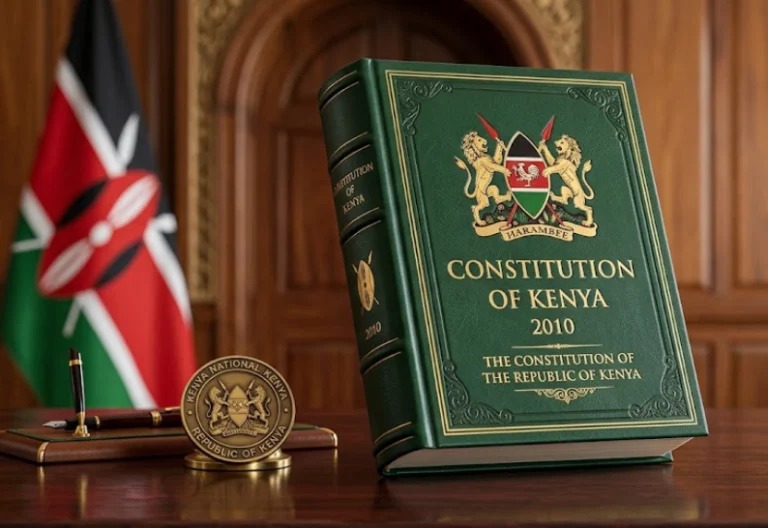
It tells the young Kenyan that their voice matters. It tells them that authority has limits. It tells them that leadership is a responsibility, not a privilege to be abused. It tells them that rights come with responsibilities. And it tells them that this country belongs to them too.
Looking back across the sixteen years since 2010, I see a mixed picture. We have made progress, but we have also disappointed ourselves. We have created institutions, but sometimes struggled to make them genuinely independent. We have expanded rights, but sometimes violated them. We have brought government closer to citizens through devolution, but accountability has not always travelled with power.
Yet I remain convinced that the 2010 Constitution is worth defending. My own experience has taught me that constitutionalism is not something that happens only in Parliament, the courts or State House. It happens in classrooms, offices, hospitals, county governments and ordinary homes. It happens whenever a citizen refuses to accept injustice simply because the person responsible is powerful. It happens whenever a public servant chooses integrity over convenience. It happens whenever a teacher treats a learner with dignity. It happens whenever an institution admits a mistake and corrects it. And it happens whenever Kenyans insist that public power must remain accountable to the people.
At Katiba@16, I do not simply celebrate the Constitution. I interrogate it — and, more importantly, I interrogate ourselves. Sixteen years is long enough to judge what has changed, but not long enough to abandon the dream. The Constitution gave us the promise. My experience has taught me that keeping that promise is not the responsibility of politicians and judges alone. It belongs to every teacher, every learner, every public servant, every parent and every citizen.
The Constitution is Kenya’s contract with itself. Sixteen years after its promulgation, the question is no longer whether it belongs to us. The question is whether we are willing to live by it.
Similar Posts by The Mt Kenya Times:
- Mt Kenya Times ePAPER October 17-18, 2026
- Ruto bets billions on Kerio Valley — with one eye on 2027
- Ruto’s health ministry kills Murang’a’s digital hospitals
- Kenya bets on Mount Kenya to drive a billion-shilling tourism revival
- Do you have a wealth vision? Or are you just working until you die?
About the Author