Kenya’s black gold test: The Dangote refinery and the question of who really owns our future
 The Mt Kenya Times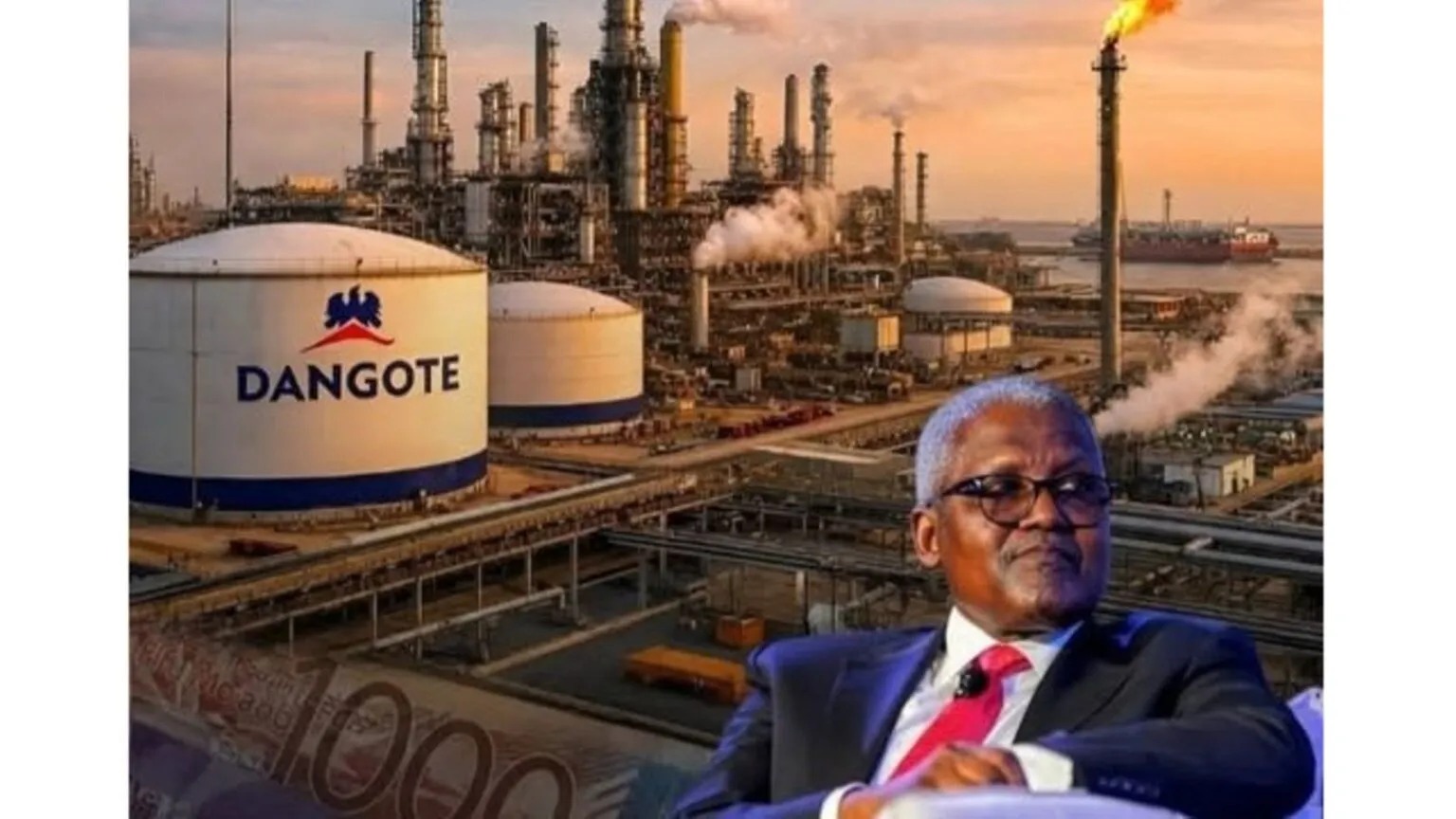
Dangote refinery in Lamu
By Fredrick Kipchumba Chelimo-PWD
Kenya must never mistake the discovery of oil for the creation of wealth. Oil beneath the ground is only potential wealth; the real wealth is the remains with the people after the oil has been extracted sold and exhausted”
There are investments that arrive quietly, create a few jobs and disappear into the ordinary rhythm of commerce. Then there are investments so large that they can alter the economic geography of an entire country. The proposed Dangote refinery in Lamu belongs to the second category.
With a reported capacity of 700,000 barrels a day and an estimated investment value variously placed between US$16 billion and US$20 billion, the project could become one of the most consequential industrial undertakings in Kenya’s history. Dangote Industries has indicated that construction could begin between September and October 2026. If realized at the proposed scale, the refinery could transform Lamu Port, accelerate the commercialization of the LAPSSET corridor and establish Kenya as a major petroleum-processing and trading centre for East and Central Africa. This is therefore not an investment Kenya should fear. It is an investment Kenya should welcome—with open arms, but also with open eyes.
Because beneath the excitement lies a question that should concern every Kenyan, from the fisherman in Lamu to the taxpayer in Eldoret, the entrepreneur in Nairobi and the farmer in Turkana: When the refinery begins generating enormous economic value, how much of that value will remain in Kenya, and how much will simply pass through Kenya? That distinction could determine whether this becomes a landmark of national transformation or another impressive example of private wealth growing beside public expectation.
There is nothing wrong with Aliko Dangote becoming richer through a successful Kenyan investment. In fact, that is what a successful investor should do. Kenya needs capital, technology, expertise, markets and ambitious entrepreneurs. The presence of a major African industrialist should be regarded as an opportunity, not a threat. But investment is a partnership, not philanthropy.
Dangote will come to Kenya because he sees commercial opportunity. Kenya must therefore approach the transaction because it sees an equally compelling opportunity for its citizens. The question is not whether Dangote should make money. The question is whether Kenya will make enough money, build enough capacity and acquire enough economic power alongside him. This is where the refinery becomes much more than a petroleum project.
Kenya possesses considerable natural-resource potential. Oil and gas, titanium, gold, rare earth elements, niobium, graphite, manganese, copper, nickel, iron ore, limestone, fluorspar, soda ash and gemstones are among the resources that have attracted varying degrees of exploration and commercial interest. Some deposits have been associated with extraordinary geological valuations. Mrima Hill in Kwale, for instance, has been linked to estimates exceeding US$62 billion. But Kenyans must learn an important economic lesson: a resource is not the same thing as wealth.
A mineral deposit worth billions underground does not mean billions are waiting to be collected by the Treasury. Between geological discovery and national prosperity lies an intricate chain of exploration, financing, infrastructure, extraction, processing, taxation, environmental management, technology, markets and commercial negotiation. And at the centre of that chain is the contract.
That is why Kenya’s greatest resource question may not be what lies beneath the ground, but whether the country has the institutions and negotiating capacity to convert what lies beneath the ground into lasting public prosperity. For too long, Kenyans have been told that the country is sitting on vast mineral wealth. We hear about trillions in the ground, billions in investment and thousands of jobs. Yet the public is rarely shown the complete economic architecture behind those announcements.
Who owns the asset? Who finances it? What does government contribute? What tax concessions are granted? Who bears the risk? Who receives the dividends? How are related-party transactions controlled? What happens if the investor wants to sell? What happens if the project fails? What obligations exist towards local communities? What proportion of the value chain remains in Kenya? These are not questions designed to frighten investors. They are questions that responsible governments ask before committing the national interest to long-term commercial arrangements.
Reports that Dangote has offered East African governments a combined 30 per cent stake, with Kenya considering approximately 10 per cent for US$500 million, therefore deserve serious public scrutiny. Ten per cent may be a superb investment—or a poor one. The percentage alone tells us almost nothing. What matters is the quality of the rights attached to that percentage.
Will Kenya have meaningful representation on the board? Will it have protection against dilution? Will it participate in strategic decisions? Will domestic supply obligations be legally enforceable? Will Kenya receive reliable access to refined products during periods of regional shortage? Who will control storage, pipelines, export terminals and related infrastructure? What tax incentives will be provided? Will the Kenyan taxpayer be expected to guarantee any borrowing? Can Kenyans be given the option to invest in it?
And if the refinery becomes commercially distressed, who carries the burden? These questions must not be dismissed as matters for corporate lawyers and government officials alone. They are matters of national sovereignty because they determine who ultimately controls the economic value created by an asset of continental significance. If Kenya contributes US$500 million, the public should know precisely what that money purchases.
 If the project is worth US$16 billion or US$20 billion, Kenyans deserve a transparent explanation of the valuation. If there is a substantial discount, they should understand why. If public land, roads, port infrastructure, security, tax incentives or government guarantees are part of the wider arrangement, their economic value must also be recognised.
Nothing provided by the Kenyan taxpayer is free. Every road has a cost. Every tax concession has a cost. Every government guarantee carries a risk. Every acre of public land has an opportunity cost. That is why Parliament must not be reduced to the role of applauding a groundbreaking ceremony after the important decisions have already been made.
Before public money and natural resources are committed, Kenyans needs an independent value-for-money assessment and rigorous institutional scrutiny. Parliament, the Auditor-General, the Controller of Budget, EPRA, the Competition Authority and relevant environmental institutions should examine the transaction within their respective mandates.
Most importantly, Kenyans must be able to understand the broad commercial and public-interest terms of the final arrangement. Transparency should not be treated as an enemy of investment. Serious investors should welcome serious institutions.
There is also a deeper constitutional principle at stake. Kenya’s natural resources are held in trust for the people and must be managed sustainably and equitably for their benefit. Government is therefore not the private owner of Kenya’s inheritance. It is its custodian. That responsibility extends beyond the political lifespan of any administration. A Cabinet secretary can leave office. A government can lose an election. A corporation can change ownership. But a badly negotiated resource agreement can bind generations. That is why the Lamu refinery should become the beginning of a much larger national conversation. Kenya should not be satisfied with owning a small percentage of a refinery. It should negotiate for an entire industrial ecosystem around it.
The refinery should stimulate petrochemicals, fertiliser production, plastics, lubricants, aviation fuel, bitumen, industrial chemicals, engineering, fabrication, logistics and manufacturing. Kenyan universities and TVET institutions should be integrated into the skills pipeline. Kenyan companies should move beyond low-value contracts for catering, security and casual labour into sophisticated engineering, maintenance, technology and supply chains.
The young people of Lamu should not merely watch an enormous industrial complex rise beside them. They should have a stake in its future. That is what inclusive development looks like. And Lamu itself must not become another place where national infrastructure is built but local prosperity remains elusive. Communities must benefit meaningfully, environmental safeguards must be credible and enforceable, and local enterprise must be deliberately integrated into the emerging economy.
The greatest danger is not foreign investment. It is foreign investment without sufficient domestic value capture. Africa’s so-called resource curse is rarely caused by the resource itself. Oil does not impoverish a country. Gold does not create corruption. Minerals do not weaken institutions. Weak governance does. Opaque contracts do. Political patronage does. Poor taxation does. Failure to process resources locally does. And the greatest tragedy occurs when citizens live beside extraordinary natural wealth but remain economically excluded from it.
Kenya has an opportunity to break that pattern. The Dangote refinery could become a symbol of a new Kenya—confident enough to welcome global capital, but sophisticated enough to negotiate fair value; ambitious enough to build infrastructure, but wise enough to ensure that infrastructure creates domestic industry; and open enough to welcome investors, but patriotic enough to protect the interests of generations yet unborn.
Kenya may indeed have won the race against Tanzania to host a refinery. But that is the easy race. The difficult race begins now. It is the race to ensure that Lamu becomes not merely a place where a refinery stands, but a place from which Kenyan industrial prosperity radiates across the country and the region. Years from now, the success of this project will not be measured by the number of dignitaries who attend its launch, the height of its towers or the number of barrels it processes. It will be measured by whether Kenyan engineers occupy its most sophisticated positions; whether Kenyan companies have entered global supply chains; whether Lamu’s young people have better lives; whether the port has become commercially vibrant; whether government earns sustainable revenues; whether consumers benefit from greater energy security; and whether the Kenyan economy has genuinely moved up the value chain.
The refinery may be privately owned. The capital may be foreign. The profits may legitimately belong to investors. But the opportunity is national. Kenya must therefore negotiate not from fear, desperation or the excitement of beating a neighbour, but from confidence in its own worth.
We should welcome Dangote to Lamu. We should welcome the jobs, capital, technology and industrial ambition. But we must also welcome something else: the courage to ask difficult questions before signing away the future. Because ultimately, the question is not whether Dangote will become wealthy from Lamu. He should, if he builds a successful refinery.
The question is whether, when our children look back thirty years from now, they will find that Kenya became wealthier too. Whether the fishermen of Lamu prospered. Whether Kenyan businesses grew. Whether our engineers found world-class careers at home. Whether our young people inherited skills rather than promises. Whether the Treasury received a fair and enduring return. Whether the port fulfilled its promise. Whether an industrial ecosystem emerged around the refinery. And whether Kenya finally learned how to turn the resources beneath its soil, the strategic value of its geography and the energy of its people into national wealth rather than merely private fortunes. That is the real black-gold test.
Kenya does not merely need to host the refinery. Kenya must capture the opportunity. Because we are not negotiating only for a refinery. We are negotiating for the economic inheritance of generations yet unborn.
Similar Posts by The Mt Kenya Times:
- Diaspora Times Global Oct 17 – Oct 23, 2026
- Is social media a blessing or a curse for university students?
- Light at last: How electricity is reshaping Nandi and Uasin Gishu
- The triple squeeze: how EPRA’s fuel price hike is reshaping the survival equation for the common mwananchi
- Zelenskyy accuses Trump of rewarding Putin as Pope pleads for peace from a hospital bed
About the Author