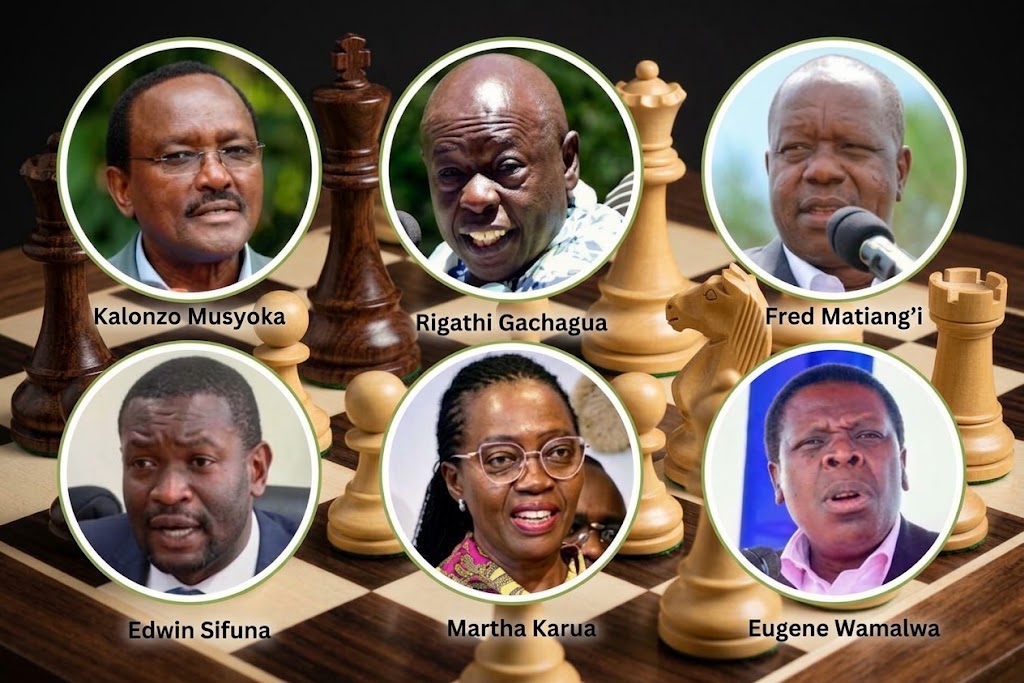
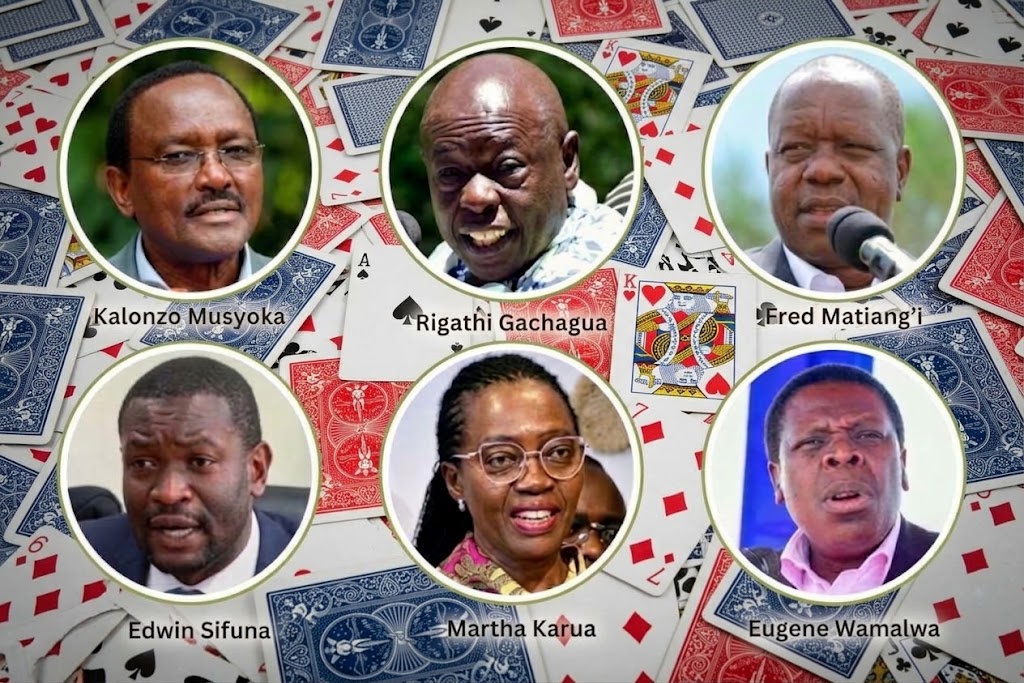
Kalonzo Musyoka, Rigathi Gachagua, Fred Matiang'i, Edwin Sifuna, Martha Karua and Eugene Wamalwa
With fewer than 300 days to the 2027 polls, the fragmented opposition faces its defining moment — unite or lose again.
By David Kimani
The Kalonzo Musyoka-led Komboa Kenya alliance will this week open formal talks with former Deputy President Rigathi Gachagua’s camp and the Linda Mwananchi movement led by Nairobi Senator Edwin Sifuna, in a push to forge a single unified presidential ticket against President William Ruto in the August 2027 General Election.
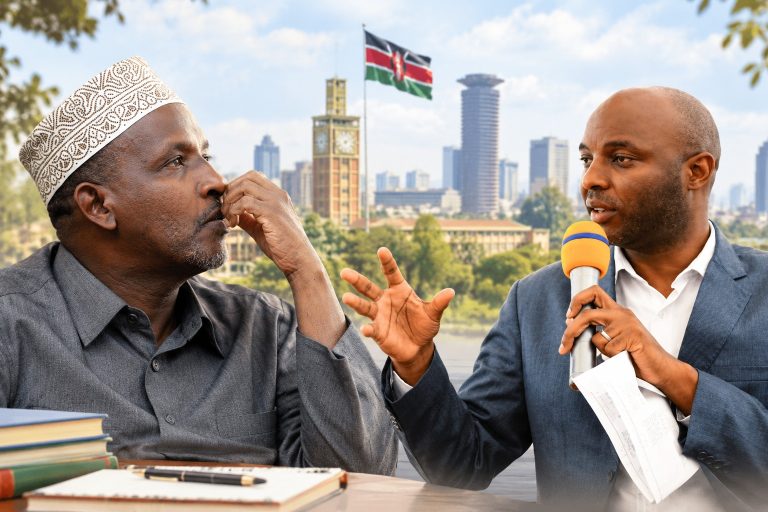
The announcement came from Democratic Action Party of Kenya leader Eugene Wamalwa, speaking at Priesthood Fellowship Church in Kahawa West, Nairobi, yesterday. His message was direct: Kenya’s divided opposition cannot afford another fragmented campaign. “This week and next month, we are asking those others in Linda Mwananchi, including Sifuna and Orengo, to come together with us so that we get one candidate,” Wamalwa said.
The stakes could not be higher. With fewer than 300 days before polling day, opposition leaders are confronting the brutal arithmetic of Kenyan electoral politics — a lesson written in the results of 2013, 2017 and 2022. Each cycle, a divided field of challengers has allowed Ruto or his predecessor Uhuru Kenyatta to consolidate sufficient regional and ethnic coalitions to secure victory. The question now is whether the opposition has finally absorbed that lesson, or whether personal ambitions will again fracture what might otherwise be a formidable political challenge.
Kenya’s political landscape heading into 2027 is more volatile than at any point in recent memory. Gachagua’s dramatic removal from the deputy presidency in October 2024 — only the second impeachment of a sitting deputy president in African history — injected a disruptive and unpredictable force into opposition politics. Gachagua commands deep loyalty in the Mount Kenya region, a vote bloc that delivered Ruto his 2022 margin of victory. His defection to the opposition, if consolidated into a formal coalition, would represent a significant structural shift in the electoral map.
Sifuna’s Linda Mwananchi movement adds a different dimension. Anchored in Nairobi and with roots in the Azimio la Umoja network, it brings urban working-class energy and organisational infrastructure that any serious presidential campaign needs. James Orengo, the Siaya governor and veteran opposition figure, carries historical credibility and western Kenya reach. Together, these formations represent constituencies that, unified, could mount a genuine challenge to Ruto’s incumbency advantage.
Yet unity among Kenyan opposition movements has historically been easier promised than delivered. The 2022 Azimio coalition, which brought together Raila Odinga and Kalonzo Musyoka among others, ultimately fell short — undone by a combination of late defections, internal mistrust and Ruto’s masterful mobilisation of the hustler narrative among lower-income voters. The wounds of that campaign have not fully healed, and the negotiations now beginning carry the weight of those unresolved grievances.
Wamalwa described the opposition not merely as a political grouping but as an alternative government in waiting. “But hope is the way. In the next 10 months, we will bring changes,” he said, framing the coalition project in terms of national transformation rather than partisan competition. Whether that language resonates beyond committed opposition supporters will depend heavily on the coalition’s ability to articulate a credible economic programme at a time when the cost of living continues to dominate public concern.
On that front, the opposition believes it holds strong ground. Wamalwa pointedly cited rising fuel prices and the increasing cost of basic commodities, including milk, as issues that will define voter sentiment in the months ahead. Ruto’s economic record — marked by controversial tax proposals, the collapse of the Finance Bill 2024 amid deadly street protests and persistent inflation — has eroded the goodwill that carried him to power. For millions of ordinary Kenyans, the promise of the hustler movement has not translated into tangible relief, and the opposition intends to prosecute that case relentlessly on the campaign trail.
The electoral infrastructure question is equally consequential. Wamalwa called on the Independent Electoral and Boundaries Commission to release the existing voters’ register to political parties ahead of a planned mass voter registration exercise next month. “Next month, IEBC, we are going for the final mass voter registration. We want the register by now, already registered members be availed to all of us,” he said. The demand reflects broader concerns about the integrity of the voter roll, including allegations that foreign nationals have been registered as voters — a claim the opposition intends to scrutinise closely.
The IEBC itself remains a source of institutional anxiety. The commission operated under considerable controversy during the 2022 election, with a minority of commissioners publicly disputing the declared result. Rebuilding public confidence in electoral administration will be essential to ensuring that a competitive 2027 contest produces an outcome that all sides accept — and that Kenya avoids the post-election turbulence that has periodically destabilised the country since the violence of 2007 and 2008.
Wamalwa urged religious leaders and the broader public to pray for unity and a peaceful process, warning explicitly against violence as parties position themselves for the polls. The appeal carried weight in a country where elections have historically been accompanied by ethnically charged tension, displacement and, at their worst, organised bloodshed. With political temperatures already rising more than a year before polling day, the responsibility on all leaders — governing and opposition alike — to lower the temperature is considerable.
The coming weeks will test whether the opposition’s unity rhetoric survives contact with the negotiating table. Agreeing on a single presidential candidate requires not only a shared platform but an agreed process for determining who leads it — a question that has derailed previous coalitions at precisely the moment they appeared most promising. Kalonzo, Gachagua, Sifuna and their respective allies each carry regional loyalties and personal ambitions that will not dissolve easily.
What is clear is that the window for building a credible unified challenge is narrowing. Campaigns must be funded, candidates identified, running mates selected and manifesto commitments made. None of that can wait until the final months before an election.
Kenya’s opposition has the political raw material to mount a serious challenge. Whether it has the discipline and selflessness to use it is the question that will define 2027 — and perhaps the country’s democratic trajectory for a generation beyond it.
Similar Posts by The Mt Kenya Times:
- Ruto turns Nandi rally into opposition assault as 2027 battle lines harden
- Kenya’s Ebola cases climb to eight as outbreak spreads beyond health workers
- Kenya braces for heavy rains as El Niño and Indian Ocean Dipole combine
- Kenya’s hidden talent: The grassroots sports crisis we keep ignoring
- Bridging languages in tourism: A French-Uzbek perspective
About the Author