Kenya’s political weather: Coalition deals, economic pain and the demand for accountability
 The Mt Kenya Times
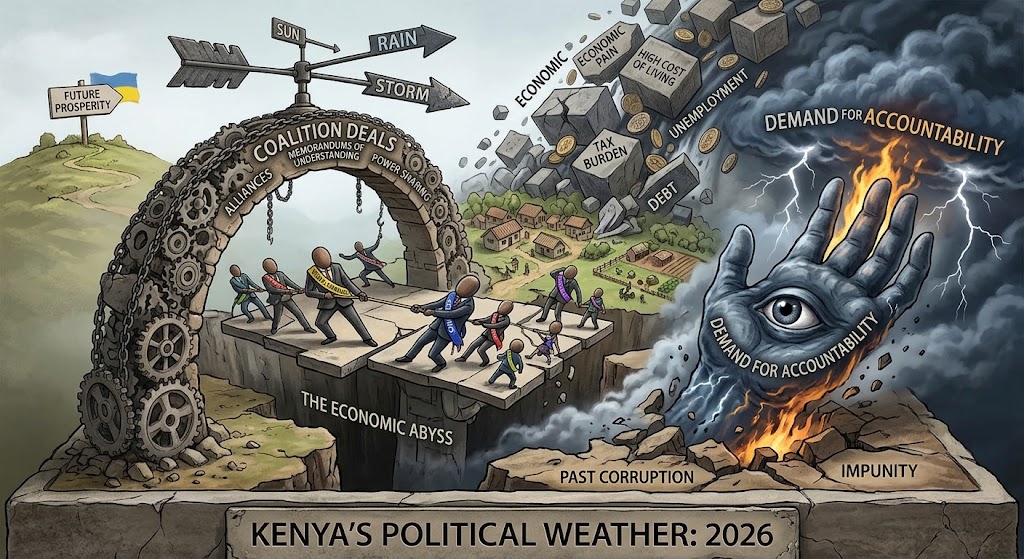
As the 2027 election draws nearer, Kenya’s political landscape is being reshaped by coalition bargaining, rising inflation and a public growing impatient with promises unmatched by results.
By Fredrick Kipchumba Chelimo
Kenya’s political atmosphere is thickening. As the country opens the first full week of November, competing ambitions, economic anxieties and mounting pressure for institutional accountability are converging into a landscape that is becoming harder for political leaders to navigate with slogans alone. With the 2027 General Election moving from distant prospect to imminent reality, the business of coalition formation, grassroots mobilisation and the contest over national credibility is now well under way.
Within the opposition, unity remains both an aspiration and a formidable organisational challenge. The 30 October unveiling of the Linda Mwananchi Movement headquarters in Lavington brought together prominent political figures, among them Kalonzo Musyoka, Rigathi Gachagua and Edwin Sifuna. Yet the disagreements and heckling that erupted around discussions of presidential candidature exposed the difficult tension between collective mobilisation and individual political ambition. Subsequent statements suggesting willingness to rally behind an agreed candidate have not resolved the fundamental questions of leadership, nomination procedures, coalition governance and the distribution of political responsibility.
The 13 November Linda Mwananchi National Delegates Conference may offer an opportunity to clarify the movement’s organisational direction, but the immediate expectation is continued negotiation rather than overnight resolution. A credible political alternative requires more than a common adversary. It demands an agreed national programme, institutional discipline and a demonstrable capacity to accommodate competing interests. Without these, the coalition risks becoming another gathering of personalities rather than a coherent governing proposition.
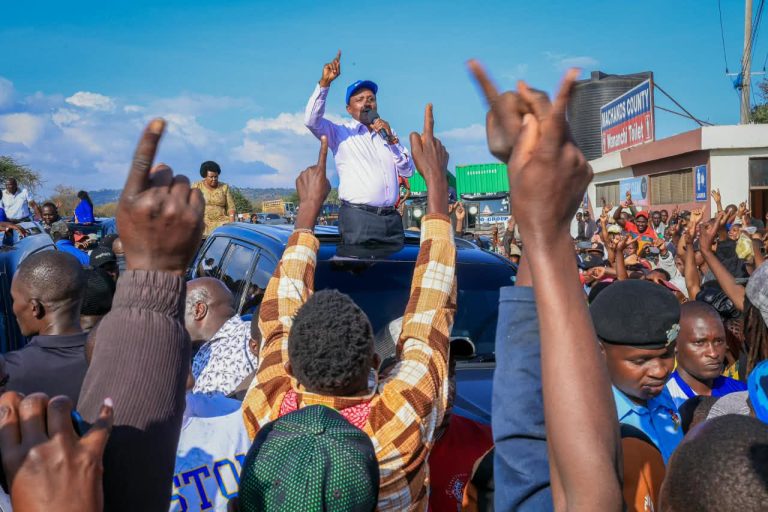
President William Ruto’s political engagements also deserve close attention. Following his North Rift tour and the Mashujaa Day celebrations in Eldoret, the administration is expected to sustain its emphasis on development delivery and grassroots engagement. The governing coalition has increasingly relied on direct community interactions, development inspections and regional mobilisation to communicate its priorities, while opposition leaders seek to extend their influence beyond traditional strongholds. This emerging competition matters because Kenyan politics is gradually evolving into a more extensive contest for grassroots organisational presence. Yet the number of rallies or political personalities attending an event cannot independently establish public support. The more substantive question is whether these engagements produce accountable development, meaningful participation and policies genuinely responsive to community needs.
Economic pressure remains the issue most likely to cut across political, social and regional boundaries. The rise in annual inflation to 7.3 per cent in October, alongside increased transport costs, has renewed serious concerns about household purchasing power. Higher petroleum prices carry consequences far beyond motorists, affecting agricultural production, food distribution, manufacturing and the broader cost of doing business. For ordinary Kenyans — many of whom combine formal employment with small-scale farming to supplement incomes squeezed by the rising cost of living — economic recovery cannot be measured exclusively through macroeconomic indicators when families continue struggling with food, rent, electricity, education and healthcare costs.
The government must explain how its fiscal and economic decisions are translating into improved livelihoods on the ground. Equally, opposition leaders must demonstrate that their proposed alternatives are financially realistic, legally implementable and capable of addressing the structural causes of economic hardship. Political criticism becomes meaningful only when accompanied by workable solutions rather than convenient promises.
Parliament’s return adds another important dimension to the week ahead. Electoral reforms, campaign financing regulations and education legislation are likely to attract renewed attention. The debate over campaign expenditure limits, political donations and financial transparency raises fundamental questions about the influence of money in democratic competition. Legal challenges surrounding the proposed regulations further demonstrate why electoral reforms must be subjected to rigorous constitutional scrutiny and genuine public participation. Amendments to the Elections Act and the institutional arrangements governing the transmission and accessibility of results must be considered in the context of public confidence and electoral integrity. Kenya cannot afford an election in which transparency becomes a slogan invoked selectively by competing parties.
Public accountability will also remain under sharp scrutiny following the devastating Eastleigh building collapse. The tragedy has renewed urgent concerns about construction approvals, inspection procedures, professional supervision and the enforcement of building regulations. The public deserves an independent and credible account of how the structure was permitted to reach completion without effective regulatory intervention. Responsibility must be established through evidence and due process, extending to every public institution and professional whose failures may have contributed to the disaster. The country must move beyond the familiar cycle of rescue operations, expressions of sympathy and temporary enforcement campaigns. Preventing future tragedies requires institutional reform and real consequences for negligence.
Public health will provide another test of government preparedness. Kenya’s Bundibugyo Ebola containment effort has required heightened surveillance, contact tracing and protection of frontline health workers. The absence of newly confirmed cases in the latest official update is encouraging, but it should not invite complacency. Effective containment depends on sustained monitoring, transparent communication and adequate health-system capacity. The management of the outbreak also carries implications for international travel, trade and diplomatic relations, particularly where other countries have introduced restrictions affecting Kenyan travellers.
Education financing and labour relations remain unresolved. The lecturers’ strike, though it has ended, exposed the financial pressures bearing down on public universities and the difficulty of reconciling institutional sustainability with fair remuneration. Students and families have borne the consequences of prolonged disruption, while uncertainty over proposed reforms to tertiary education financing raises questions about equitable access and the long-term viability of public universities. The government must move beyond negotiations that generate expectations without providing credible implementation timelines.
Disability inclusion is emerging as another significant test of constitutional accountability, particularly in Nakuru and Uasin Gishu counties. Disability-related matters are now before the courts in Nakuru, bringing questions of equality, representation, accessibility and the practical enforcement of constitutional guarantees into the judicial arena. In Uasin Gishu, a petition is to be presented to the County Assembly, while the disability community awaits the governor’s response within the stipulated 30-day period. Kenya’s Constitution guarantees equality, dignity, participation and protection against discrimination, yet persons with disabilities continue confronting institutional barriers in public representation, employment, budgeting and access to essential services. Disability inclusion should not depend on demonstrations or political patronage; it is a constitutional obligation.
The coming week will be shaped by opposition consultations, government mobilisation, economic pressures, parliamentary business and increasingly assertive demands for accountability. In the counties, citizens will continue questioning whether public allocations are reaching intended beneficiaries and whether development priorities reflect genuine community needs.
Ultimately, Kenya’s political weather cannot be understood merely through the movements of political personalities or the excitement of public rallies. It must also be read through the anxieties of households, the struggles of university students, the safety of urban communities and the continuing demands of citizens whose constitutional rights remain inadequately realised. As 2027 approaches, every political formation will face the same fundamental questions: what does it stand for, how will it finance its promises, whose interests does it represent and how will citizens hold it accountable?
Similar Posts by The Mt Kenya Times:
- Mt Kenya Times ePAPER November 3, 2026
- Kang’ata: ‘I turned down the Deputy President’s job — it was a trap’
- World Bank’s KSh26B project to restore Kenya’s degraded landscapes and transform 750,000 lives
- Wiper sets final deadline for 2027 aspirants as Kenya’s electoral race begins in earnest
- Kalonzo draws his line in the sand
About the Author