The Mt Kenya Times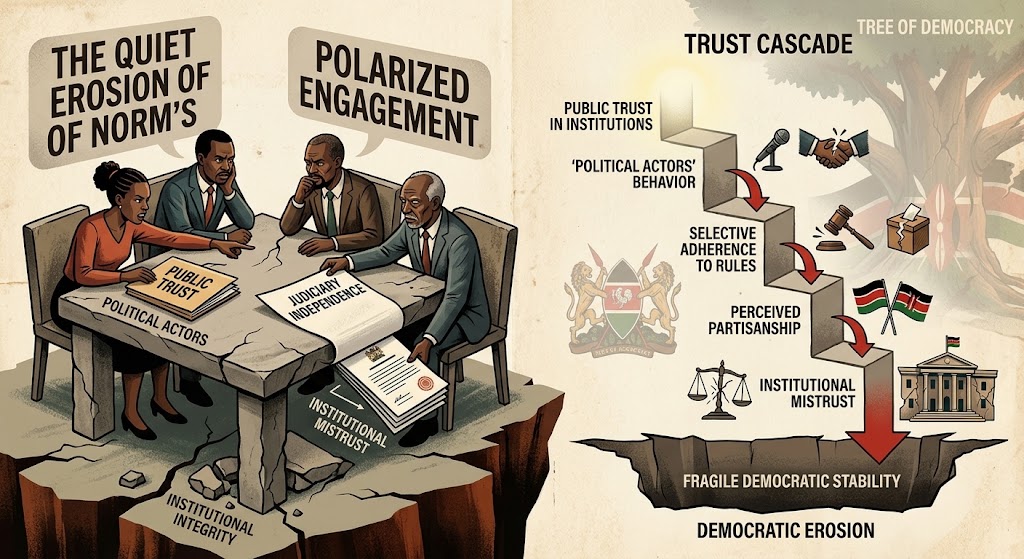
As political temperatures rise, early signs of intolerance and institutional mistrust threaten Kenya’s democratic stability
As political temperatures rise, early signs of intolerance and institutional mistrust threaten Kenya’s democratic stability.
By Mr. Fredrick Kipchumba Chelimo PWD
“The true strength of a democracy is revealed not by how it protects the powerful, but by how safely its most vulnerable citizens can participate when political temperatures begin to rise.”
Kenya is less than a year away from the 2027 General Election, but it would be dangerously naïve to imagine that the election begins when ballot papers are printed or when voters finally queue outside polling stations. The election has already begun. It is taking shape in roadside rallies, political realignments, public demonstrations, social-media battles, increasingly confrontational rhetoric and the daily struggle for control of the national political narrative. The most important question facing Kenya, therefore, is no longer simply who will win in 2027. The more urgent question is whether the country is paying sufficient attention to the warning signs emerging before the vote.
History teaches an uncomfortable lesson: electoral disasters rarely arrive without warning. They begin quietly. A political rally is disrupted and society calls it an isolated incident. An opponent is threatened and the matter is dismissed as political theatre. An institution is repeatedly accused of bias without credible evidence, and public confidence slowly begins to erode. A careless ethnic statement is made, shared online and transformed into a political weapon. By the time the country recognises the danger, suspicion may already have hardened into hostility. Kenya must learn to repair these cracks while they are still visible.
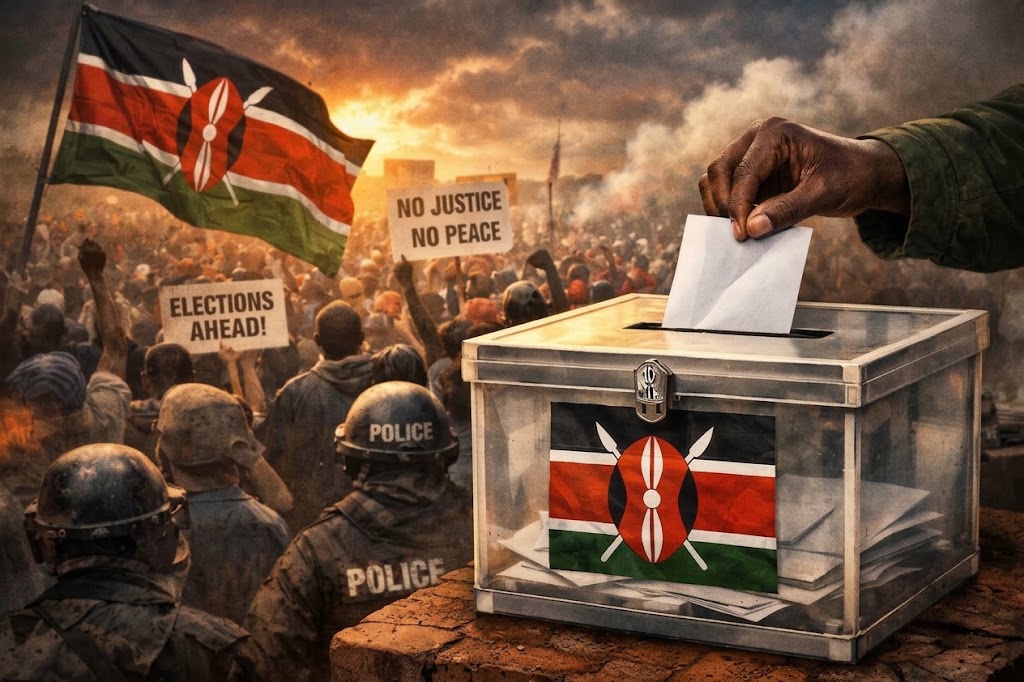
One of the most worrying signs is the gradual normalisation of political intolerance. Democracy cannot survive where citizens are made to believe that supporting the “wrong” leader makes them enemies of the community. Political rallies should be placed where ideas compete, not battlegrounds where intimidation determines who can speak. A democracy becomes fragile when politicians require protection from fellow citizens simply because they hold different political views.
The solution begins with leadership. Political leaders must stop condemning violence selectively. A leader who condemns violence only when it affects his or her supporters, but remains silent when supporters commit violence against others, is not defending peace. They are simply defending political interests. Every act of political violence must attract the same condemnation and the same legal consequences, regardless of who commits it or which political side benefits from it.
The security agencies have an equally important responsibility. Kenya needs firm action against those who organise, finance and perpetrate violence. But firmness without impartiality can become another source of instability. If citizens perceive that police officers are quick to disperse one political gathering while ignoring violence elsewhere, public confidence will inevitably collapse. The uniform must never become an extension of political power. It belongs to the Republic and must protect every Kenyan with equal determination.
Perhaps even more dangerous is the gradual destruction of trust in electoral institutions. Elections are not credible simply because votes are counted correctly. They must also be perceived as credible by the people. The Independent Electoral and Boundaries Commission must therefore pursue transparency not as a public relations exercise but as a democratic obligation. Kenyans should not be told simply to trust institutions. Institutions must demonstrate, through openness and consistency, why they deserve that trust.
Yet politicians also carry a heavy responsibility. Recklessly declaring an election “stolen” before voting has even taken place may energise supporters, but it plants a dangerous idea in the national consciousness. When supporters become convinced that their candidate cannot legitimately lose, democracy is transformed into a contest in which only victory is acceptable.
And then there are persons with disabilities, who must not be treated as an afterthought in Kenya’s preparations for 2027. In a politically volatile environment, persons with disabilities are among the most vulnerable citizens. This is not because disability makes anyone less courageous or less capable. It is because society and its institutions often fail to provide the protection, accessibility and reasonable accommodation necessary for equal participation.
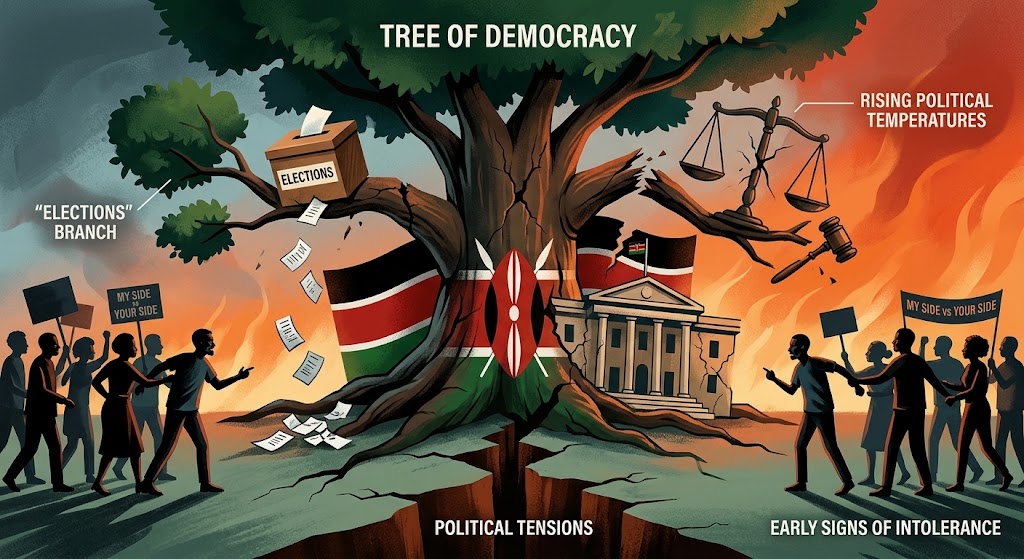
Imagine political violence suddenly erupting at a crowded rally. A person using a wheelchair may face physical barriers to escape. A person who is blind may struggle to identify a safe route through a panicked crowd. A deaf person may not hear warnings from security officers or announcements directing people away from danger. A person with another form of disability may be separated from an essential support person or mobility aid.
These are not imaginary concerns. Disability advocates and recent electoral discussions have continued to identify inaccessible political spaces, communication barriers, high campaign costs, stigma and violence as significant obstacles to meaningful political participation. Kenya’s own disability law recognises the rights of persons with disabilities to protection from violence and to equal participation in political and public life.
Political violence, therefore, does not affect everyone equally. When chaos breaks out, those who already encounter physical and communication barriers are often placed at even greater risk. For a person with a disability, the decision to attend a political rally, party meeting or polling station may involve questions that other citizens rarely have to consider: Will the venue be accessible? Will I be able to leave safely if violence erupts? Will anyone understand how to communicate with me? Can I vote independently and secretly? A truly democratic election must answer these questions before polling day.
Kenya should consequently place disability inclusion at the centre of its electoral preparedness. Political parties must create genuinely accessible structures and protect aspirants with disabilities from intimidation. The IEBC should ensure that polling centres, voter education and electoral information are accessible. The reinstatement and strengthening of disability-focused electoral coordination mechanisms would provide an important avenue for identifying barriers before they become crises. Persons with disabilities themselves must also be included in designing these solutions. Inclusion designed without the participation of those affected is rarely genuine inclusion.
The digital battlefield presents another growing danger. A fabricated video, manipulated image or inflammatory message can now travel across Kenya within minutes. Long before the truth catches up, anger may already have taken hold. Citizens must therefore develop the discipline to stop, question and verify before forwarding political material. In 2027, misinformation may be as dangerous as a weapon because it can mobilise fear, hostility and violence without anyone knowing who fired the first shot.
Kenya’s young people, too, deserve protection from political exploitation. They must never again be treated merely as crowds for hire, online warriors or instruments of intimidation. Their energy should be invested in leadership, innovation and democratic participation, not in defending the ambitions of politicians who may disappear once the election is over.
The road to 2027 must therefore be approached as a national responsibility. The IEBC, security agencies, political parties, the Judiciary, Parliament, the media, civil society, religious institutions and citizens all have a role in preventing disaster. Recent human-rights warnings have emphasised the risks posed by political violence, intimidation, hate speech, disinformation, and recent abduction of some media personalities as Kenya approaches the election, making early prevention far more valuable than waiting to manage a crisis after it has erupted.
The ultimate test of Kenya’s democracy will not simply be the announcement of a winner. It will be whether every Kenyan—including the person with a disability, the young voter, the political minority and the citizen supporting a losing candidate—can participate safely, freely and with dignity.
Kenya still has time. But time must not become an excuse for complacency. The warning signs are already visible. The political temperature is rising. The responsible course is not to panic, but neither is it to pretend that there is no danger. Kenya must choose to act early, speak responsibly, protect its institutions, reject violence and place its most vulnerable citizens at the heart of electoral preparedness. Because when a nation protects those who are most vulnerable, it strengthens democracy for everyone.
The ballot will determine who governs Kenya in 2027. What we do today will determine whether the country emerges from that election stronger, more united and more democratic—or more deeply wounded. “The greatest measure of Kenya’s democratic maturity in 2027 will be whether its most vulnerable citizen can participate in politics with the same freedom, safety and dignity as its most powerful politician.”
Similar Posts by The Mt Kenya Times:
- Mt Kenya Times ePAPER October 19, 2026
- DCP takes healthcare pledge to Murang’a heartland
- Sifuna bets his political life on a presidential run
- Ruto turns Nandi rally into opposition assault as 2027 battle lines harden
- Kenya’s Ebola cases climb to eight as outbreak spreads beyond health workers
About the Author