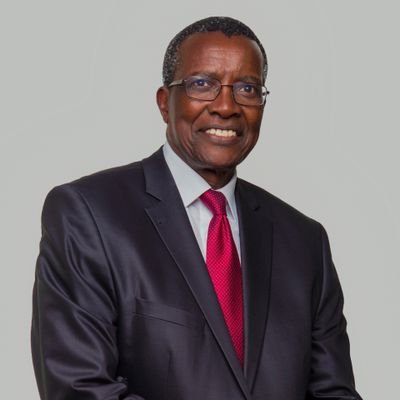
Former President Uhuru Kenyatta
As Kenya’s opposition rebrands and repositions ahead of 2027, the former president’s exit from coalition leadership raises more questions than it answers
By David Kimani
Former President Uhuru Kenyatta resigned yesterday as chairperson of the Azimio la Umoja One Kenya Coalition, completing a carefully choreographed withdrawal from formal political office that has repositioned — but almost certainly not ended — his influence over Kenya’s fractious opposition landscape in the critical months before the 2027 general election.
The resignation, communicated in a letter dated Monday, October 5, followed Kenyatta’s earlier relinquishment of the Jubilee Party leadership to former Interior Cabinet Secretary Fred Matiang’i. Both moves were triggered by a High Court ruling by Justice Lawrence Mugambi upholding Section 6 of the Presidential Retirement Benefits Act, which bars retired presidents from holding political party office for more than six months after leaving State House. Kenyatta left the presidency in September 2022. The law, in effect, had been catching up with him for some time.
But in Kenyan politics, the distance between formal position and real power has always been elastic, and few understand that better than Kenyatta himself.
In his resignation letter, the former president was at pains to frame his departure not as a retreat but as a contribution to democratic renewal. “This decision is not a departure from our shared political journey, but a necessary step in the continuous renewal of our democratic institutions,” he wrote. He described a coalition as “not merely a temporary alliance of convenience” but “a permanent covenant of conviction” — language that carried the unmistakable tone of a man signalling that his absence from the top table should not be mistaken for absence from the room.
“I remain, as always, a committed member of the Azimio family, ready to support the institution from the ranks, and always available to offer counsel when called upon,” Kenyatta said.
That phrase — available to offer counsel — may prove to be the most consequential sentence in the entire letter. In the grammar of Kenyan political power, counsel from a former president who retains deep financial networks, ethnic mobilisation capacity in the Mount Kenya region and longstanding relationships across the political spectrum is not advisory. It is structural. Kenyatta stepping back from the chairmanship does not strip him of leverage. It may, paradoxically, increase it. Freed from the constraints of formal office, he can now operate with greater flexibility — present when needed, absent when convenient, accountable to no one.
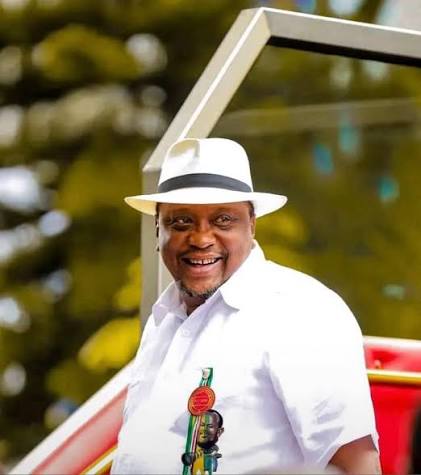
The question that Kenya’s political analysts are already asking is whether Kenyatta is exiting the stage or simply moving to the wings. The answer, most believe, is the latter.
Wiper Party leader Kalonzo Musyoka, who leads the coalition now rebranded as The Ukombozi Alliance — TUA — was careful to project calm in the wake of the resignation. “There is no vacuum at the helm of Ukombozi, and no change in the party’s leadership, direction or programme,” he said in a statement issued yesterday evening. He thanked Kenyatta warmly, acknowledged the sacrifices of his family and confirmed that the former president would be invited for a formal handover ceremony. Kalonzo also drew a firm distinction between the chairmanship Kenyatta has vacated and his own role as party leader — the political and executive head responsible for day-to-day affairs and public representation.
“The Party Leader is the political and executive head of the party. He speaks for the party, runs its day-to-day affairs, represents it before the Office of the Registrar of Political Parties and other institutions, and answers to its members. I hold that office, and it is unaffected by President Kenyatta’s resignation,” Kalonzo said.
The statement was measured and confident. Whether the confidence is entirely warranted is another matter.
The Ukombozi Alliance — a name the Office of the Registrar of Political Parties has now reserved — is entering its most demanding period. With the 2027 general election less than a year away, the coalition must simultaneously consolidate its internal structures, sharpen its policy identity, manage competing ambitions among its constituent parties and mount a credible challenge to President William Ruto’s Kenya Kwanza administration. It must do all of this while absorbing a leadership transition at the top of its council and navigating the ambiguous but unmistakable presence of a former president who has not gone quietly into private life.
Matiang’i, now at the helm of Jubilee, has signalled his intention to rebuild the party ahead of 2027, working with what he describes as like-minded leaders. His elevation places a figure of considerable administrative experience and political acuity at the centre of one of the coalition’s key constituent parties. How Matiang’i interprets his mandate — and whether he moves Jubilee closer to or further from the broader Ukombozi project — will be one of the defining subplots of the coming months.
Beneath these leadership manoeuvres lies a deeper structural question about Kenya’s opposition. The Ukombozi Alliance is attempting to hold together a diverse and sometimes fractious collection of parties, personalities and regional interests against a ruling coalition that, for all its own internal tensions, controls the machinery of the state. The 2022 election demonstrated how thin the margins of Kenyan presidential politics have become. The opposition came within a percentage point of the presidency. The question for 2027 is whether the coalition can sharpen that near-miss into a victory — and whether it can do so with a leadership architecture that is still, in several important respects, unsettled.
Kenyatta’s role in that architecture is the central uncertainty. He is constitutionally barred from seeking the presidency again. He is legally barred from holding party office. He is not, however, barred from shaping outcomes. His endorsement in 2022 of Raila Odinga over his own deputy, Ruto, demonstrated both his willingness to act against expectation and the limits of his ability to deliver his political base. Mount Kenya did not follow him then. Whether the region has since recalibrated — and whether Kenyatta has spent the intervening years rebuilding that relationship — is a question that will define the 2027 electoral map as much as any policy platform or coalition agreement.
For now, Kenya’s opposition enters the election season with a new name, a familiar leader, a reorganised structure and an influential former president hovering just offstage. The choreography is deliberate. Whether it is sufficient is what the next eleven months will determine.
In Kenyan politics, the puppet master rarely holds the strings in public. That, perhaps, is precisely the point.
Similar Posts by The Mt Kenya Times:
- From devotion to the stage: Niranjanaa’s Bharatanatyam Arangetram
- Kenya’s public universities shut as lecturers’ strike enters sixth day
- When the mirror becomes a threat
- We did not fall yesterday. We are falling today
- Arteta commits to Arsenal until 2030
About the Author