The Mt Kenya Times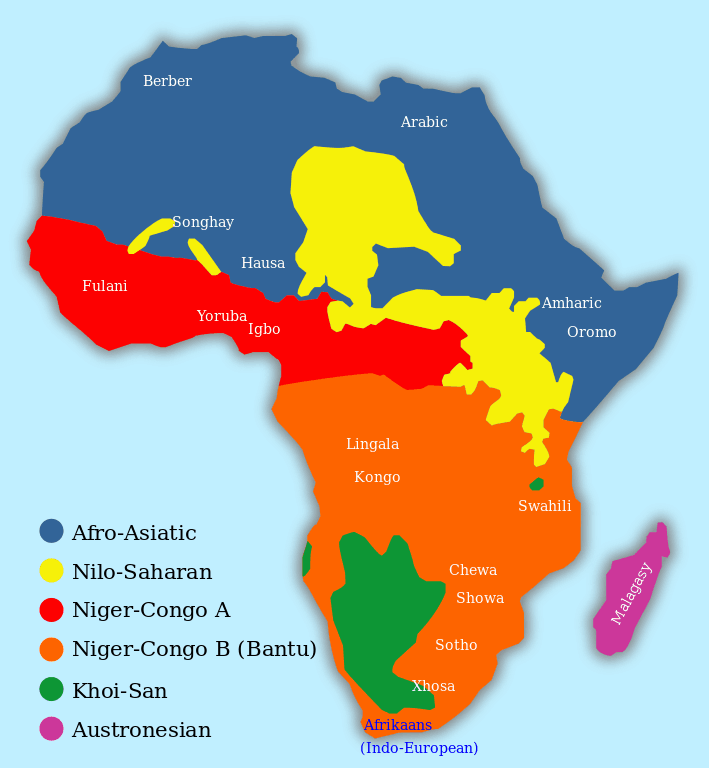
By David Ndirangu
Worth Noting:
- Taking Tanzania as a case in point, Mwalimu Julius Nyerere made Kiswahili the language of instruction in all learning institutions in 1961. Several decades later, there is talk that they are considering shifting to English language. Reality is that there is a bit of inferiority (real or imagined) associated to graduates who have taken their courses in Kiswahili (especially in technical courses).
- This inferiority is two-way, they themselves may regard themselves as inferior in a professional sense or others may regard them as such. In light of this, the proposal by Kiswahili scholars to have Kiswahili as the lingua franca for Africa complete with ‘ngeli’, ‘misamiati’, ‘methali’ ‘misemo’ etc is a tall order.
There is currently a heightened spirit of Pan Africanism in Kenya and beyond especially now that our very own ‘Baba’ is pitching for the top seat in the African Union Commission (AUC) and the attendant hype that has come with it. There are some who are for the collapsing of all the ‘Mzungu’ created boundaries and having one happy united Africa with one leadership, one parliament, one market, one currency, one language (Kiswahili) and one…etc. For those of this school of thought, I can only tell them that their dreams are valid. Now, when anyone tells you that ‘your dreams are valid’, they are just politely telling you that they can see your ambition but you have stretched it to a ridiculous level. Additionally, in my view, pushing all these agendas at the same time is akin to shovelling a plateful of ‘githeri’ into your mouth and attempting to chew and swallow it.
Having said that, the idea of the African Continental Free Trade Area is not only a very noble idea but is also realistic. It is a good starting point for whatever other areas of unity that we may want to pursue for Africa. Kiswahili can then come in as the language of commerce across the Free Trade Area bearing in mind that it has also been declared an official language of the African Union (AU).
The United Nations designated, the 7th July as the World Kiswahili Day which was celebrated for the first time this year making Kiswahili the first African language to be feted by the UN. Kiswahili is the 10th most widely spoken language in the world with over 200 million speakers spread in fourteen countries namely Kenya, Uganda, Tanzania, Rwanda, Burundi, DR Congo, South Sudan, Somalia, Mozambique, Malawi, Zambia, Comoros and Oman and Yemen in the Middle East. South Africa and Botswana have recently commenced the teaching of Kiswahili in their learning institutions. This recognition by the UN has caused so much excitement in the academic circles that some Kiswahili scholars have advanced an argument that the East African countries should adopt use of Kiswahili as their own language of instruction in all learning institutions. They claim that the rest of Africa will then follow suit.
I have no problem with the above proposal but let me give a basic experience. When we were in primary school standard five, which later became class five and now I guess is grade five, in a subject that was called Nature Study which today maybe is called science, the teacher introduced to us the most complicated word we had ever come across, ‘photosynthesis’. We practised pronouncing the word for the rest of the lesson and for the next couple of days and never got it right. So my question begs, why would one want to translate photosynthesis into my native language or Kiswahili for that matter? At a higher level, why do we need to translate ‘Grey’s Anatomy’ into Kiswahili for medical students just in the name of Pan Africanism?
Taking Tanzania as a case in point, Mwalimu Julius Nyerere made Kiswahili the language of instruction in all learning institutions in 1961. Several decades later, there is talk that they are considering shifting to English language. Reality is that there is a bit of inferiority (real or imagined) associated to graduates who have taken their courses in Kiswahili (especially in technical courses). This inferiority is two-way, they themselves may regard themselves as inferior in a professional sense or others may regard them as such. In light of this, the proposal by Kiswahili scholars to have Kiswahili as the lingua franca for Africa complete with ‘ngeli’, ‘misamiati’, ‘methali’ ‘misemo’ etc is a tall order.
This notwithstanding, we may look at it a little differently. In the case of Kenya, Kiswahili is a compulsory subject in primary and secondary schools. So basically everyone who has gone through the school system (which is a good majority) has been taught grammatically correct Kiswahili. However, this language (Kiswahili sanifu) is abandoned and forgotten immediately one steps out of the classroom setting. The version of Kiswahili that is spoken right across the country is totally different. This is the language that every Kenyan community speaks in their own unique way but surprisingly we are all able to communicate and understand one another. In fact there is one community (that I will not name) which is so challenged by the language that most of them confess at the beginning of a conversation thus, ‘unajua Kiswahili sio midomo changu’. Loosely translated – you know Kiswahili is not my mother tongue. This is the Kiswahili that has united Kenyans, allows them to transact business, have social engagements, entertainment, dispute resolutions and so forth.
This version of Kiswahili is self-driven and shaped by various factors like the native language of the user, the purpose of engagement like trade and so forth. On a wider scale you will find a similar scenario in the other East African countries, the Ugandan, Congolese, Rwandese, and Somali all have their unique ways of speaking Kiswahili but we all somehow understand one another. This is the situation that I envisage replicating in the African Continental Free Trade Area scene – Kiswahili that will be self-driven by need as different countries interact in commerce, but the official Kiswahili sanifu ya ‘Ngeli’ and ‘misamiati’.. Hapana.
David Ndirangu BSc. International Business Administration (USIU- A) CPA (K). Business Management Consultant and Author of the book; This is DAVE. Email: ndirangudavid2023@gmail.com
Similar Posts by The Mt Kenya Times:
- Diaspora Times Global Sep 19 – Sep 25, 2026
- Tibet’s glacial catastrophe: Behind Beijing’s wall of silence, a climate disaster reshapes a region
- Museveni says Uganda overpaid for fuel through Kenyan middlemen as new terminal breaks ground
- Court orders throw KPL season kickoff into doubt
- Can Kenyans abroad become the untapped force that transforms Kenya?
About the Author