

By Jerameel Kevins Owuor Odhiambo
The Kenya Revenue Authority (KRA) collected over KES 2.4 trillion in revenue during the 2023/2024 financial year, with Pay As You Earn (PAYE) and related employment taxes contributing approximately 20% of this total. Within this landscape, Fringe Benefit Tax remains one of the most misunderstood and frequently contested areas during KRA audits. Recent compliance sweeps have revealed that over 60% of Kenyan employers either underreport or completely omit certain fringe benefits from their tax computations, exposing themselves to significant penalties, interest charges, and potential criminal prosecution. As KRA intensifies its enforcement mechanisms through sophisticated data analytics and inter-agency information sharing, understanding Fringe Benefit Tax is no longer optional; it’s a survival imperative for every employer operating in Kenya.
Fringe Benefit Tax is a levy imposed on non-cash benefits that employers provide to their employees beyond basic salary. Under Section 12(2) of the Income Tax Act, these benefits are deemed part of taxable income and must be valued, reported, and taxed accordingly. The underlying principle is simple: if an employee receives economic value from their employer whether through a company car, housing allowance, low-interest loans, or private medical cover that value constitutes income and should be taxed. The current FBT rate in Kenya stands at 30% of the benefit’s taxable value, paid by the employer on behalf of the employee. This tax applies to benefits provided to directors, employees earning above KES 24,000 per month, and in some cases, their family members who enjoy these benefits.
Put differently, Fringe Benefit Tax (FBT) is a levy imposed by the Kenya Revenue Authority (KRA) on non-cash benefits that employers provide to their employees, directors, or their associates. These are benefits that are not part of the employee’s basic salary but add value to their overall compensation package. The employer, not the employee, bears the responsibility of remitting FBT to the KRA.
Let me use a practical example to illustrate the same and make it sink home. Consider a marketing manager in Nairobi whose employer provides a fully maintained company vehicle valued at KES 3 million for both business and personal use. The taxable benefit is calculated at 2% of the vehicle’s cost per month (KES 60,000), resulting in an annual FBT liability of KES 216,000 (30% of KES 720,000). Similarly, if a multinational corporation provides its country director with a serviced apartment in Westlands worth KES 300,000 monthly, the fair market value of this accommodation becomes a taxable benefit, generating an annual FBT liability of KES 1.08 million. Low-interest or interest-free loans present another common scenario: when an employer extends a KES 5 million housing loan to a senior executive at 5% interest while the prescribed rate is 13%, the 8% differential on the loan amount (KES 400,000 annually) constitutes a taxable benefit, attracting FBT of KES 120,000. Educational assistance for employees’ children, club memberships, stock options below market value, and even employer contributions to unregistered pension schemes all fall within FBT’s expansive net.
The rationale behind FBT is to ensure fairness in taxation by capturing the economic value of benefits that employees receive outside their regular pay. Without it, employees enjoying significant non-cash benefits could escape taxation on a substantial part of their income. KRA views FBT as a way of maintaining horizontal equity thus ensuring that employees earning the same total value (cash and non-cash) are taxed similarly. In essence, FBT closes potential loopholes that could encourage under-declaration of taxable income.
I have argued elsewhere that the justification behind Fringe Benefit Tax is fundamentally about equity and revenue integrity. Without FBT, high-income earners could structure their compensation packages to minimize cash salary (which attracts progressive PAYE rates up to 35%) and maximize non-cash benefits, effectively eroding the tax base. This would shift the tax burden disproportionately onto lower-income workers who receive predominantly cash compensation. FBT ensures horizontal equity that two employees receiving equal total compensation pay similar taxes regardless of whether that compensation comes as salary or benefits. From a fiscal perspective, FBT protects government revenue streams that fund essential public services, infrastructure development, and social programs. The tax also discourages excessive perks that could widen income inequality and ensures that compensation practices remain transparent and economically efficient rather than being distorted by tax avoidance strategies.
Employers across Kenya increasingly voice concerns that FBT represents excessive taxation that stifles business competitiveness and economic growth. The argument centers on double or even triple taxation: an employer pays corporate tax on profits, then pays FBT on benefits provided from those already-taxed profits, while the employee may also bear indirect costs through reduced take-home benefits. A manufacturing company in Thika providing medical insurance, housing, and transport to 200 employees might face an additional KES 15 million in annual FBT obligations funds that could otherwise finance expansion, equipment upgrades, or additional hiring. Small and medium enterprises particularly struggle with FBT compliance costs, which include not just the tax itself but also the administrative burden of valuation, documentation, and reporting. The 30% FBT rate, one of the highest in East Africa combined with the absence of meaningful thresholds or exemptions for modest benefits, creates a particularly harsh environment for businesses trying to attract and retain talent through non-monetary incentives.
The complexity of FBT regulations creates a minefield for well-intentioned employers. Many struggle with benefit valuation: how do you fairly value a company car that’s three years old, or a housing benefit in a market with fluctuating rental rates? The Income Tax (Fringe Benefit Tax) Rules provide formulas, but they often fail to capture real-world nuances. Some benefits occupy grey areas, is an occasional team lunch taxable? What about an employee wellness program or mental health support? Employers also grapple with the challenge of benefits provided to employee families; when a director’s spouse uses the company car or children attend school on employer-funded scholarships, determining the apportionment of taxable benefit becomes contentious. Record-keeping requirements compound these challenges: KRA expects detailed logs of personal versus business use for vehicles, comprehensive benefit registers, and contemporaneous documentation that many Kenyan businesses lack the systems to maintain.
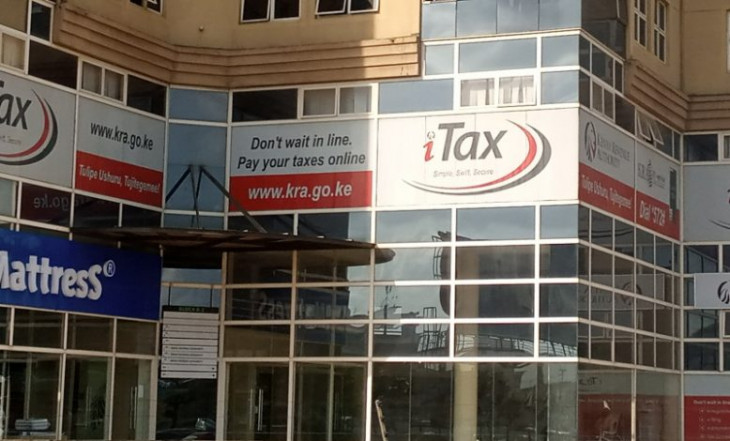
Despite these concerns, FBT remains a critical focus during KRA audits. Employers who fail to account for FBT correctly risk backdated assessments, penalties, and interest. The KRA’s current audit approach is data-driven, using technology such as iTax cross-referencing, integrated payroll records, and even car logbook data to trace undeclared fringe benefits. A company that gives a director a company car but fails to declare FBT could be hit with a hefty bill sometimes spanning multiple financial years.
KRA has dramatically enhanced its FBT enforcement capabilities through technology and intelligence-gathering. The Integrated Tax Management System (iTax) now cross-references employee P9 forms, employer PAYE returns, and third-party data from insurance companies, financial institutions, and motor vehicle registries. When a company declares vehicle operating expenses of KES 5 million annually but reports minimal fringe benefits, red flags trigger automatic audit selections. KRA auditors arrive armed with detailed queries about specific employees, particular benefits, and unexplained discrepancies between lifestyle indicators and declared income. Recent audits have uncovered schemes where employers deliberately misclassify benefits as business expenses, provide benefits through related entities to obscure the true employer-employee relationship, or simply rely on KRA’s limited enforcement capacity. However, the consequences of non-compliance have become severe: penalties of 25% of unpaid tax, interest at 1% per month, potential prosecution of directors, and mandatory tax agent oversight for repeat offenders. Public naming of non-compliant taxpayers further amplifies reputational risks that can damage client relationships and competitive positioning.
Before your audit notice arrives, it is essential to ensure that your company’s policies and documentation around benefits are watertight. Maintain detailed records showing the purpose, value, and treatment of each benefit. For instance, if an employee loan exists, document the interest rate charged, repayment schedule, and justification. The “market rate” should align with the CBR as announced by the Central Bank of Kenya plus 2%. For cars, maintain logbooks, fuel policies, and usage records to separate private from business mileage.
While FBT may appear burdensome, compliance offers long-term advantages. A compliant employer avoids surprise tax bills, builds trust with KRA, and improves corporate governance standards. Additionally, clear documentation of benefits can enhance employee transparency, showing that benefits are structured, valued, and compliant. In an era where tax compliance contributes to a company’s public image, being proactive about FBT positions a business as responsible and credible.
While FBT serves legitimate policy objectives, Kenya’s current framework demands urgent reform to balance revenue collection with economic pragmatism. First, the 30% rate should be reconsidered; neighboring countries like Uganda (30%) and Tanzania (30%) are increasingly seen as examples not to follow, while Rwanda’s more nuanced approach recognizes that excessive taxation drives businesses to informal arrangements or offshore structures. Second, exemptions for modest benefits would remove disproportionate compliance burdens: why should a small business face complex valuations and tax liabilities for providing employees with basic transport allowances or subsidized meals? A de minimis threshold of, say, KES 50,000 annually would ease pressure on SMEs while focusing enforcement on genuinely significant benefits. Third, the valuation methodology needs updating to reflect actual economic benefit rather than crude proxies; a five-year-old vehicle shouldn’t be valued at original cost when its utility and market value have depreciated substantially. Fourth, safe harbor provisions could offer certainty: if employers follow prescribed methods and maintain adequate documentation, they should receive protection from arbitrary reassessments based on KRA’s shifting interpretations.
However, there is a growing case for reviewing how FBT is applied in Kenya. Policymakers should consider thresholds or exemptions for SMEs, or allow certain benefits like professional development programs or wellness perks to be tax-deductible. This would preserve the spirit of FBT without stifling employee welfare initiatives. Simplifying the FBT regime could also encourage more transparent declarations instead of pushing employers toward avoidance or underreporting.
To stay ahead, employers should conduct internal FBT reviews annually, involve tax professionals in structuring benefit packages, and leverage technology to automate payroll and benefit tracking. Regular training for HR and finance staff can also prevent costly errors. Above all, aligning benefit policies with current KRA guidelines and market rates can safeguard your company from future disputes.
In the current tax environment, ignorance is no defense. KRA’s crosshairs are increasingly trained on fringe benefits, especially as data analytics sharpen audit accuracy. Employers must not view FBT as an arbitrary penalty but as part of Kenya’s effort to tax income equitably. By understanding, documenting, and complying with FBT obligations, companies can avoid unnecessary exposure while still rewarding their teams fairly. In today’s compliance-driven business landscape, the best defense against an audit is proactive transparency because when the audit hits, it’s too late to start explaining what you should have declared.
The writer is a legal researcher and writer
 Mt Kenya Times