Trump’s Jungle Post: A Digital Firestorm That Exposed the White House’s Fault Lines

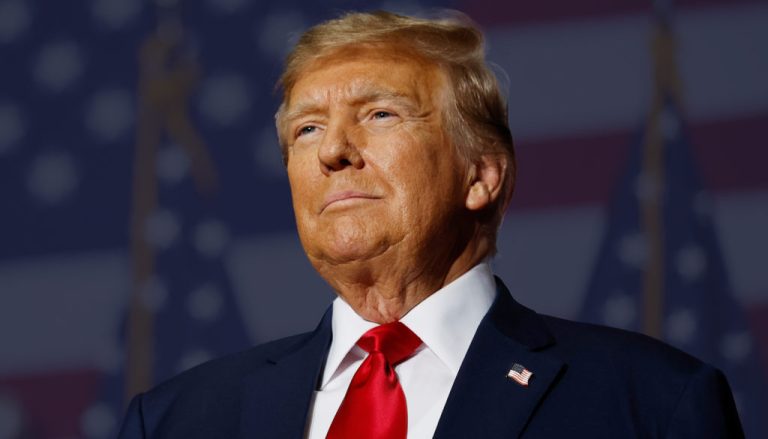
President Donald Trump
By: Diaspora Times Team
It began with a single post, late at night, on Truth Social. Within hours, it had spiraled into a political firestorm that rattled Washington, embarrassed the White House, and reignited questions about Donald Trump’s judgment in the digital age. The video — crude, racially offensive, and unmistakably targeted — depicted former President Barack Obama and former First Lady Michelle Obama as primates in a jungle. It was not satire, nor parody, but a grotesque caricature that carried echoes of America’s darkest racial tropes. And for nearly twelve hours, it sat on the official account of the President of the United States.
The backlash was immediate. Civil rights leaders, Democrats, and even Republicans condemned the imagery. Senator Tim Scott of South Carolina, a close Trump ally and one of the most prominent Black Republicans in Congress, called it “the most racist thing I’ve seen out of this White House.” The NAACP issued a blistering statement, describing the video as “a deliberate attempt to dehumanize Black leaders during Black History Month.”MercoPress
Yet, in the opening hours of the controversy, the White House did not retreat. Press Secretary Karoline Leavitt dismissed the outrage as “fake,” insisting the clip was merely “an internet meme video depicting President Trump as the King of the Jungle and Democrats as characters from The Lion King.” That defense collapsed by mid-morning Friday, when the video was quietly deleted. A White House official then claimed a staffer had “erroneously” posted the clip, describing it as an error. MercoPress
But Trump himself refused to apologize. Speaking aboard Air Force One, he insisted he had only watched the beginning of the video, which focused on debunked claims of voter fraud. “I looked at the beginning of it. It was fine,” he said. “Nobody knew that was in the end. Somebody slipped and missed a very small part.” When pressed by reporters, Trump was defiant: “No. I didn’t make a mistake.”
Vice President Kamala Harris rejected the White House’s explanation outright. “No one believes this cover-up,” she said. “We are all clear-eyed about who Donald Trump is and what he believes.”
The incident fits a familiar pattern in Trump’s political life: a provocative act, a wave of outrage, a half-hearted defense, and a refusal to apologize. From his promotion of the “birther” conspiracy against Obama years ago to his recent amplification of false claims about election fraud, Trump has repeatedly tested the boundaries of political discourse.
This time, however, the timing was particularly damaging. The video surfaced during Black History Month, a period when the nation reflects on the struggles and achievements of African Americans. For many, the imagery was not just offensive but symbolic of a deeper disregard for racial sensitivity at the highest levels of government.
Civil rights groups seized on the moment. The NAACP accused Trump of “weaponizing racism for political gain.” The Congressional Black Caucus demanded accountability, calling the incident “a stain on the presidency.”
Perhaps more striking was the reaction from within Trump’s own party. Senator Scott’s condemnation was joined by other Republicans who privately expressed alarm. One GOP strategist told Politico the episode was “a nightmare scenario — the kind of thing that alienates suburban voters and energizes Democrats.”
The White House’s shifting explanations only deepened the unease. Initially, officials defended the post. Then they blamed a staffer. Finally, Trump himself claimed ignorance of the video’s ending. The contradictions fueled suspicion that the administration was scrambling to contain a self-inflicted crisis.
The controversy underscores the risks of digital politics in the Trump era. Social media has long been Trump’s weapon of choice, a direct line to his supporters and a platform for unfiltered messaging. But it has also been a source of repeated crises, from tweets that sparked diplomatic incidents to posts that spread misinformation.
This latest episode highlights the blurred lines of accountability. Was the video truly posted by a staffer without Trump’s knowledge? Or was it shared with tacit approval until the backlash became untenable? The White House’s explanations left more questions than answers.
The uproar comes at a time when Trump is seeking to consolidate his political base ahead of the 2026 midterms. His campaign strategy has leaned heavily on themes of grievance, portraying himself as a victim of media bias and political persecution. The video, with its mix of racist imagery and false claims of voter fraud, fit neatly into that narrative — until it backfired.
For Democrats, the incident was a gift. Harris’s sharp rebuke framed Trump as unapologetically racist. Congressional Democrats amplified the message, linking the controversy to broader concerns about Trump’s fitness for office.
Internationally, the episode drew attention as well. European outlets like DW and BBC reported on the controversy, noting the White House’s initial defense and subsequent retreat.
In the aftermath, Trump sought to reclaim the narrative. He described himself as “the least racist president you’ve had in a long time.” He insisted the video was “a very strong post in terms of voter fraud,” and suggested the offensive imagery was a minor detail overlooked by staff.
But the damage was done. The incident reinforced perceptions of Trump as a leader unwilling to acknowledge mistakes, even when confronted with blatant racism.

Among Trump’s core supporters, the controversy may have little impact. Many dismissed the backlash as media hysteria, echoing the White House’s initial claim of “fake outrage.” But among independents and moderates, the episode risks deepening doubts about Trump’s judgment.
Political analysts noted that the incident could have lasting effects. “It’s not just about one video,” said a Georgetown professor of political communication. “It’s about a pattern of behavior that raises questions about whether Trump can govern responsibly in a diverse society.”
The deletion of the racist video targeting the Obamas was more than a digital misstep. It was a moment that exposed the fault lines of Trump’s presidency: the reliance on social media, the refusal to apologize, the strained relationship with racial politics, and the uneasy alliance with Republicans who increasingly find themselves defending the indefensible.
For the White House, the episode was a day of damage control. For Trump, it was another chapter in a long-running saga of controversy and defiance. And for America, it was a reminder that in the age of digital politics, a single post can ignite a storm that reverberates far beyond the screen.
Similar Posts by The Mt Kenya Times:
- Diaspora Times Global Oct 24 – Oct 30, 2026
- America’s baby bust: U.S. birth rate hits record low as women choose later motherhood
- Literary Outreach Incubation Program Instills The Culture From Book Adaption To Spoken Words
- Why starting school too early is failing our children
- Who defines Africa’s destiny? The western lens, African compliance and the struggle for intellectual sovereignty
About the Author