Beyond CAB3: the structural failures eroding Zimbabwe’s politics
 The Mt Kenya Times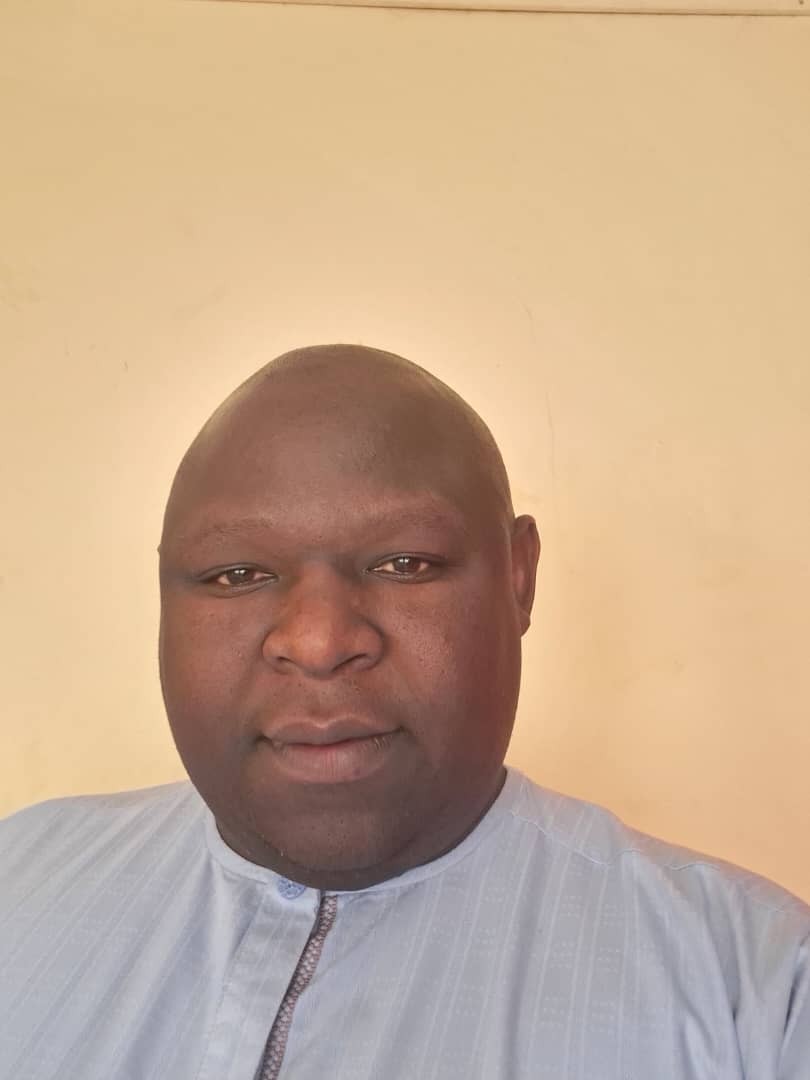
Mbizo's MP Corban Madzivanyika
Constitutional reform means little while economic collapse, institutional decay and broken service delivery hollow out the state from within
By Norman Mwale | Southern Africa Correspondent
The debate around Constitutional Amendment Bill 3 has understandably consumed public discourse in Zimbabwe, with opposition MPs such as Mbizo’s Hon. Corban Madzivanyika among those leading efforts in Parliament to block its passage. Yet to focus solely on CAB3 is to mistake the symptom for the disease. The more urgent challenge facing Zimbabwean politics is the progressive erosion of state capacity, accountability and public trust — a condition that leaves constitutional reform at risk of being little more than words on paper. As one political scientist put it recently, Zimbabwe does not lack constitutions; it lacks the will to honour them.
“When the state cannot deliver water and refuse collection, its claim to legitimacy becomes purely procedural,” says Dr Eldred Masunungure, whose observation cuts to the heart of Zimbabwe’s governing crisis with uncomfortable precision. It is a sentiment that resonates far beyond academic circles, heard in the queues outside Harare’s water collection points and in the WhatsApp groups where diaspora Zimbabweans track events back home with a mixture of love, frustration and weary familiarity.
At the centre of this erosion lies the persistent failure of economic governance. For over two decades, Zimbabwe has cycled through currency reforms with the regularity of a country that has not yet accepted why each previous attempt failed. Inflation and exchange rate volatility remain entrenched features of daily life rather than temporary discomforts to be managed through policy. The Zimbabwe National Statistics Agency has repeatedly recorded triple-digit inflation in recent years, a reality that corrodes wages, savings and long-term investment with equal indifference to who bears the cost. As economist Dr Prosper Chitambara noted in a 2025 ZIMCODD briefing, “policy inconsistency has created a two-tier economy where access to foreign currency determines survival.” Without credible monetary and fiscal discipline, even the most progressive constitutional provisions risk becoming irrelevant to the ordinary citizen who cannot afford bread from one week to the next. A constitution that cannot put food on the table will not long command the loyalty of a hungry population.
This economic dysfunction feeds directly into the visible collapse of service delivery, and here the evidence is not anecdotal — it is audited. In Harare, Bulawayo and smaller urban centres, water shortages, uncollected refuse and potholed roads have shifted from temporary inconvenience to systemic condition, accepted by residents with the grim resignation of people who have stopped expecting better. The Auditor-General’s report on local authorities for the year ended 31 December 2024, tabled before Parliament on 6 September 2025 by Acting Auditor-General Rheah Kujinga, revealed that 66 of 92 local authorities had failed to submit financial statements for 2024. The 497-page audit described “rampant financial mismanagement with goods procured three years ago yet to be delivered, and missing documents for transactions running into millions of dollars.” Central government attributes the crisis to underfunding and sanctions. Local authorities cite centralised control and political interference. The citizen caught in the middle continues paying rates and taxes for services that never arrive, and draws the obvious conclusion about where accountability ends.
Compounding this is the yawning weakness of enforcement mechanisms. Zimbabwe’s Auditor-General produces detailed annual reports exposing financial mismanagement across ministries, parastatals and councils, yet the gap between exposure and consequence remains vast enough to drive a fleet of undelivered government vehicles through. Parliamentary portfolio committees hold hearings and issue recommendations, but enforcement is sporadic and prosecutions rare enough to function as the exception rather than the rule. The Public Accounts Committee’s 2023 report on the Command Agriculture programme documented US$2.9 billion in unaccounted expenditure, with the Ministry of Lands, Agriculture, Water, Fisheries and Rural Resettlement admitting it had “no idea” how the disbursed funds had been utilised. Former Auditor-General Mildred Chiri remarked in a 2024 interview that “accountability will remain elusive until there is political will to act on findings.” When impunity persists at that scale, the message to citizens is unmistakable: rules apply selectively, and the powerful know it.
Equally pressing is the systematic marginalisation of youth and the diaspora from meaningful political participation. Over 60 per cent of Zimbabweans are under 35, according to the 2022 Census, yet political structures remain dominated by a narrow, ageing elite whose policy instincts were shaped by a very different Zimbabwe. Decision-making rarely reflects the realities confronting young people facing unemployment rates above 20 per cent, or the estimated 4.5 million Zimbabweans living abroad who collectively sustain the country through remittances. The World Bank estimates those remittances at over US$1.5 billion annually — a figure that dwarfs many line items in the national budget — yet formal channels for diaspora political participation remain severely limited. “You cannot expect the diaspora to fund a country while being excluded from shaping its direction,” said Sibongile Ncube, chair of the Zimbabwe Diaspora Forum UK, speaking at a 2025 policy dialogue in London. It is a point that carries both moral and practical weight: a country cannot indefinitely draw on the loyalty of people it refuses to include.
The politicisation of public institutions completes this troubling picture. When bodies such as the Zimbabwe Electoral Commission, ZINARA and urban councils are widely perceived as extensions of ruling party machinery rather than independent servants of the public, compliance erodes and cynicism deepens in equal measure. The 2023 Harmonised Elections were marked by disputes over voter rolls and media access, with African Union and SADC observer missions noting the need for greater institutional independence. As constitutional lawyer Alex Magaisa wrote in his widely read Big Saturday Read column, “institutions cannot be both referees and players.” The observation is simple, but its implications are profound: without independent, professionalised institutions, elections, taxation and service provision all become suspect enterprises, and public trust — once lost — is extraordinarily difficult to rebuild.
Constitutional amendments may reshape the architecture of power, but they cannot substitute for the harder, slower work of competent governance. Zimbabwe requires a political settlement that genuinely prioritises economic stability, consistent service delivery, institutional integrity and inclusive participation across generations and borders. For the diaspora, the stake in that settlement is both deeply personal and unmistakably national. Zimbabweans abroad sustain families, fund community projects and invest in a country’s future they still believe in, even from a distance. What is owed in return is a politics that matches that enduring commitment with responsibility, transparency and results.
If Zimbabwe is to move forward, the national conversation must shift decisively from procedural battles over constitutional amendments to the substantive work of governance reform. Without that shift, even the most carefully and conscientiously drafted constitution will remain precisely what too many Zimbabwean documents have become before it — a statement of admirable intentions that the state lacks either the capacity or the will to honour.
Norman Mwale is a southern Africa political correspondent reporting for The Mt Kenya Times.
Similar Posts by The Mt Kenya Times:
- Mt Kenya Times ePAPER October 1, 2026
- Museveni backs Lamu but keeps Uganda’s money at home
- Sifuna’s party wins its name — and Kenya’s opposition race begins in earnest
- Lamu’s $16B gamble: Africa’s biggest refinery divides the region
- Ruto launches KSh2.2 trillion Lamu refinery in East Africa’s biggest energy bet
About the Author