WHO declares Ebola outbreak in DRC and Uganda a global health emergency
 The Mt Kenya Times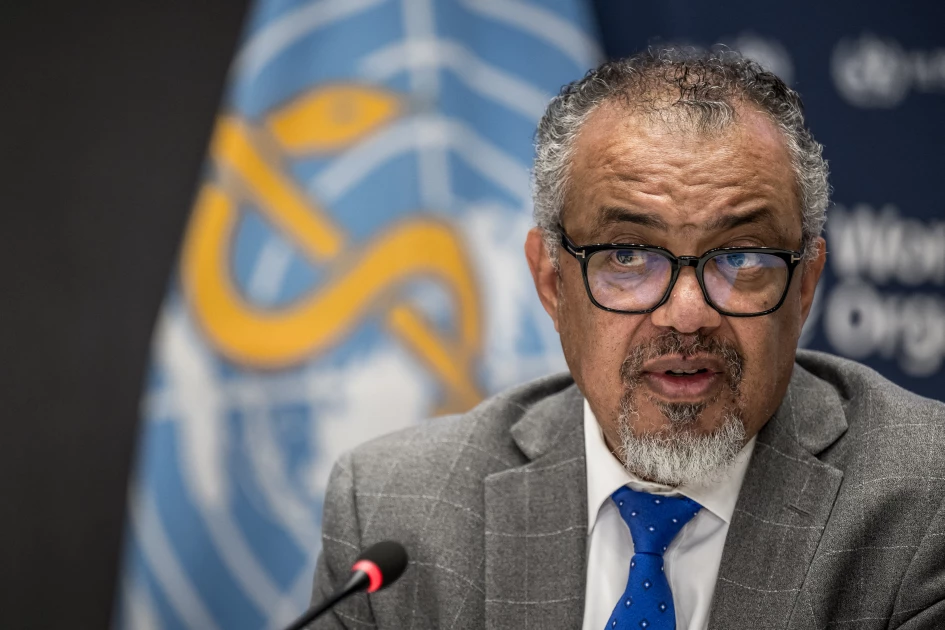
WHO Director-General Tedros Adhanom Ghebreyesus
No approved vaccine exists for the Bundibugyo strain as cross-border cases emerge in Uganda and Kinshasa
By Norman Mwale
GENEVA — The World Health Organization has declared the Ebola outbreak in the Democratic Republic of Congo and Uganda a public health emergency of international concern, citing rapid spread and the risk of further transmission across Central and East Africa.
The declaration came yesterday after laboratory tests confirmed the Bundibugyo strain as the causative agent. WHO clarified the outbreak does not meet pandemic emergency criteria but issued a stark warning of “a very real risk of regional spread” — language that immediately put neighbouring governments on high alert.
The human toll is already sobering. “As of Saturday, we have 80 suspected deaths, eight laboratory-confirmed cases and 246 suspected cases in Ituri province alone,” a WHO statement said. The DRC Ministry of Health had reported those 80 deaths the previous day, Friday, 15 May.
Cross-border transmission has already been confirmed. In Uganda’s capital Kampala, two laboratory-confirmed cases — including one death — were recorded on 15 and 16 May among people who had travelled from the DRC. Kinshasa separately reported a confirmed case in a traveller from Ituri, suggesting the virus is tracking human movement with troubling efficiency.
WHO Director-General Dr Tedros Adhanom Ghebreyesus was candid at a Friday press briefing. “This is an extraordinary situation because we have no approved therapeutics or vaccines for the Bundibugyo virus,” he said. “Given the high positivity rate in initial samples and the rise in suspected cases, we are concerned that the true scale of the outbreak may be larger than what we see today.”
WHO said it first received reports of suspected cases on 5 May and deployed a response team to Ituri. Early samples returned negative before a Kinshasa laboratory confirmed positive results on Thursday, 14 May. The agency has since released $500,000 from its emergency contingency fund to bolster surveillance, contact tracing, laboratory capacity and clinical care.
Africa CDC Director-General Dr Jean Kaseya pressed the case for coordinated regional action. “Given the high population movement between affected areas and neighbouring countries, rapid regional coordination is essential,” he said — a call analysts say cannot come soon enough.
Conditions on the ground make the response extraordinarily difficult. Ituri remains deeply unstable, with militia clashes having overwhelmed or destroyed health infrastructure across the province. Médecins Sans Frontières warned earlier this month of catastrophic hygiene conditions inside displacement camps, precisely the environment where Ebola spreads fastest.
The US Embassy in Kinshasa has issued an urgent health alert for Ituri Province, and the US State Department maintains a Level 4: Do Not Travel advisory for the region. This is the seventeenth Ebola outbreak in the DRC since 1976. The previous outbreak, in Kasai province, was declared over on 1 December 2025 after 64 cases and 45 deaths.
WHO is urging all countries to activate emergency mechanisms, strengthen entry-point surveillance and implement cross-border screening immediately. The message from Geneva is unambiguous: act now, before the human cost becomes irreversible.
Norman Mwale is a health and global affairs journalist reporting for The Mt Kenya Times.
Similar Posts by The Mt Kenya Times:
- Mt Kenya Times ePAPER October 26, 2026
- Sakaja challenges Kamukunji police over Eastleigh suspect bail
- Muturi demands binding livestreaming rules for 2027 polls to prevent repeat of 2022 chaos
- NTSA calls for road safety to be declared a national disaster after 24 die in Mtito Andei crash
- Ruku turns on Waiguru over deputy president ambitions: ‘That seat is not being contested for’
About the Author