Hantavirus: the silent killer reshaping global health security, disrupting economies and exposing the price the world pays for ignoring nature’s warning signs
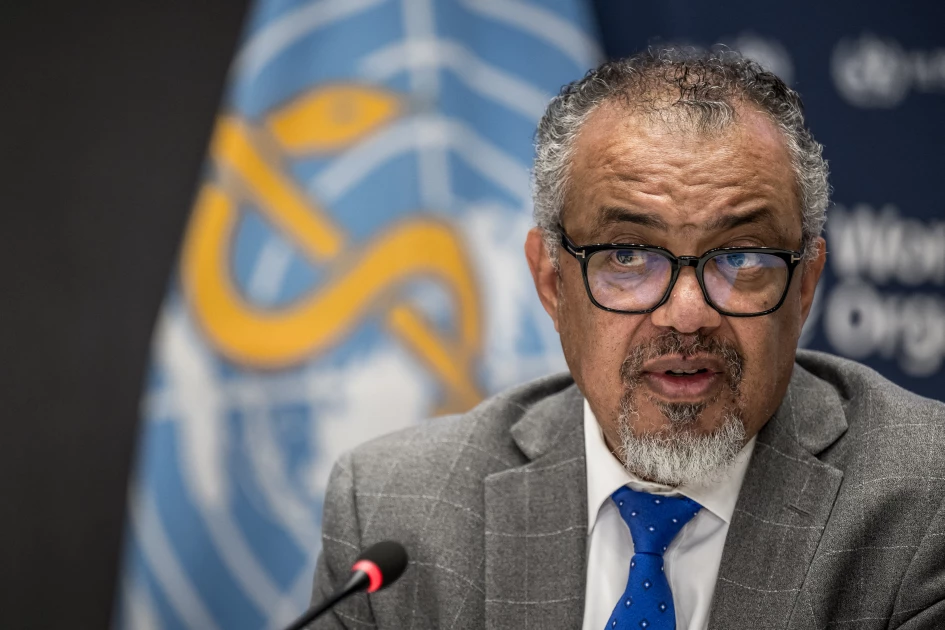
WHO Director-General Tedros Adhanom Ghebreyesus
By Diaspora Times Team
It began with a birdwatcher in Argentina, spread through the confined quarters of a luxury Antarctic cruise ship traversing the South Atlantic, killed three passengers from two countries, scattered potentially exposed travellers across 23 nations on five continents — and has now triggered the most extensive international response to a haemorrhagic respiratory virus since the early days of Covid-19. Hantavirus has arrived on the world’s front pages. The question is whether it has also arrived in the world’s consciousness in time to matter.
The immediate facts of the MV Hondius outbreak are now well-established. The Dutch-flagged expedition vessel departed Ushuaia, Argentina, on 1 April 2026, carrying 147 passengers and crew from 23 different nationalities. By 11 April, a passenger — later identified as a Dutch national — had died on board. WHO investigators working on the assumption that the Dutch couple who died were infected off the ship believe they may have contracted the virus during a bird-watching trip through Argentina, Chile and Uruguay, visiting sites where the species of rat known to carry the virus was present. The incubation period — typically one to six weeks — meant the virus was already silently at work before the ship left port. By the time the pattern was recognised, it was too late for three people, and the ship had become a floating epidemiological puzzle dispersing across the Atlantic.
As of 9 May 2026, the WHO reported eight cases — six confirmed and two suspected — including three deaths. Passengers have been hospitalised in South Africa, the Netherlands, Germany, Saint Helena, Spain and Switzerland, while the ship made its way to Tenerife in the Canary Islands carrying 147 individuals and one dead body still on board. The geopolitical theatre accompanying the ship’s final passage was almost as alarming as the virus itself: the president of the Canary Islands, Fernando Clavijo, initially refused to receive the vessel, citing concern for the islanders’ safety rooted in memories of the Covid-19 pandemic, before Spain’s health agency approved the plan in accordance with international law and humanitarian principles.
What is hantavirus?
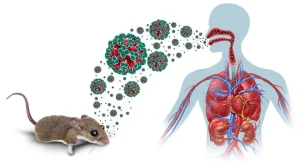
A family of more than 50 virus types carried by rodents, transmitted to humans through contact with infected urine, droppings or saliva. It causes two distinct syndromes: Hantavirus Pulmonary Syndrome (HPS), which attacks the lungs, and Haemorrhagic Fever with Renal Syndrome (HFRS), which damages the kidneys. There is no licensed vaccine and no approved antiviral treatment. Survival depends entirely on supportive care, ideally in an intensive care unit.
A virus with deep roots and a rising trajectory
Hantavirus is not a new pathogen. It has circulated in rodent populations for millennia and has been infecting humans for at least as long as we have lived alongside rats and mice. Its modern scientific history begins with the Korean War of 1950 to 1953, when more than 3,000 United Nations forces contracted what would later be identified as Haemorrhagic Fever with Renal Syndrome — the first recorded mass outbreak to bring Hantavirus disease to worldwide attention. The second landmark moment came in 1993, when a mysterious respiratory illness swept through the Four Corners region of the American Southwest, killing previously healthy young adults within days. The culprit — the Sin Nombre hantavirus, carried by deer mice — had been circulating undetected in the rural American West for years.
Worldwide, it is now estimated that between 10,000 and 100,000 hantavirus infections occur each year, with the largest burden falling on Asia and Europe. China alone accounts for more than 90 per cent of global HFRS cases, with the populous central province of Shaanxi among the key hotspots. The scale of the Asian burden is frequently overlooked in Western health discourse, which tends to treat hantavirus as a rare Americas problem. It is not rare. It is endemic across large swaths of Asia, Europe and the Americas, suppressed from global attention primarily because it lacks the pandemic dynamics — efficient person-to-person transmission — that elevate diseases to geopolitical concern. Until now.
The Andes strain changes that calculus. The Andes virus is the only known hantavirus to spread between people. This spread, though rare, has previously occurred, usually in cases of close and often sustained contact. During a 1996 outbreak in El Bolson, Argentina, 18 cases occurred, and three of the patients who became ill were doctors who had treated other patients with the disease — a pattern of person-to-person transmission that had never before been observed with any hantavirus, either in the Americas or in Europe and Asia. That characteristic — unique in the hantavirus family — is what has driven the extraordinary international response to the MV Hondius outbreak and what distinguishes this strain as genuinely, if modestly, different in its risk profile.
The mortality problem
To understand why hantavirus commands serious attention despite its limited transmissibility, one must understand its lethality. The statistics are stark. Hantavirus Pulmonary Syndrome, found mainly in the Americas, has a case fatality rate of approximately 35 to 40 per cent — making it among the most lethal acute respiratory infections known to medicine. About 38 per cent of those who develop HPS with respiratory symptoms may die without treatment, according to the CDC. For context, Covid-19’s global infection fatality rate across the pandemic was estimated by the WHO at approximately 0.5 per cent. Seasonal influenza kills fewer than 0.1 per cent of those it infects. Hantavirus Pulmonary Syndrome, untreated, kills between one-third and half.
From the beginning of its monitoring programme in 1993 until 2023, the US Centers for Disease Control and Prevention detected 890 cases of hantavirus in the United States, of which 35 per cent resulted in death. That is 311 Americans killed by a pathogen most of the public could not name before the MV Hondius crisis broke into the news cycle. In Argentina, which has the highest Andes virus burden in the world, the health ministry reported 101 hantavirus infections since June 2025 — roughly double the caseload recorded over the same period the previous year. Argentina’s fatality rate for hantavirus infections reached 33.6 per cent in early 2026, exceeding levels seen during the 2018 to 2019 outbreak, with deaths including a ten-year-old girl and a 14-year-old boy.
“The risk to the global population from this event is low. But we must be clear — hantavirus is not a disease to be dismissed. In endemic regions, it remains a serious and often fatal threat, and the conditions that drive its spread are getting worse, not better.”
— Dr Tedros Adhanom Ghebreyesus, Director-General, World Health Organisation, press briefing, 8 May 2026
Climate change: the accelerant no one wanted to discuss
Argentina’s doubling of hantavirus cases in less than a year is not coincidental, and its public health researchers are not treating it as such. Many local public health researchers attribute the surge to the recently accelerating effects of climate change. The mechanism is well understood in epidemiological literature: as temperatures rise and rainfall patterns shift, rodent populations that carry hantavirus — particularly the long-tailed mouse in South America and various Apodemus species in Europe — respond with population booms when their food sources, primarily seeds and berries, experience favourable growing seasons driven by unusual warmth. More rodents in close proximity to human habitation means more opportunities for transmission. In drought years that follow boom years, rodents are also pushed into closer contact with human food and water supplies as their natural habitats dry out.
Kenya’s Public Health Principal Secretary, Mary Muthoni, made this link explicit in the wake of the MV Hondius outbreak, signalling that African health authorities are watching with more than passing concern what is unfolding thousands of miles away in the Atlantic.
“We are strengthening surveillance systems to detect zoonotic diseases early, especially threats linked to rodents and climate change. Long-term prevention, not crisis response, must be our posture.”
— Mary Muthoni, Public Health Principal Secretary, Kenya Ministry of Health
Africa’s position in the hantavirus story is underappreciated and potentially underestimated. Seoul hantavirus — which causes a milder form of HFRS — has been detected in rats across the African continent, and serological surveys have found evidence of past human infection in several sub-Saharan African countries. Africa also hosts some of the world’s most diverse rodent populations, in environments that climate models predict will become increasingly hospitable to species displacement and habitat compression. The combination of rising temperatures, inadequate sanitation infrastructure in rapidly urbanising cities, and health systems with limited zoonotic disease diagnostic capacity creates conditions for an under-detected burden that may already be larger than current data suggests.
The economic and geopolitical cost
Beyond the immediate human toll, hantavirus outbreaks carry measurable economic consequences — and the MV Hondius crisis is already generating ripple effects across several industries. The cruise and expedition travel sector is perhaps the most immediately exposed. Interest in Antarctica trips was up 34 per cent year-on-year through the first four months of 2026, according to travel insurance marketplace Squaremouth, reflecting continued demand for high-end expedition travel. That demand has so far survived the crisis, with travel risk experts telling industry media the outbreak is unlikely to dent long-term appetite for remote expeditions. But the behavioural data tells a more nuanced story: purchases of “Cancel for Any Reason” and “Interruption for Any Reason” travel protection upgrades nearly doubled, from 10 per cent during the first four months of 2025 to 19 per cent during the same period in 2026. Risk consciousness, if not risk aversion, is measurably increasing.
The reputational and economic impact on Argentina — and specifically on Ushuaia, the departure point of the MV Hondius — is more acute and more politically charged. Officials in Tierra del Fuego strongly rejected claims suggesting the virus originated in Ushuaia, arguing that the investigation should be broadened to include other regions of Argentina visited by the infected travellers prior to boarding. The concern is not merely epidemiological. Ushuaia is the world’s primary gateway for Antarctic expedition cruises, a tourism sector worth hundreds of millions of dollars annually to the local and national economy. The association — even an unproven one — between the city and a deadly virus outbreak is the kind of reputational damage that tourism economies struggle to recover from quickly, as Wuhan, China learned to devastating effect in 2020.
The medical evacuation operation mounted around the MV Hondius has itself been extraordinarily expensive. Multiple air medical evacuations from remote Atlantic islands to intensive care units in South Africa and Europe, the deployment of epidemiological teams from the CDC, WHO and multiple national health agencies to the Canary Islands, the coordinated international contact tracing exercise spanning 23 nationalities in dozens of countries, and the political crisis management required to navigate a vessel rejected by one jurisdiction and accepted by another — all carry costs that are difficult to quantify precisely but collectively represent an enormous deployment of public health resources triggered by a single environmental exposure event.
“What they actually get is a cruise that has a lot of risky activity in remote areas without easy access to medical care. The premium price tag does not guarantee premium emergency infrastructure.”
— Jason Margulies, maritime attorney, Lipcon, Margulies & Winkleman, speaking to CNBC, May 2026
No vaccine, no cure: the treatment gap
Perhaps the most sobering dimension of the hantavirus story is the treatment landscape — or rather, the near-total absence of one. Despite decades of research, no approved antiviral treatment exists for hantavirus infection in most countries, and no licensed vaccine has been cleared for use in the Western world. Ribavirin, an antiviral drug used against some other RNA viruses, has shown limited efficacy in some studies of HFRS but has not demonstrated consistent clinical benefit for Hantavirus Pulmonary Syndrome. Supportive care in a well-equipped intensive care unit — mechanical ventilation, extracorporeal membrane oxygenation (ECMO) for the most severe respiratory failure cases, and careful fluid management — remains the only meaningful clinical intervention. In high-income countries with sophisticated ICU infrastructure, survival rates improve substantially. In lower-income settings, they do not.
China and South Korea have developed and licensed their own hantavirus vaccines for domestic use — reflecting the enormous HFRS burden those countries carry — but these vaccines target Asian strains and have not been developed or approved for the Andes virus responsible for the current outbreak. The global pharmaceutical industry has not treated hantavirus as a priority therapeutic target, largely because the disease’s annual case burden, while significant in absolute terms, is insufficient to generate the market returns that drive vaccine development investment. This is the classic neglected tropical disease problem applied to a pathogen that does not technically qualify for the “neglected tropical disease” designation.
“People are more risk-conscious today than ever. I wouldn’t necessarily call it risk aversion, but they are looking for a plan B. Security membership purchases are up 30 per cent so far this year compared with the same period in 2025.”
— Dan Richards, CEO, Global Rescue, speaking to CNBC, May 2026
The global response: coordination under pressure
The international response to the MV Hondius outbreak has been, by most accounts, faster and more coordinated than the early days of any previous comparable event. The CDC deployed a team of epidemiologists and medical professionals to the Canary Islands and arranged a US government medical repatriation flight to Offutt Air Force Base in Omaha, Nebraska, where returning passengers would be assessed at the National Quarantine Center. The US State Department led a coordinated whole-of-government response including direct contact with passengers, diplomatic coordination, and engagement with domestic and international health authorities.
Argentina confirmed it would send biological material and laboratory reagents to Spain, Senegal, South Africa, the Netherlands and the United Kingdom to support the diagnosis and study of the cases — a notably cooperative gesture from a country that has been under investigation as the possible source of the outbreak and that had, months earlier, withdrawn from the WHO. The scale of contact tracing initiated across five continents represents a genuinely impressive demonstration of the Global Outbreak Alert and Response Network’s operational capacity when activated at full pitch.
Yet the structural lesson the MV Hondius outbreak teaches is ultimately not about response — it is about prevention. A couple went birdwatching in South America, walked near a landfill, and encountered the droppings of an infected rodent. That single moment of environmental contact cascaded through five weeks, three deaths, eight confirmed infections, 23 nationalities, and a multi-continent health emergency that has consumed incalculable public health resources. The virus did not change. The world came to it.
What must change
The implications of the hantavirus crisis extend across at least three distinct policy domains. First, zoonotic disease surveillance must be treated as a global public good rather than a national afterthought. The WHO’s One Health framework — which addresses the interconnections between human health, animal health, and environmental health — has been endorsed at the highest diplomatic levels but funded inadequately in most of the countries where its application is most urgently needed. Argentina’s doubling of hantavirus cases did not appear without warning in the epidemiological data; it appeared without adequate institutional response.
Second, the pharmaceutical research gap for hantavirus must be addressed through the kind of public-private partnership mechanism that delivered Covid-19 vaccines in record time. The Coalition for Epidemic Preparedness Innovations (CEPI), established in 2017 after the Ebola crisis, has hantavirus on its radar as a priority pathogen — but funding and clinical trial momentum have lagged behind the rhetorical commitment. A virus that kills between 35 and 50 per cent of those it infects with its most severe form cannot remain a low-priority research investment.
Third, the expedition travel industry — a sector whose rapid growth is placing more affluent travellers in closer contact with remote ecosystems and endemic disease environments than at any previous point in history — must develop health infrastructure standards commensurate with the risks it is selling. The MV Hondius carried one doctor and lacked sophisticated equipment such as scanners or ventilators needed to diagnose or treat serious respiratory illness. By the end of April, that single doctor was among those confined to quarters with illness, leaving passengers without professional medical care in the middle of the Atlantic Ocean.
Hantavirus has existed for thousands of years, kills with brutal efficiency, resists every drug we have, has no widely available vaccine, is rising on the back of a warming planet, and has just demonstrated — aboard a vessel surrounded by ocean, far from any hospital — exactly what happens when the world treats a known biological threat as someone else’s problem until it becomes everyone’s emergency. The next outbreak will not announce itself more politely than this one did. The question is whether the world is finally listening.
Similar Posts by The Mt Kenya Times:
- Mt Kenya Times ePAPER October 1, 2026
- Museveni backs Lamu but keeps Uganda’s money at home
- Sifuna’s party wins its name — and Kenya’s opposition race begins in earnest
- Lamu’s $16B gamble: Africa’s biggest refinery divides the region
- Ruto launches KSh2.2 trillion Lamu refinery in East Africa’s biggest energy bet
About the Author